
Chemistry: Rust — Conditions, Causes, Prevention
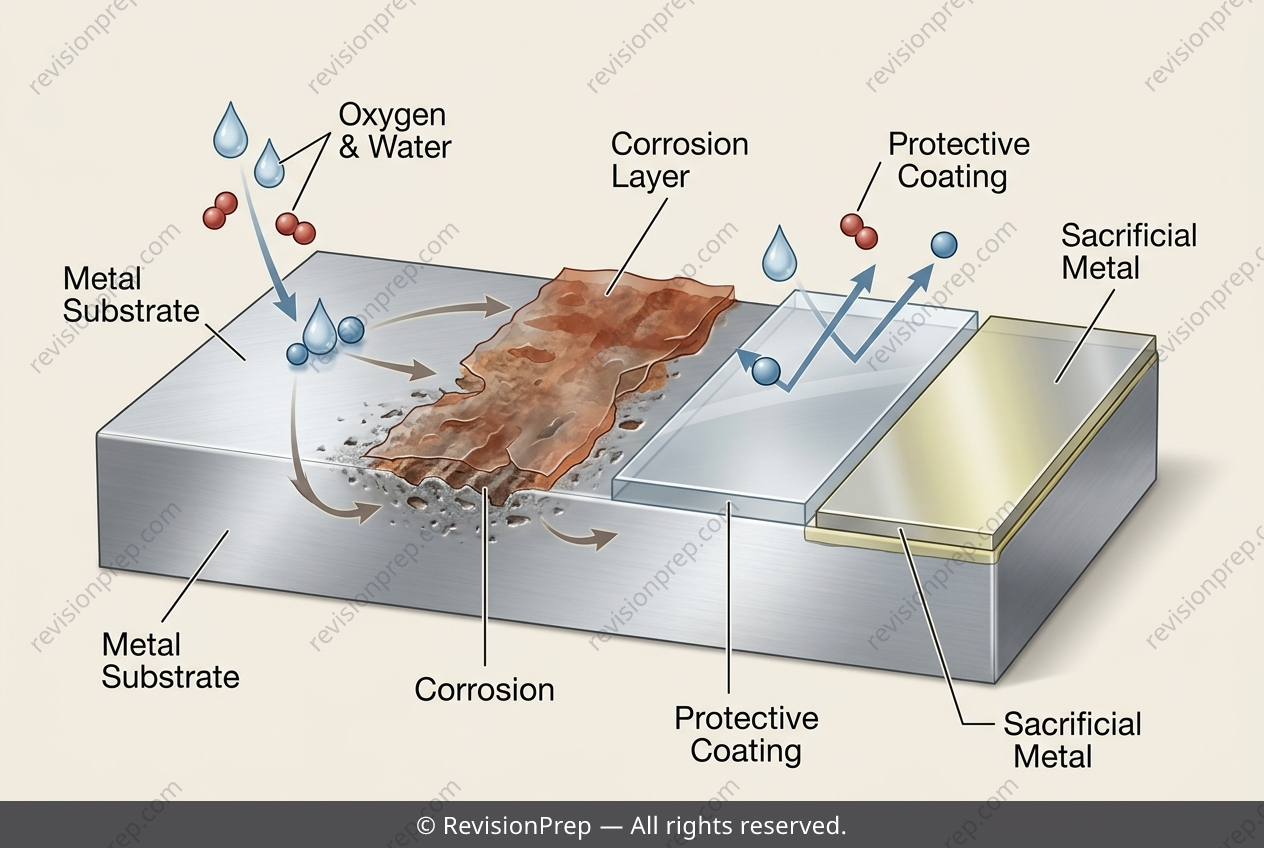
Rusting is the slow, chemical degradation of iron when it reacts with oxygen and water, forming hydrated iron(III) oxide—the flaky, reddish-brown substance we call rust. This is not just a surface nuisance; it is a process that literally consumes the metal, converting strong structural iron into a brittle, powdery material that crumbles under pressure. For everyday objects like a school bicycle rack, this means the metal loses its load-bearing strength, turning a simple convenience into a potential safety hazard. Understanding rusting is about recognising the conditions that drive it and the barriers that stop it. The reaction requires both oxygen and water to proceed, so protection focuses on breaking that contact. Painting, for instance, creates a physical shield that seals the iron surface from moisture and air. Similarly, oil or grease repels water, while galvanising uses a zinc coating that not only blocks exposure but also acts sacrificially—zinc corrodes in place of iron. Each method works by interrupting the chemical pathway, preserving the metal’s integrity and extending the life of everyday structures.
Start practising IB questions today
150,000+ IB-styled questions, criteria-mapped and instantly accessible.