
Chemistry: The Atomic Logic Behind Every Reaction
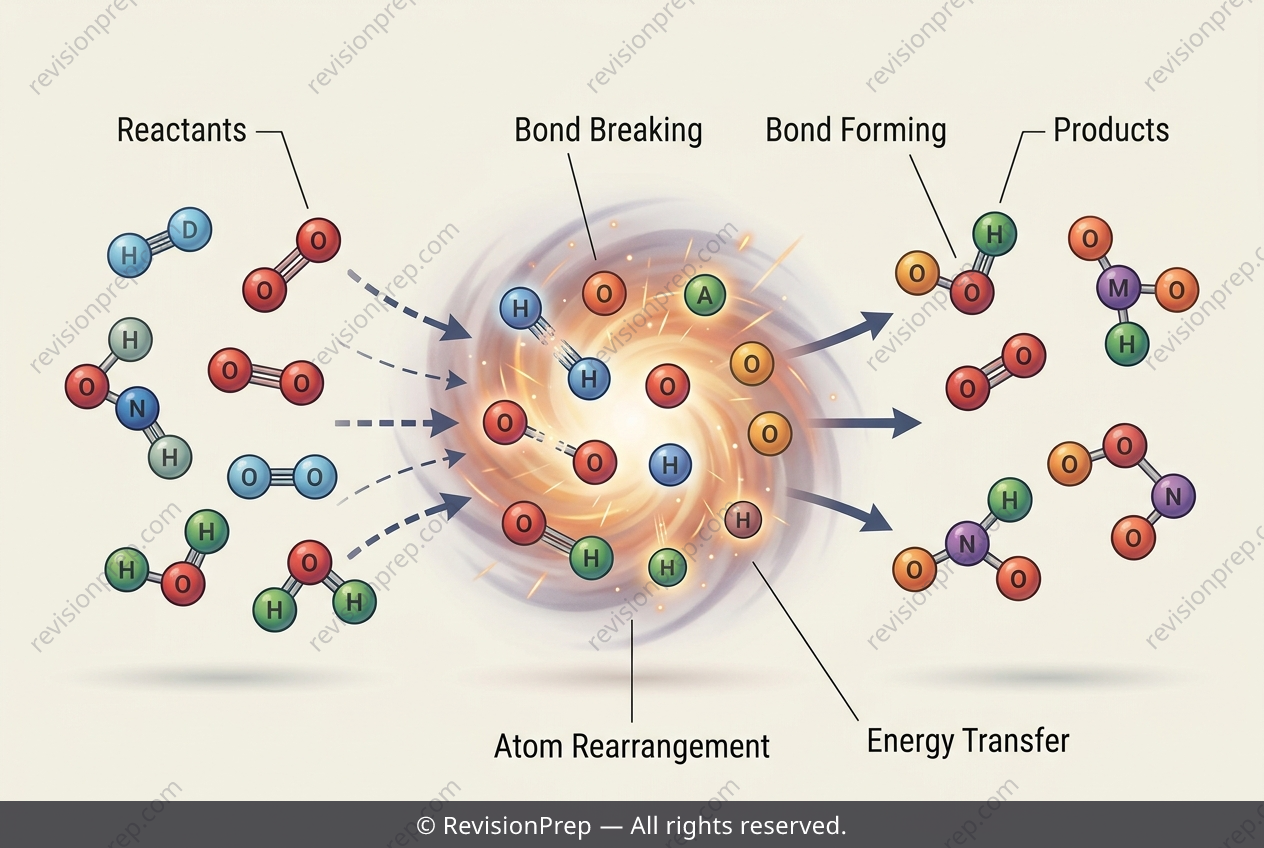
Chemical changes are all around us—from the rusting of a bike left in the rain to the burning of a candle. At its heart, a chemical reaction is a process where substances, called reactants, rearrange their atoms to form entirely new substances, known as products. In the classic example of magnesium burning in oxygen, the shiny metal and the colourless gas are the reactants, while the white powdery ash you see afterward is the product, magnesium oxide. What makes this a chemical change—rather than a physical one—is that the atoms themselves are not destroyed or created; they are simply reconnected. During the reaction, magnesium atoms and oxygen atoms break their original bonds and form new ones, creating a compound with different properties from either starting material. This atomic rearrangement is the core mechanism behind every chemical reaction. Understanding how reactants combine to yield products helps you predict what will form, why mass is conserved, and why new substances have unique characteristics—a foundational idea that connects all of chemistry, from simple combustion to complex biological processes.
Start practising IB questions today
150,000+ IB-styled questions, criteria-mapped and instantly accessible.