
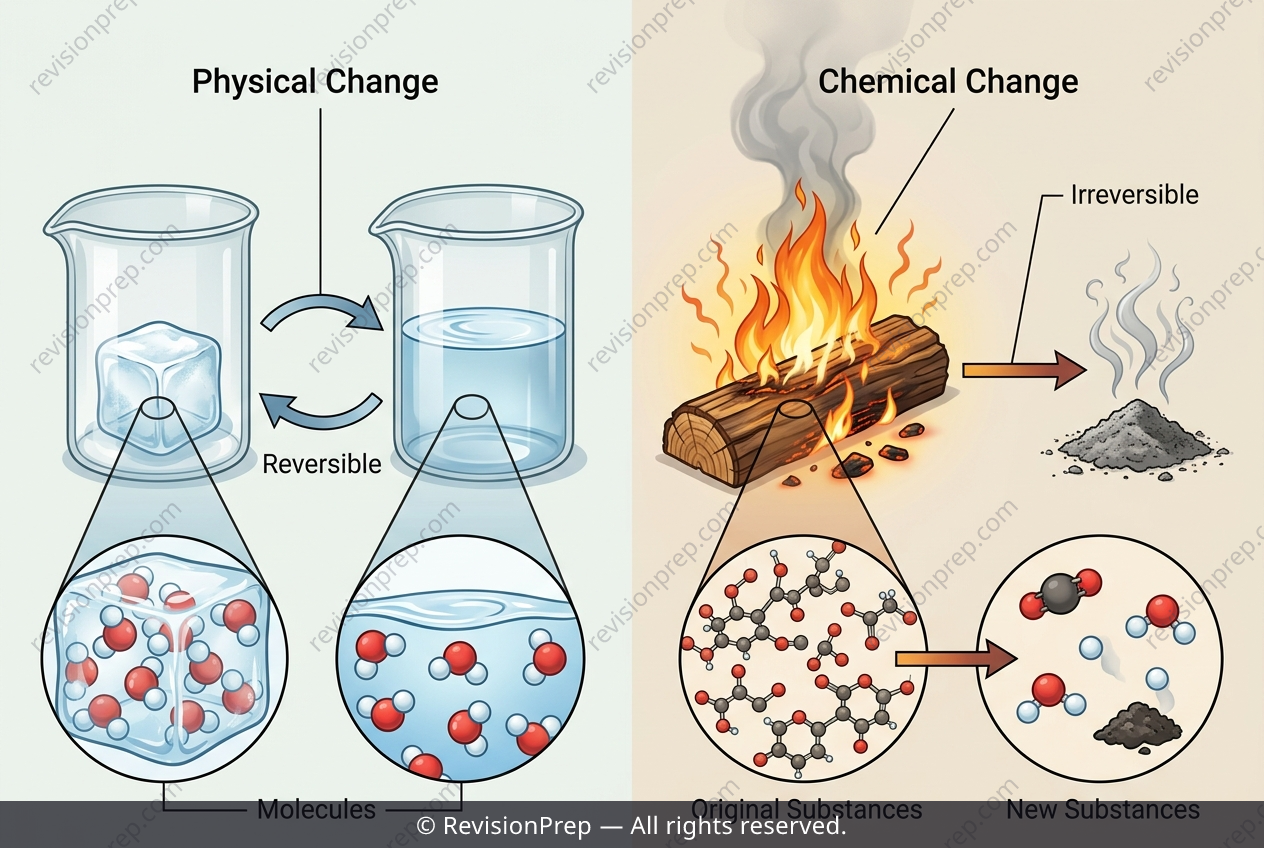
Chemistry: The Test for an Irreversible Reaction
When a candle burns, it undergoes an irreversible chemical change—a transformation that produces entirely new substances and cannot be undone. This core idea in chemistry distinguishes physical changes (like melting wax) from chemical reactions, where bonds break and reform to create different materials with new properties. In the burning candle, the wax (A) melts and travels up the wick (B), where it reacts with oxygen in the flame (C). This combustion produces carbon dioxide, water vapour, and solid ash (D). The key relationship is that the wax and oxygen are the reactants, while ash and gases are the products—new substances that did not exist before. Because these products have a different chemical composition from the original wax, the reaction is irreversible: you cannot simply cool or reshape the ash to recover the candle. This principle matters beyond the lab—it explains why burning fuels, rusting iron, or cooking food cannot be reversed, and it underpins how we identify chemical changes in everyday life. Recognising that new substances form is the fundamental test for irreversibility.
Start practising IB questions today
150,000+ IB-styled questions, criteria-mapped and instantly accessible.