
Maths: Radius vs Diameter — Getting It Right
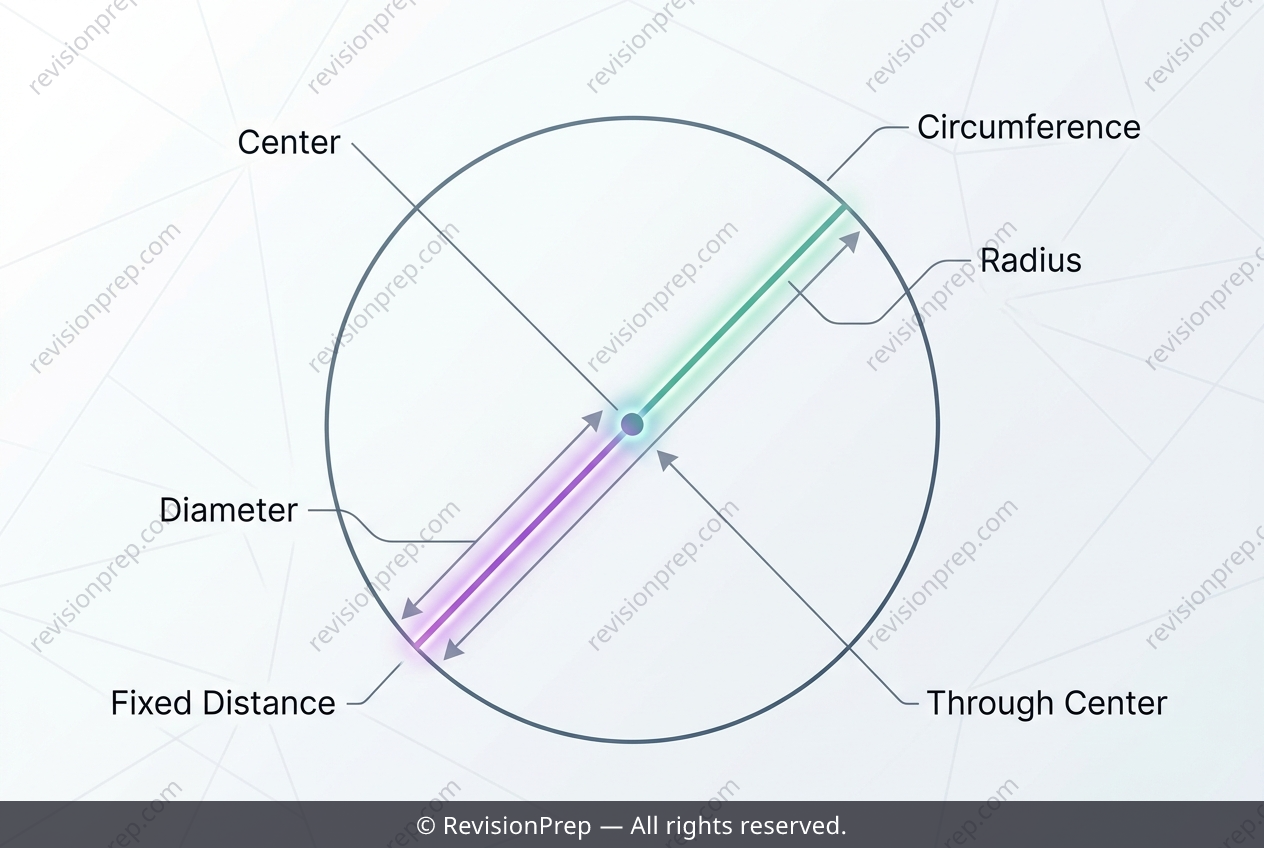
A circle is defined by a single fixed point at its centre and a constant distance to every point on its circumference—that distance is the radius. In any circle, the radius is the fundamental building block: it determines the circle’s size, and every other key segment relates directly to it. For instance, a diameter is simply twice the radius, formed by connecting two points on the circumference while passing through the centre. Understanding this distinction is not just about naming parts; it is the foundation for calculating circumference (C = 2πr), area (A = πr²), and for solving problems involving chords, tangents, and arcs. The relationship between the radius and the diameter is the first geometric property students must internalise. A radius always runs from the centre to a single point on the edge, while a diameter spans the entire circle through the centre, joining two circumference points. This means the diameter is exactly two radii long. When you see a segment like AB that passes through the centre and touches the circle at both ends, you are looking at a diameter—not a radius. Recognising this distinction clarifies how lengths relate and prevents common errors when applying circle formulas in more complex problems.
Start practising IB questions today
150,000+ IB-styled questions, criteria-mapped and instantly accessible.