
Maths: Scale Factors and Geometric Similarity
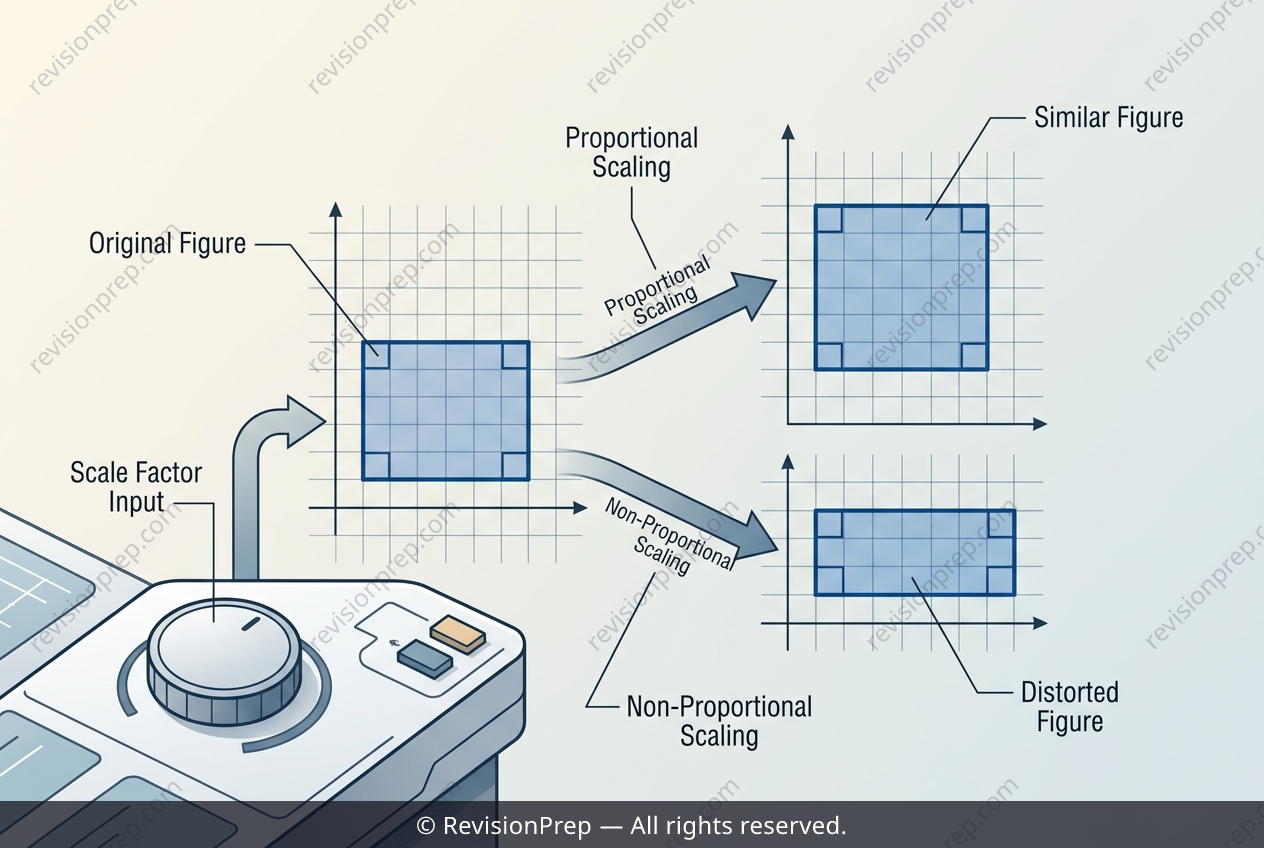
When a photographer enlarges a 4‑inch by 6‑inch photo using a scale factor of 2.5, the new dimensions are produced by multiplying each original side by that same factor. This is the heart of geometric similarity: two shapes are similar when their corresponding sides are in the same proportion, meaning they share an identical shape but differ in size. In this case, the ratio of the enlarged width to the original width equals the ratio of the enlarged height to the original height — both equal the scale factor — which is the precise condition for similarity. Why does this matter beyond the math classroom? Scale factors appear everywhere in real life, from resizing a wallet‑sized snapshot into a poster, to shrinking a large image for a passport photo. Understanding proportional reasoning lets you predict how changing one dimension affects the whole object, ensuring the result is not stretched or distorted. When both dimensions are multiplied by the same factor, the shape is preserved; if only one side were scaled, the photo would become a different shape entirely. This connection between ratios, scale factors, and shape preservation is the key to solving any similarity problem — whether you are enlarging a print or comparing two triangles on a geometry test.
Start practising IB questions today
150,000+ IB-styled questions, criteria-mapped and instantly accessible.