
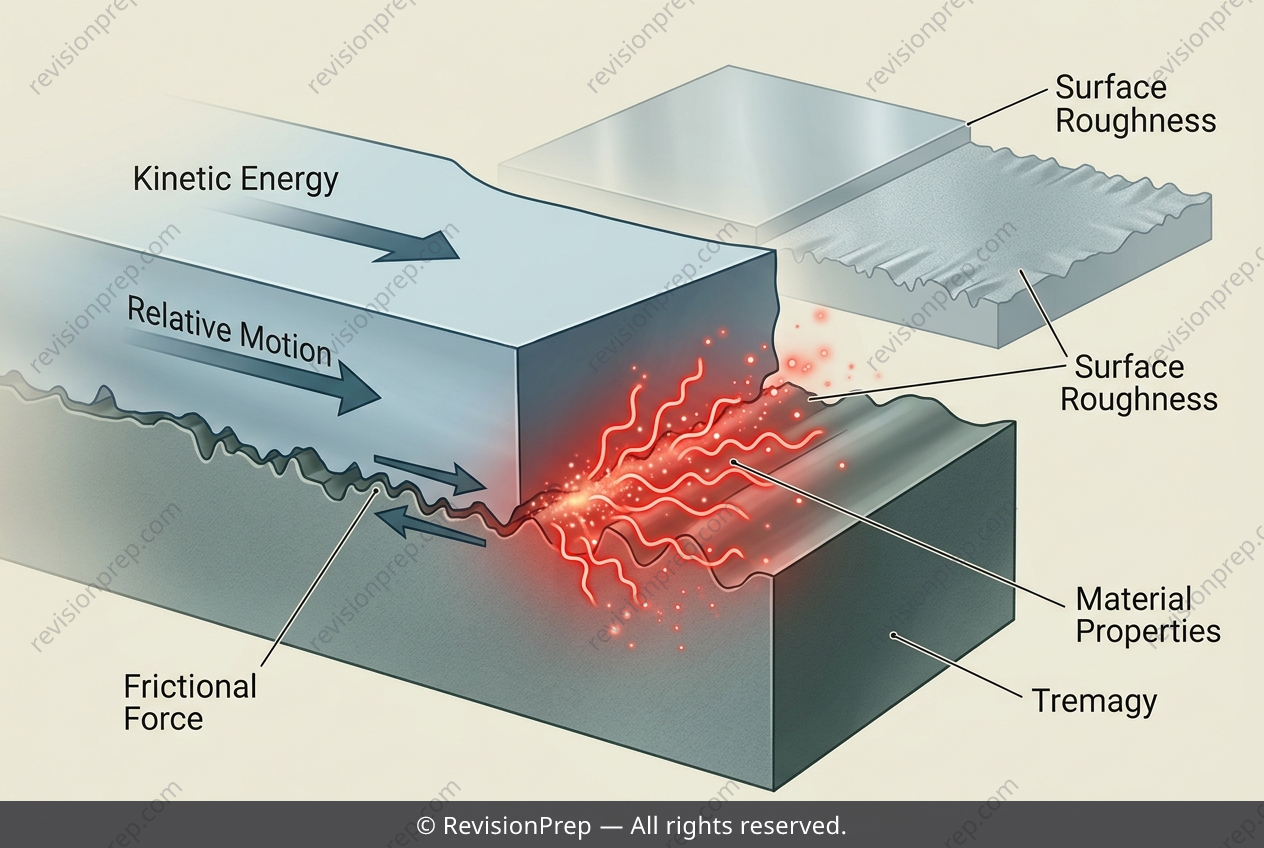
Physics: How Friction Converts Motion into Heat
Friction is a force that resists motion between two surfaces in contact, and in the context of a playground slide, it acts as an energy transformer. When the child slides down, friction does not simply “slow things down”—it actively converts the kinetic energy of the moving child into thermal energy, or heat. This is why the back of the legs feels warm: the mechanical energy of sliding is being dissipated as internal energy within the skin and the slide’s surface. The relationship is direct—greater friction means more energy conversion per metre travelled, but also more heat generated per second. The significance of this concept extends far beyond a warm sensation on a sunny day. For engineers, friction is a design variable that must be carefully balanced. A slide surface with too little friction would allow dangerously high speeds, while too much friction would convert excessive kinetic energy into heat, risking discomfort or even burns. The material choice therefore hinges on controlling the rate of energy transformation: enough resistance to manage velocity safely, but not so much that thermal buildup becomes hazardous. This trade-off illustrates how a fundamental physical mechanism—energy conservation and conversion—directly shapes real-world safety and comfort.
Start practising IB questions today
150,000+ IB-styled questions, criteria-mapped and instantly accessible.