
Physics: How Surface and Material Affect Friction
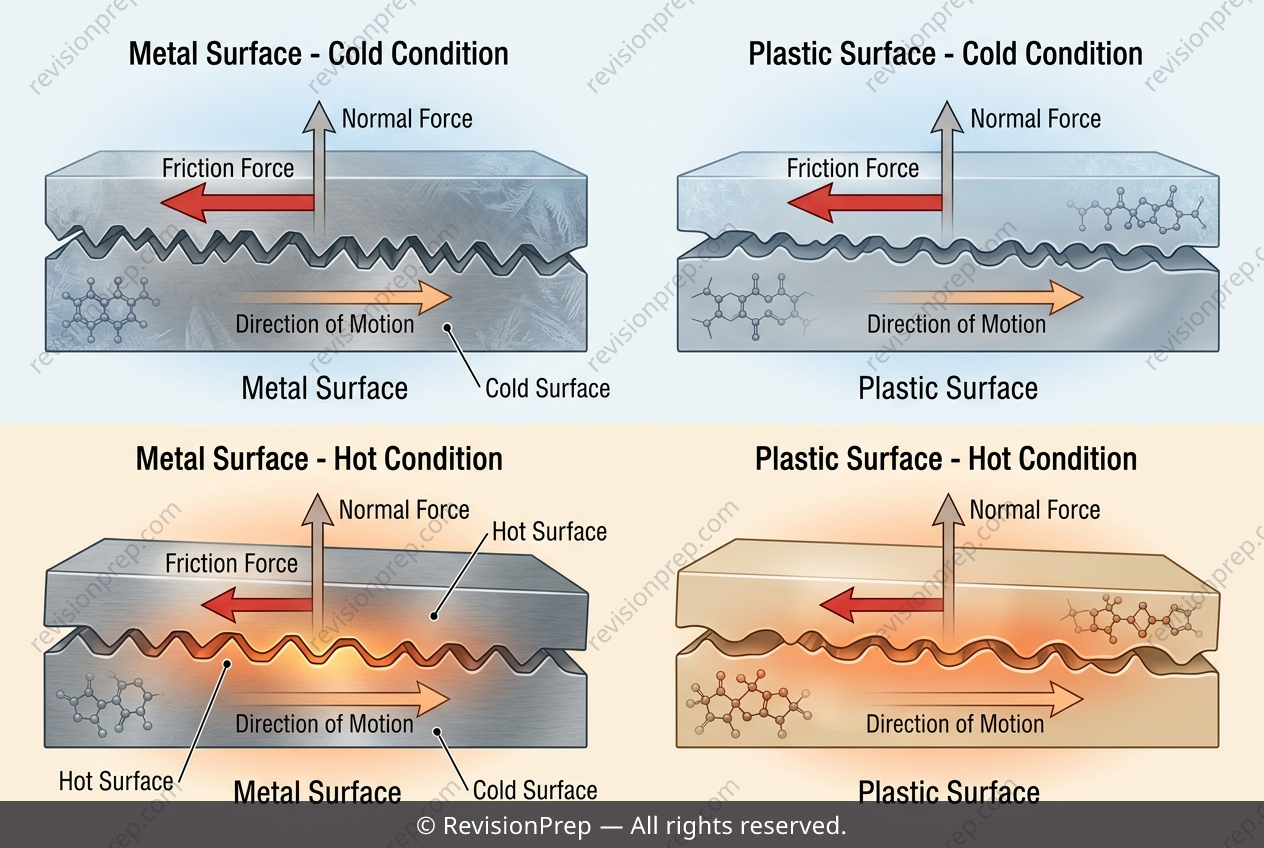
Friction is the force that resists motion between two surfaces in contact, and its size depends on both the materials involved and the conditions of their surfaces. When you slide down a playground slide, two main forces act on you: gravity (your weight) pulling you downward along the slope, and friction acting upward against your motion. The balance between these two forces determines how fast you travel — and that balance is far from constant. What makes this interesting is how temperature and material choice shift that balance. On a hot day, a metal slide expands slightly, making its surface smoother and reducing friction, so you accelerate more quickly. In winter, the metal contracts, creating a rougher texture that increases friction and slows you down. Plastic, by contrast, doesn’t change shape much with temperature, but it naturally has a higher coefficient of friction than smooth metal. This means plastic slides are slower but safer, while metal slides are faster yet conduct heat so well that they become dangerously hot in summer and painfully cold in winter. Understanding friction as a force that depends on surface roughness, material properties, and thermal effects helps explain everyday experiences — from playground equipment to car brakes and shoe grip.
Start practising IB questions today
150,000+ IB-styled questions, criteria-mapped and instantly accessible.