
Physics: How Surface Area Slows a Falling Object
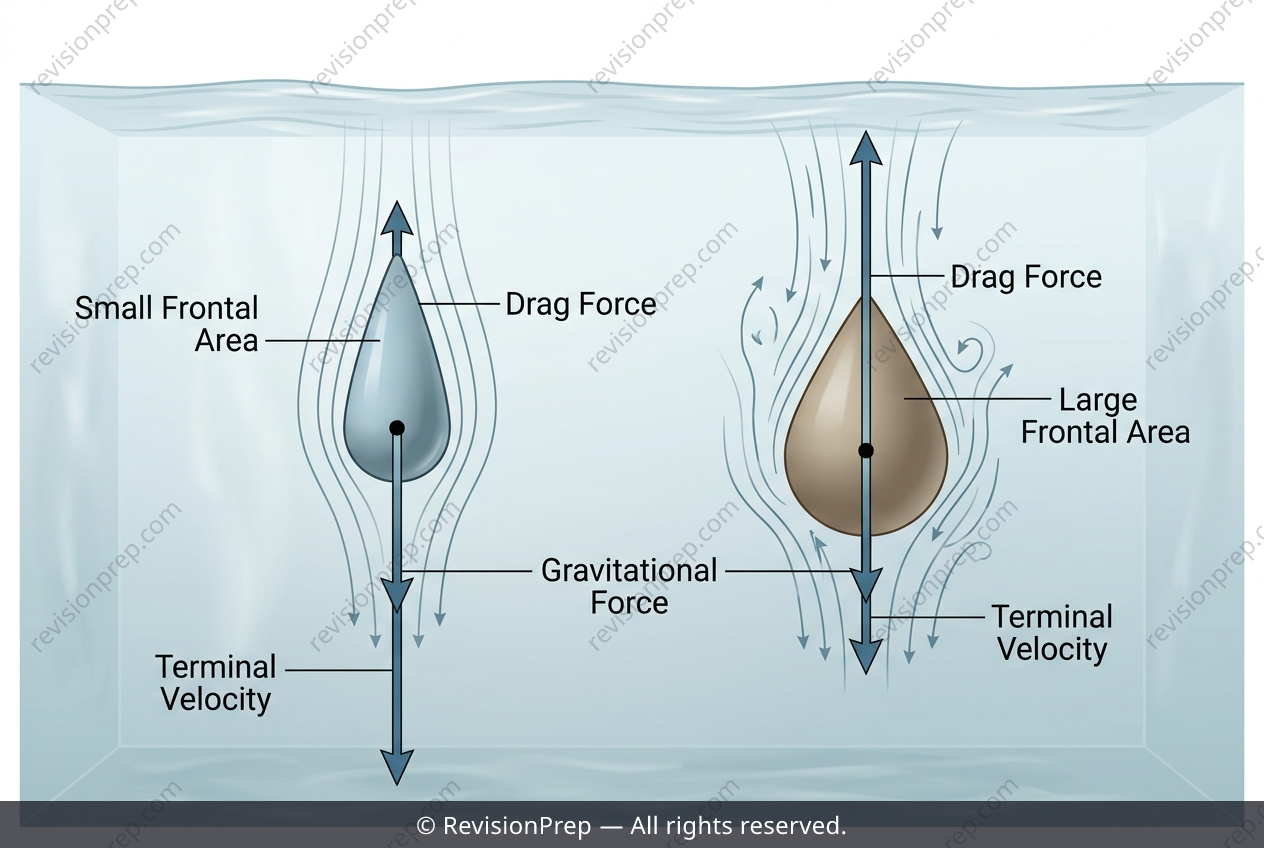
When an object moves through a fluid—whether air or water—it doesn’t travel unopposed. The fluid pushes back, generating a resistive force that we call drag (in air) or water resistance (in water). This force is the heart of fluid resistance, and it scales directly with the object’s surface area and its speed. For a falling object, this drag acts upward, opposing gravity’s downward pull. The key relationship is that net force = weight − drag; as speed increases, drag increases until it equals weight, at which point acceleration stops and the object reaches terminal velocity. Why does this matter? Because it explains why objects of identical mass can fall at very different rates through the same fluid. Consider three paper cones of equal mass but different opening sizes dropped in water. The cone with the smallest opening presents the least frontal surface area to the fluid, so it collides with fewer water particles, experiencing minimal drag. The largest opening, by contrast, presents the greatest surface area, maximising the number of particle collisions and thus the upward drag force. That larger drag slows its acceleration, meaning it takes longer to reach the bottom—even though all cones have the same weight. The mechanism is simple: more surface area → more fluid resistance → smaller net downward force → slower fall. This connection between geometry, drag, and motion is what governs everything from parachutes to sediment settling in oceans.
Start practising IB questions today
150,000+ IB-styled questions, criteria-mapped and instantly accessible.