
Physics: Why a Book Doesn't Fall Through a Table
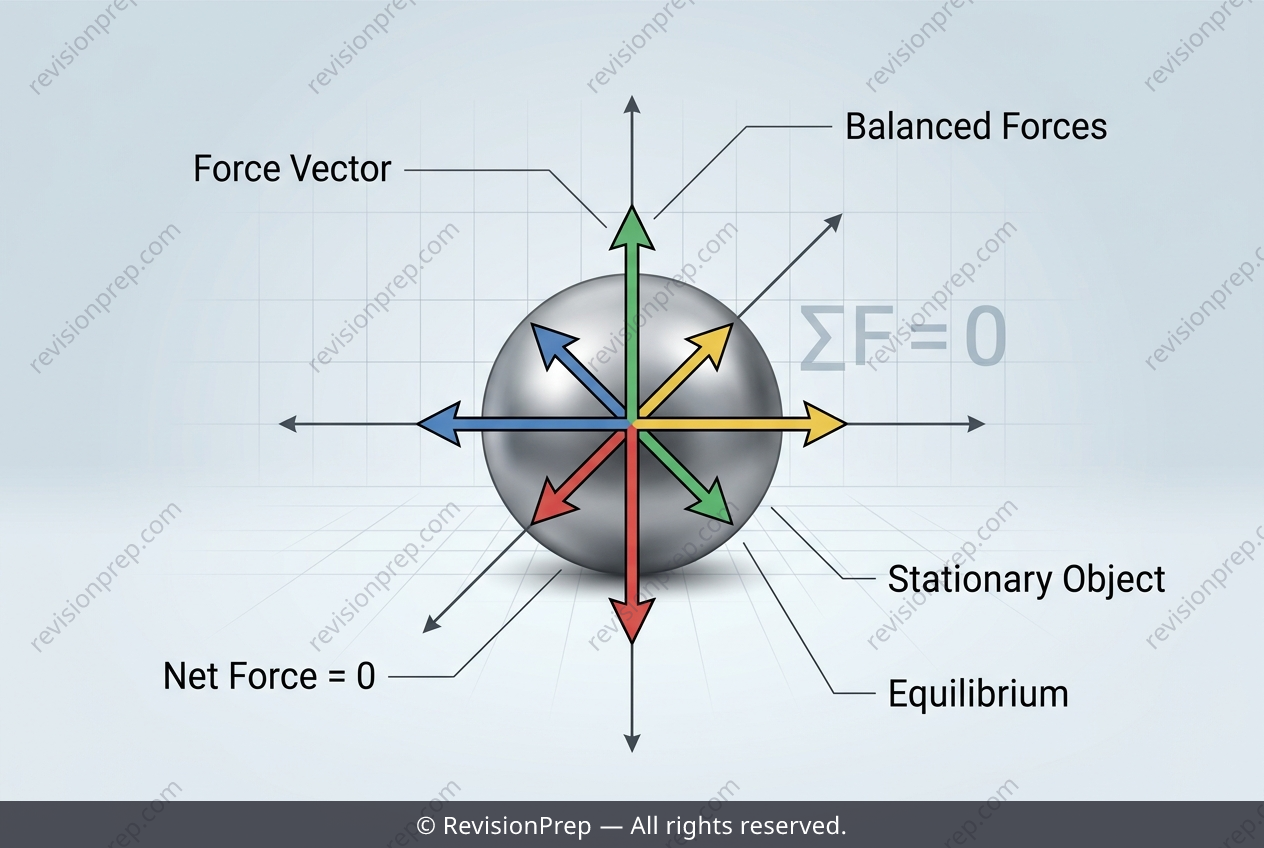
When you place a book on a table, it stays perfectly still—yet it is not free from forces. In physics, this stillness is a clue: the book is in a state of static equilibrium, meaning the forces acting on it are perfectly balanced. The core idea is that forces are not just pushes or pulls; they are vectors with both size (magnitude) and direction. When multiple forces act on an object, they combine into a single net force. If that net force is zero, the object’s motion does not change—so if it was at rest, it remains at rest. Here, two key forces are at play. Gravity (or weight) pulls the book downward toward Earth’s centre. The table responds with an upward support force (also called the normal or reaction force). These two forces are equal in magnitude and opposite in direction, so they cancel each other out. This balance is not a coincidence—it is a direct result of Newton’s first law: an object at rest stays at rest unless an unbalanced force acts on it. Understanding this relationship between gravity, support force, and net force helps explain why objects feel “heavy” yet don’t fall through tables, and it forms the foundation for analysing more complex systems where forces are not balanced.
Start practising IB questions today
150,000+ IB-styled questions, criteria-mapped and instantly accessible.