
Physics: Why Surface Roughness Affects Friction
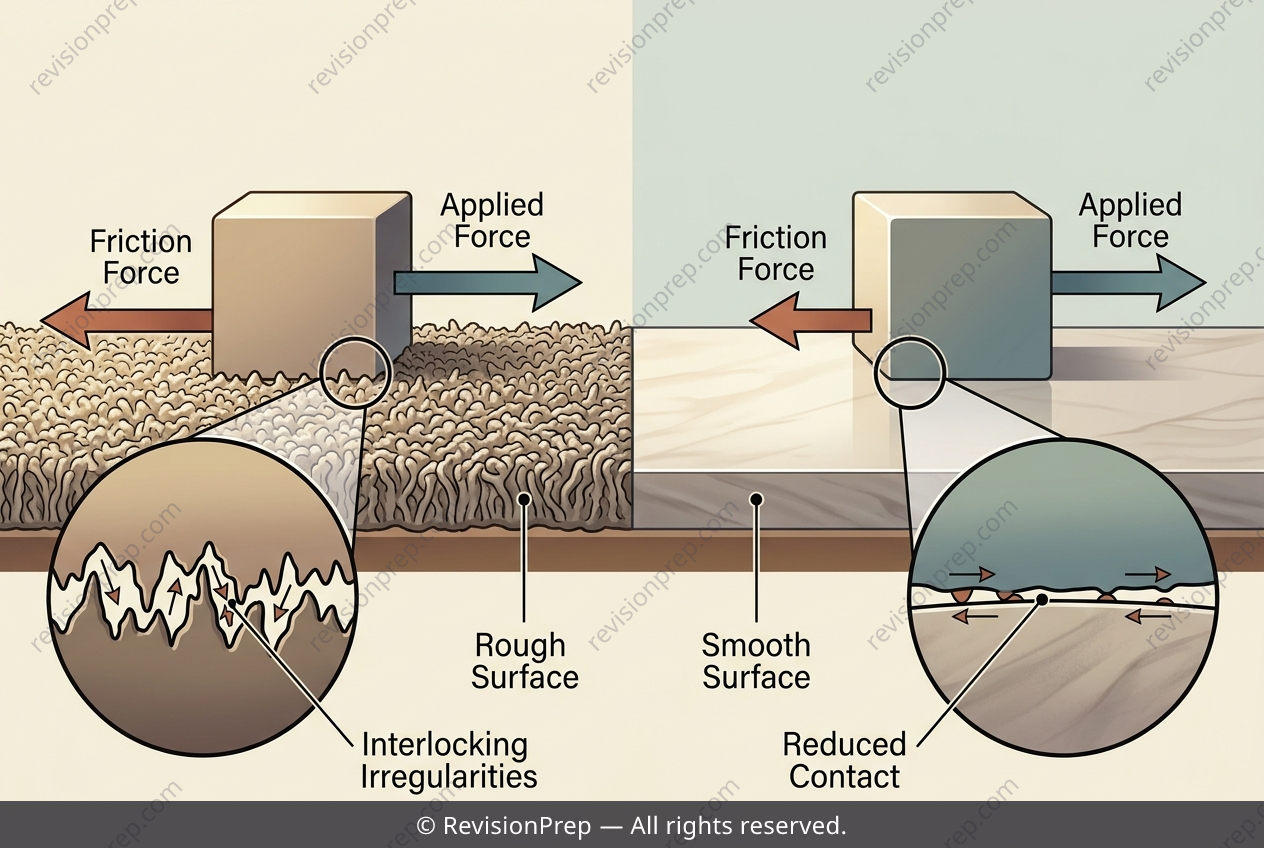
Friction is the force that resists motion between two surfaces in contact, and its size depends heavily on the nature of those surfaces. When you push a heavy box across a carpeted floor versus a tiled floor, the difference you feel is not about weight but about surface roughness at the microscopic level. Carpet has many irregular fibres that interlock with the box’s base, creating a large frictional force, while tile is comparatively smooth, offering far less resistance. The key relationship here is that friction increases with surface roughness and the force pressing the surfaces together, meaning the same box experiences very different opposing forces depending on the floor. This concept matters because friction governs how easily objects move in everyday settings—from sliding furniture to designing safe play areas. On carpet, high friction strongly opposes motion, making the box harder to push and slowing it down quickly; on tile, low friction allows the box to glide with less effort. These differences are exploited deliberately: carpets are used on stairs to prevent slipping, while smooth tiles are chosen in warehouses where heavy equipment must be moved efficiently. Understanding that friction is not a fixed property but a response to surface interaction helps explain why the same push produces such different outcomes—and why choosing the right surface is a practical engineering decision.
Start practising IB questions today
150,000+ IB-styled questions, criteria-mapped and instantly accessible.