
Maths: Discount Then Tax — Order Matters
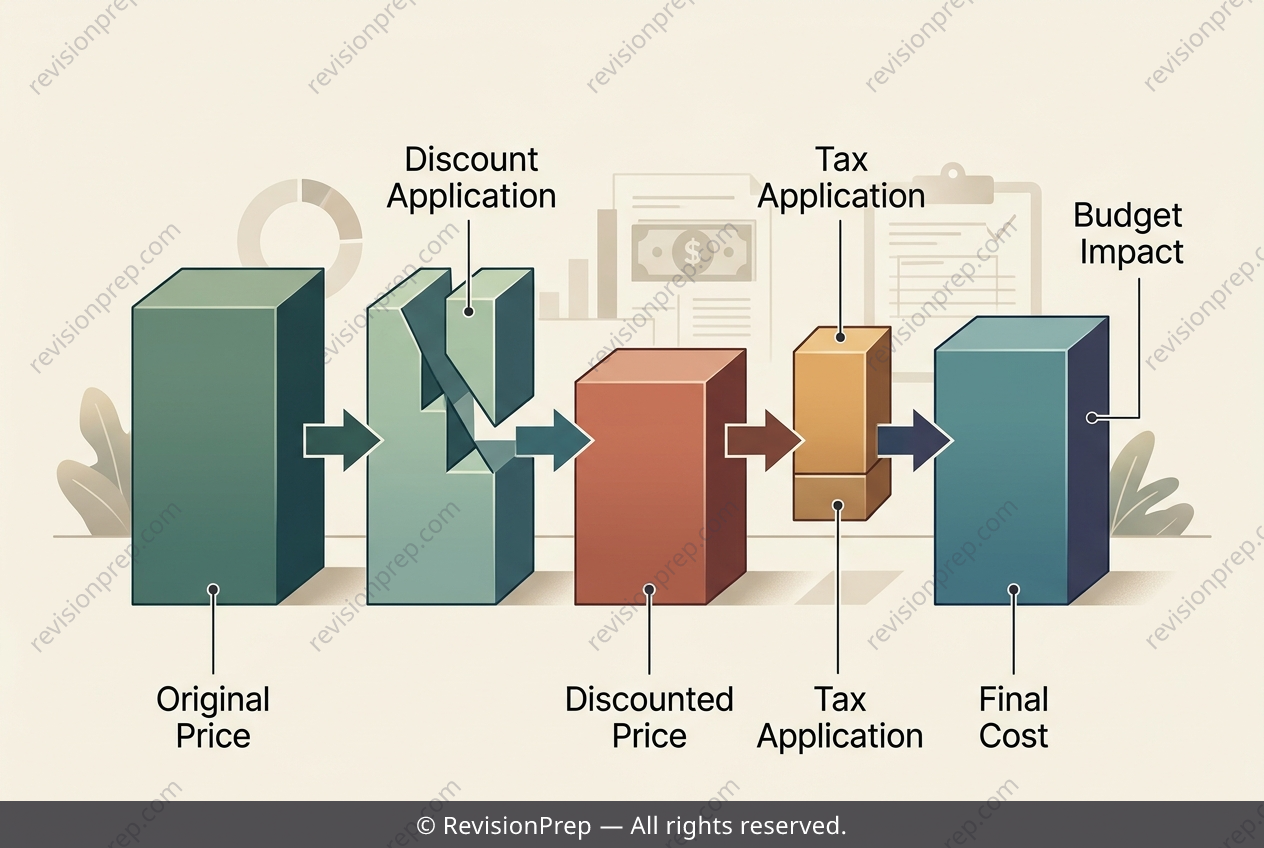
Percentages rarely act alone in real-world finance—they stack. This question explores sequential percentage change, where a discount and a sales tax are applied one after another to the same starting price. The core mechanism is that each percentage operates on the current value, not the original one. Here, the 30% discount reduces the 45 price first, and then the 5% tax is calculated on that reduced amount, not on the original45. This order matters: applying tax to the original price would yield a different, higher total. Understanding this sequence is vital for budgeting, because a single percentage figure—like “30% off”—tells only part of the story. The discount ignores additional charges that follow, such as sales tax, which inflate the final cost beyond what the discount alone suggests. By working through the discount amount, then the discounted price, then the tax on that new subtotal, you see how each step compounds or offsets the previous one. This builds a realistic picture of actual money spent, revealing why a budget based solely on the advertised discount will fall short of the true total.
Start practising IB questions today
150,000+ IB-styled questions, criteria-mapped and instantly accessible.