
Maths: Is a 'Free' Item Really Tax-Free?
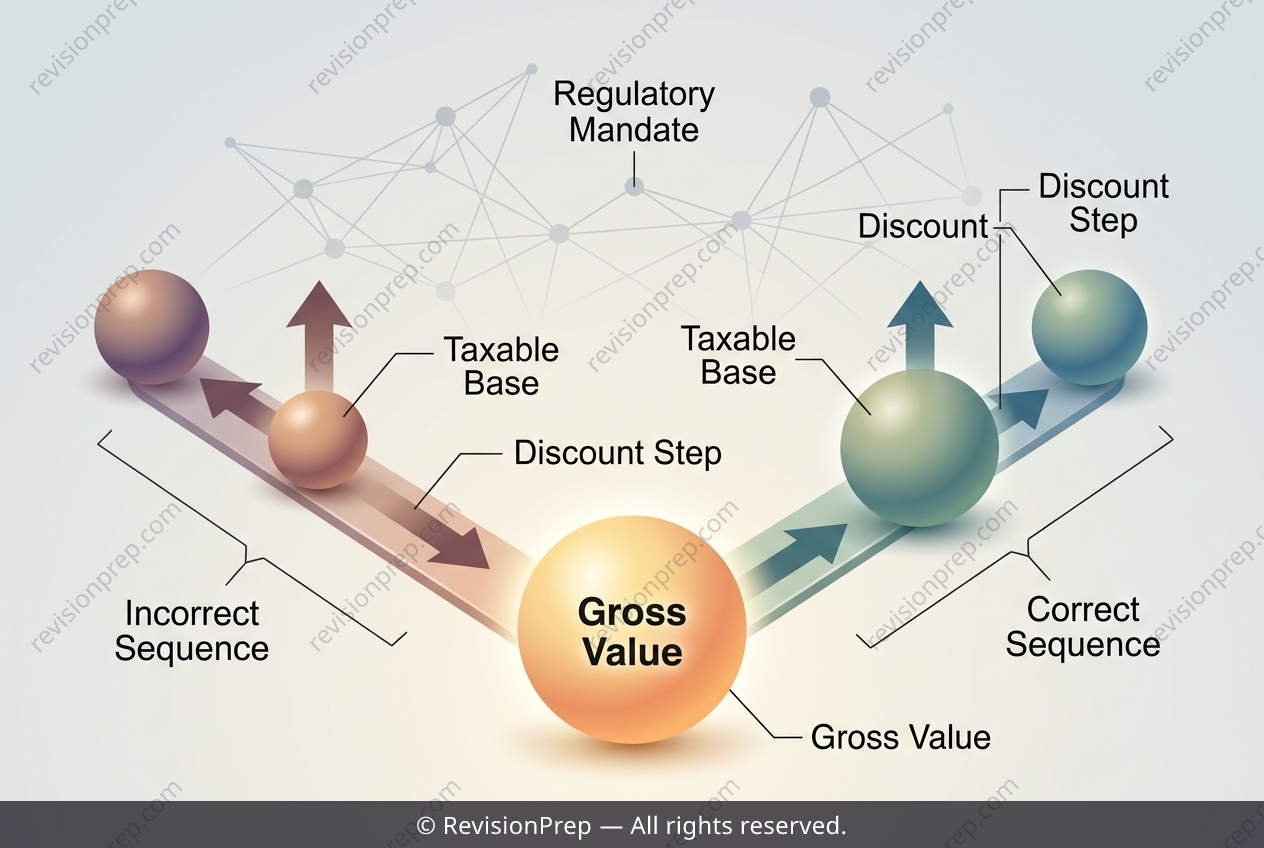
When a shop advertises a promotion like “Buy 2, Get 1 Free,” the immediate appeal is obvious—three items for the price of two. But beneath that simple arithmetic lies a more subtle financial concept: the taxable base, or the exact amount on which a tax like GST is legally calculated. In this scenario, the core issue is not the discount itself, but how tax regulations define the value of the transaction, especially when items are given away as part of a deal. The student’s model treats the promotion as a pure two-item purchase, applying the 8% GST only to the 1000 dollars actually paid. However, many tax jurisdictions require GST to be charged on the full transaction value of all items received—including the “free” one. This means the taxable base expands to 1500 dollars (three items at 500 each), not 1000. The relationship is straightforward: final price = (number of items received × unit price) × (1 + tax rate). The distinction matters because misidentifying the taxable base understates the tax owed, leading to a final price that is legally incorrect—and significantly lower than what the customer must actually pay.
Start practising IB questions today
150,000+ IB-styled questions, criteria-mapped and instantly accessible.