
Maths: Markup vs Discount — Same Price, Two Paths
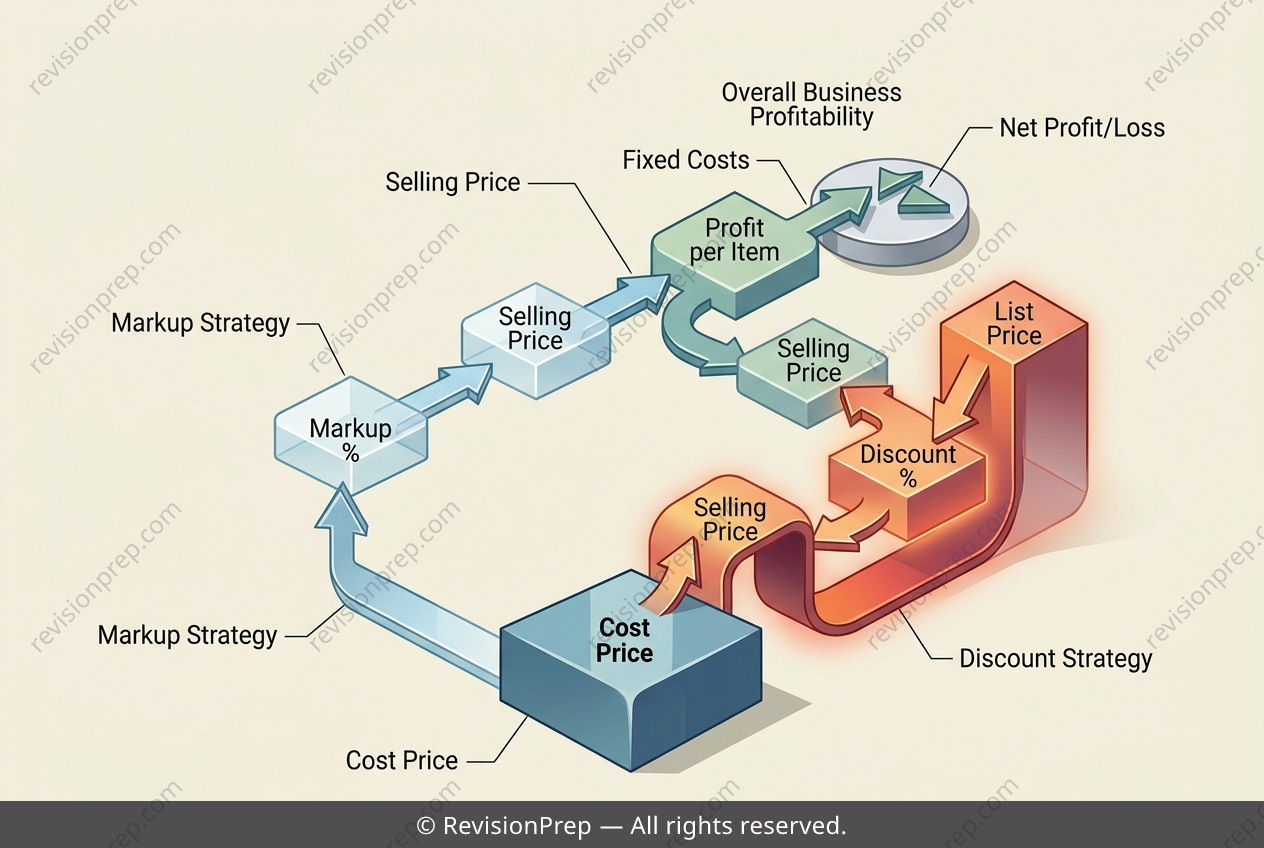
Percentage changes are the quiet engines behind pricing decisions, turning a simple cost into a selling price and ultimately determining whether a business thrives or merely survives. At its heart, this topic asks you to move fluidly between two directions: a percentage increase (like a markup on cost) and a percentage decrease (like a discount off a list price). The key relationship is that both operations act on different bases—a markup multiplies the cost price, while a discount multiplies the original list price—so identical percentage figures do not guarantee identical outcomes. What makes this concept powerful is how it connects arithmetic to real-world strategy. In a typical scenario, a business might compare a 40% markup on a 50 cost against a 30% discount on a100 list price. The marking scheme reveals that both paths can converge on the same selling price and profit per item, yet the choice between them is rarely neutral. The discount strategy plays on customer psychology—perceived value and the thrill of a “deal”—while the markup approach offers internal clarity and cost-plus logic. Beyond the single item, these percentages feed into weekly gross profit, which must then absorb fixed costs like rent. Only by subtracting those fixed costs from the total contribution margin can you judge whether a pricing strategy truly leads to net profitability—showing that percentage math is not just about numbers, but about the story those numbers tell about a business’s health.
Start practising IB questions today
150,000+ IB-styled questions, criteria-mapped and instantly accessible.