
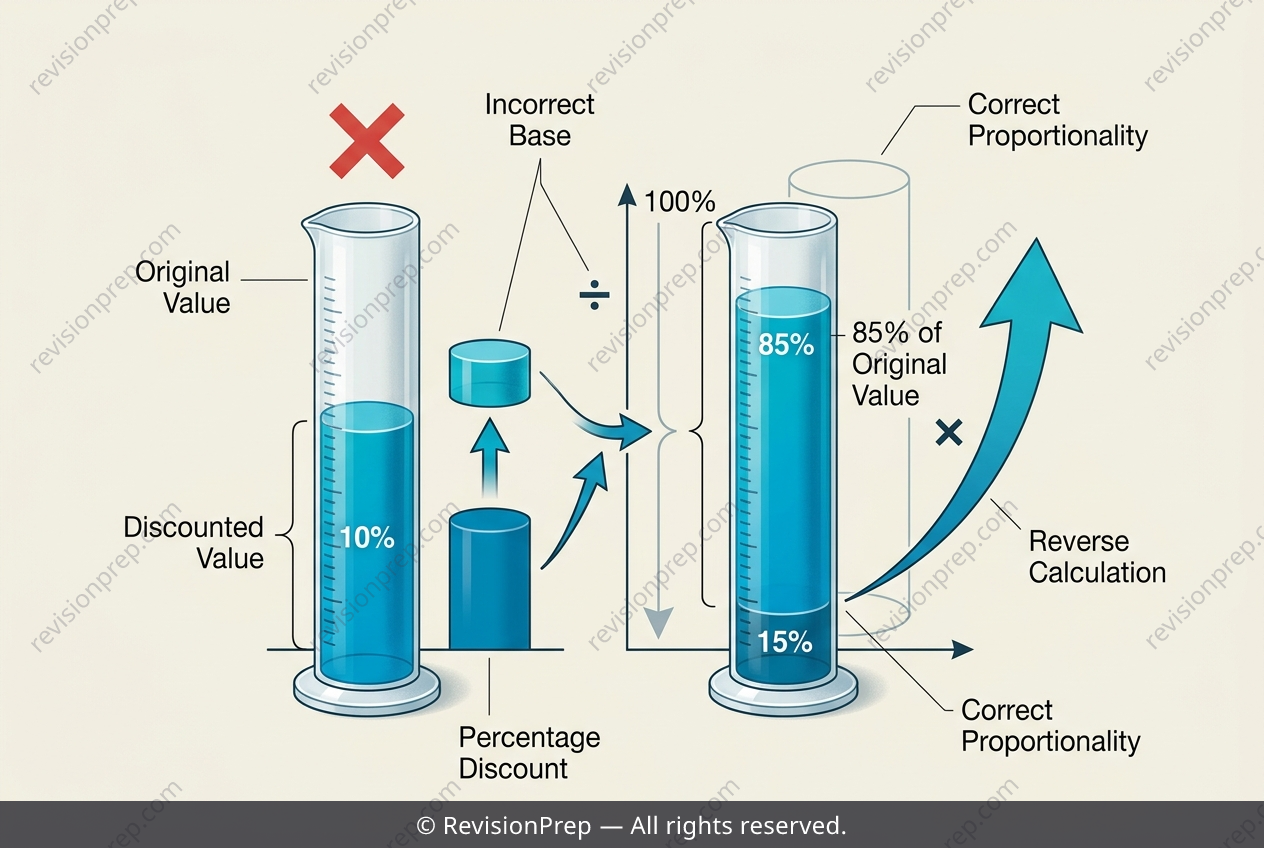
Maths: Reverse Percentages — Why Adding Back Fails
Reverse percentage problems are all about working backwards from a changed value to find the original amount. When a price is reduced by a discount, the final figure you see is not the starting point—it is the result of a percentage taken off the original. The core relationship is simple: if a 15% discount is applied, you are actually paying 85% of the original price, which can be written as 0.85x = final price. Solving for x means dividing by 0.85, not adding 15% of the discounted amount back on. This distinction matters because percentages are always relative to a specific base. A common trap is to calculate 15% of the reduced price and add it back, but that mistakenly treats the final amount as the base. The original price is the base for the discount, so the reversal must use division by the remaining percentage (0.85), not addition of a percentage of the new total. Furthermore, this method assumes the discount is purely proportional and that no other factors—like taxes or rounding—interfere with the price. Understanding this reversal is essential for everything from shopping sales to interpreting financial data, where knowing the true original value drives better decisions.
Start practising IB questions today
150,000+ IB-styled questions, criteria-mapped and instantly accessible.