
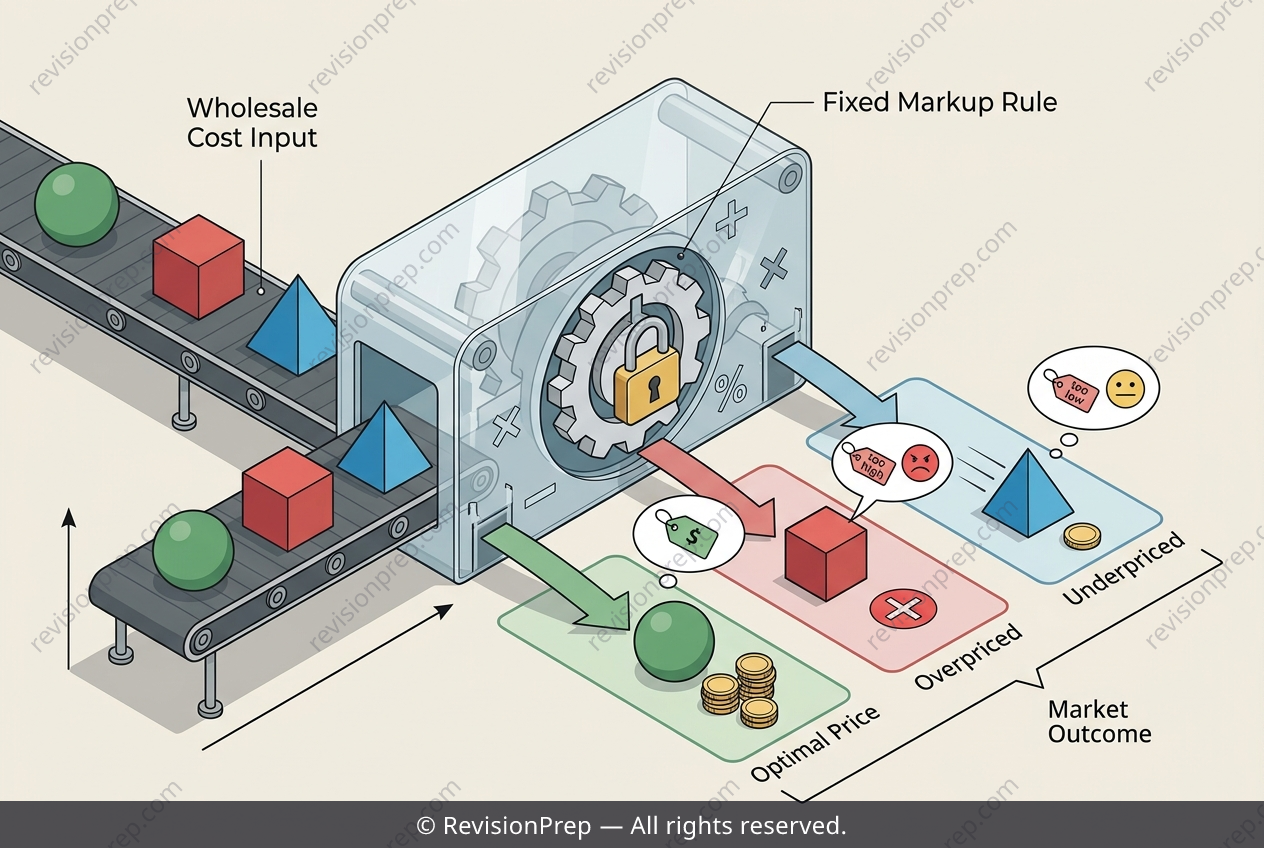
Maths: Why One Markup Rate Can't Fit All
Percentage increase and decrease is one of the most practical tools in mathematics—it governs how prices shift, how discounts bite, and how profit margins are built. At its heart, the concept is simple: you take a base value, multiply it by a percentage expressed as a decimal, and either add or subtract that result to find the new value. But the real power lies in using this operation to model real-world decisions, such as a store’s pricing strategy. In this context, a fixed markup is a rule that applies the same percentage increase to the wholesale cost of every item. The formula is straightforward: predicted selling price = wholesale cost + (markup percentage × wholesale cost). However, as the marking scheme reveals, a single fixed percentage can be a blunt instrument. When the actual selling price deviates from the prediction, it signals that the model fails to capture something important—perhaps the item’s demand, brand value, or market positioning. The relationship between cost, markup, and final price is not just arithmetic; it’s a lens for evaluating whether a pricing model is effective or limited. A rigid rule may underprice high-demand goods, leaving profit on the table, while overpricing slow movers. Understanding this interplay helps you see percentages not as isolated calculations, but as levers in a broader economic system.
Start practising IB questions today
150,000+ IB-styled questions, criteria-mapped and instantly accessible.