
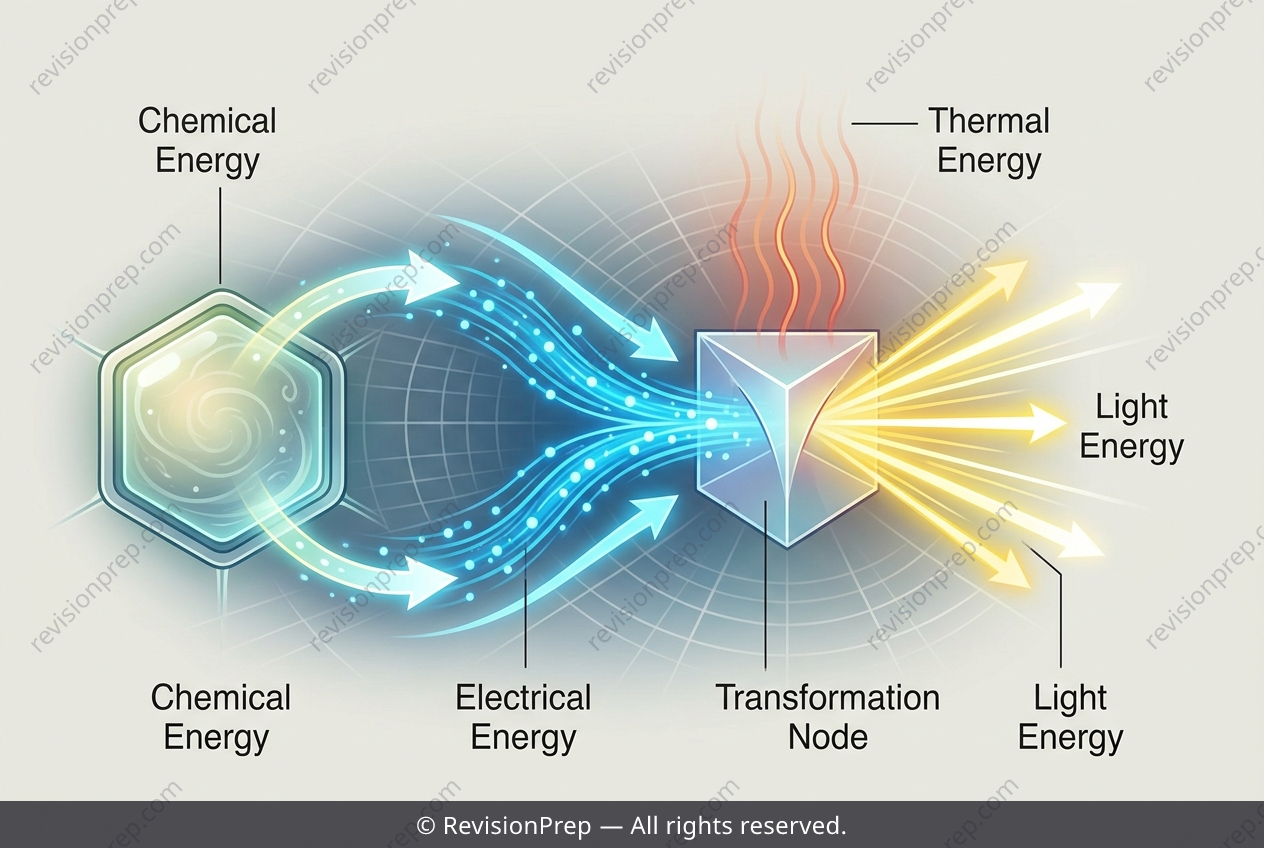
Physics: Chemical to Light — Tracing a Flashlight
Energy transformations are the invisible engines behind every device we use, and understanding them is the first step to mastering how the universe conserves its most fundamental currency: energy. In the IB Sciences, the principle of conservation states that energy cannot be created or destroyed—it only changes form. When you flick on a flashlight, you are not creating light; you are converting the stored potential inside a battery into other, more useful forms of energy. The core of this topic lies in tracing the input and output pathways of a system. In a simple flashlight, the chemical energy held within the battery’s cells is the initial reservoir. Once the circuit closes, this chemical potential energy is released and transformed, primarily into light energy that illuminates your path. However, no real-world transformation is perfectly efficient. As the electrical current flows through the filament or LED, resistance causes some of that energy to dissipate as thermal (heat) energy. Recognising that both light and heat are simultaneous outputs—not just one—is essential, because it reflects the real, lossy nature of energy conversion while still obeying the law of conservation.
Start practising IB questions today
150,000+ IB-styled questions, criteria-mapped and instantly accessible.