
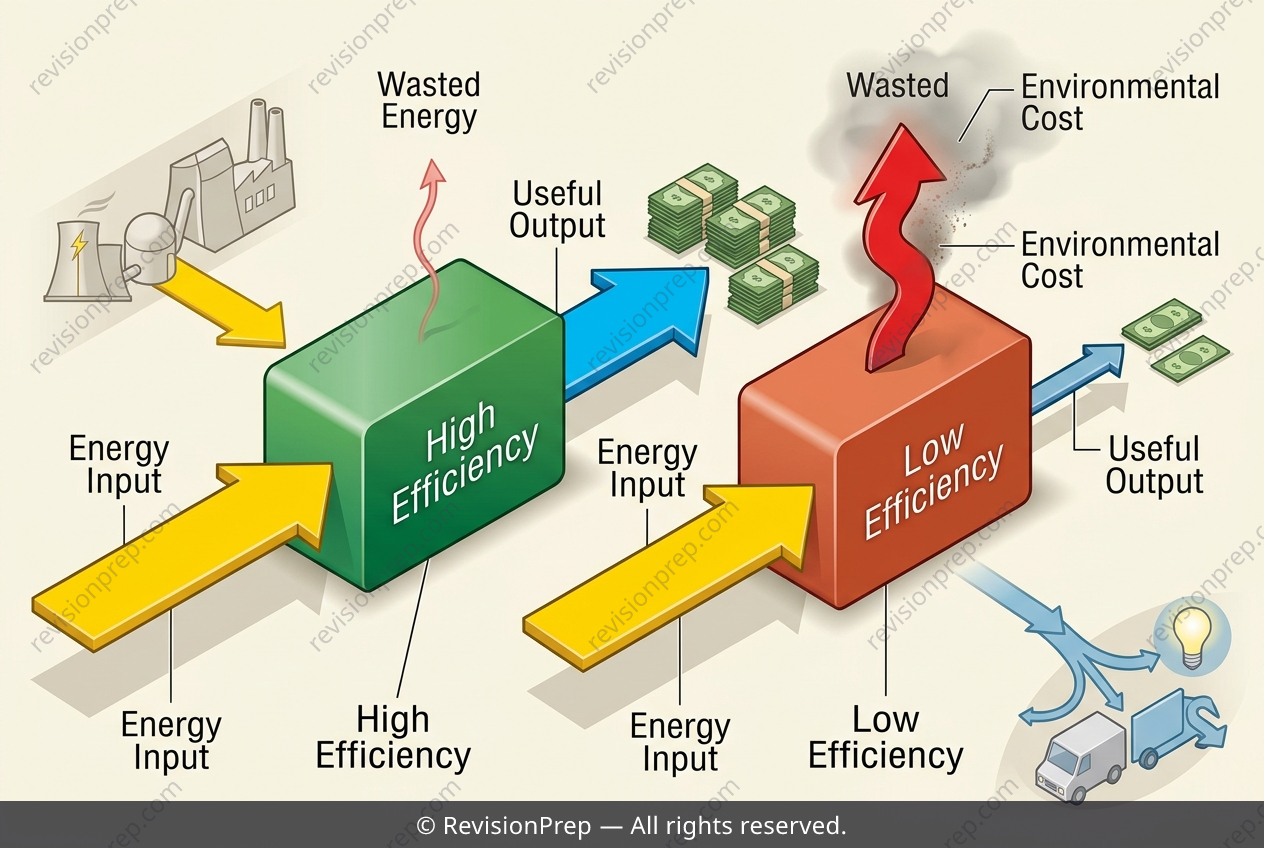
Physics: Efficiency — More Output, Less Wasted Energy
Energy efficiency is, at its core, a measure of how much useful output you get for every unit of energy you put in. In everyday appliances, this translates directly into the ratio of service provided—like cooling, heating, or lighting—to the electricity consumed. The star rating system exists to make this abstract ratio tangible, allowing consumers to compare models that deliver identical performance but draw very different amounts of power from the grid. This concept matters far beyond the physics lab because it sits at the intersection of personal economics and global environmental impact. When two refrigerators offer the same cooling but one uses significantly less electricity, the difference represents energy that is simply wasted as heat rather than used for work. Choosing the more efficient model means less fuel burned at power plants, which reduces greenhouse gas emissions and lowers household utility bills simultaneously. The relationship is straightforward: efficiency = useful output ÷ energy input, and a higher star rating signals a better ratio, meaning less wasted energy for the same result.
Start practising IB questions today
150,000+ IB-styled questions, criteria-mapped and instantly accessible.