
Physics: Energy In, Energy Out — Reaching Balance
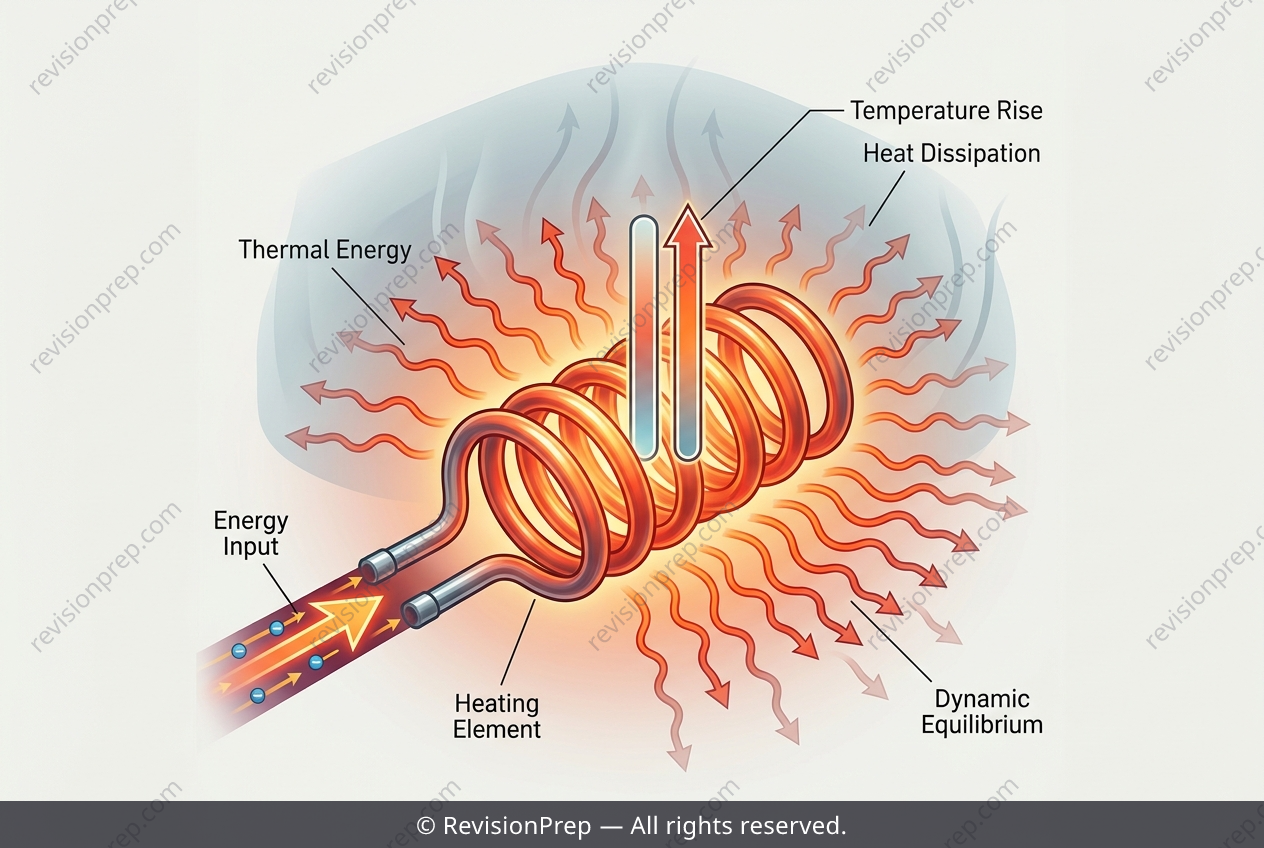
Energy transformations are all around us, often hiding in plain sight—inside a toaster, for instance, where electrical energy is converted into the thermal energy that browns your bread. At its heart, this topic explores how energy shifts from one form to another, and crucially, how that transfer is never perfectly efficient. The core concept here is dynamic energy transfer: the idea that energy doesn’t just flow in one direction, but interacts continuously with its surroundings, driving changes in temperature and ultimately settling toward thermal equilibrium. The data from a simple heating element reveals this beautifully. As electrical energy is pumped in, the element’s temperature climbs, but not at a constant rate. Early on, the temperature leaps dramatically—gaining 200 °C in the first 30 seconds—because the element is still cool and loses little heat to the air. As it gets hotter, the gap between the element and its environment widens, so thermal energy escapes faster. This means less of the incoming electrical energy goes into raising the temperature further, causing the rate of increase to slow. The relationship is a tug-of-war between energy input and energy loss, where the temperature rise reflects the net gain. Recognising this pattern helps explain why objects don’t simply heat up forever, but approach a balance where energy in equals energy out.
Start practising IB questions today
150,000+ IB-styled questions, criteria-mapped and instantly accessible.