
Physics: Why a Hair Dryer's Energy Never Vanishes
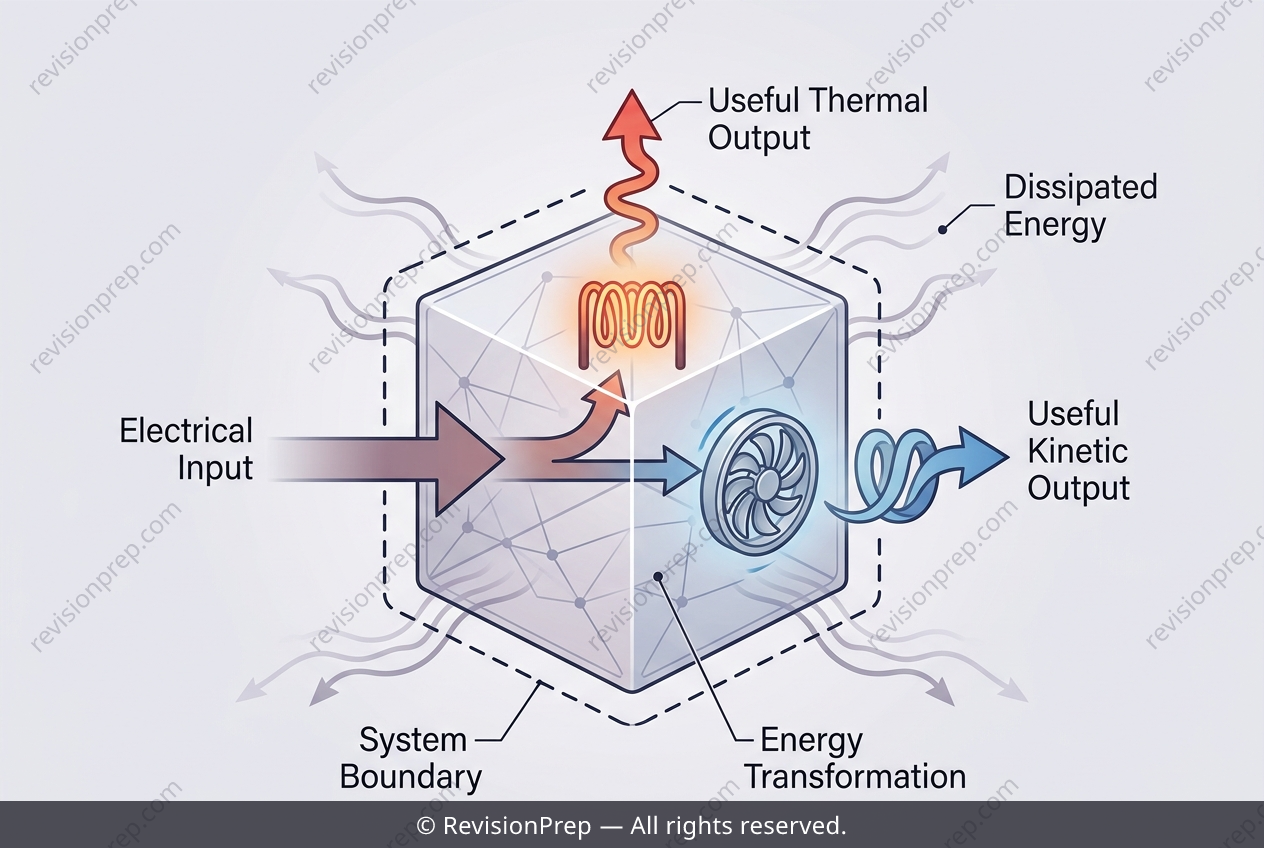
Energy transformations are all around us, but few everyday devices illustrate them as clearly as a hair dryer. At its core, this appliance is governed by the Law of Conservation of Energy: energy cannot be created or destroyed, only changed from one form to another. When you plug in a 1200 W hair dryer, you are supplying electrical energy at a rate of 1200 joules per second, and that energy must go somewhere—either into useful outputs or into losses that warm the surroundings. The hair dryer splits this input into distinct pathways. Inside, a heating element uses electrical resistance to convert electrical energy into thermal energy, while an electric motor in the fan transforms electrical energy into kinetic energy of the spinning blades and moving air. Yet the story does not end there. Some energy inevitably dissipates as heat through the plastic casing, meaning the total useful output (thermal plus kinetic) is always less than the electrical input. This gap between input and useful output is the essence of energy dissipation—a reminder that no real-world system is perfectly efficient. Understanding these transformations and losses helps explain why the air leaving the dryer is never as hot as the element itself, and why energy conservation always holds, even when energy seems to “disappear” into the room.
Start practising IB questions today
150,000+ IB-styled questions, criteria-mapped and instantly accessible.