
Physics: Why a Sea Breeze Always Blows Inland
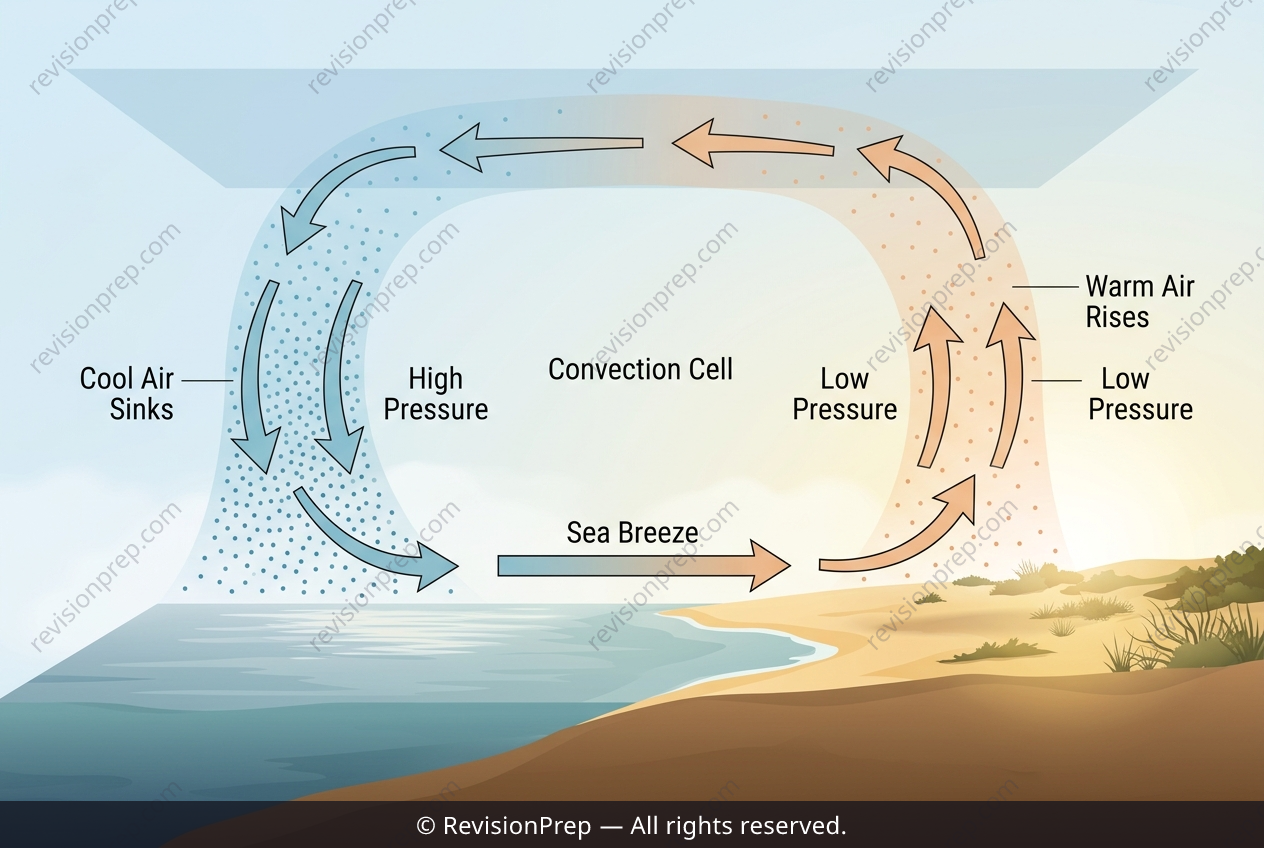
When the Sun beats down on a coastline, it doesn’t heat everything equally. Land absorbs and releases heat far faster than water, so during the day the ground warms the air directly above it more intensely than the sea warms its own overlying air. This uneven heating is the spark that sets the atmosphere in motion, creating a gentle but constant wind we call a sea breeze. The mechanism hinges on density. As the air over the land warms, its particles gain energy, spread apart, and become less dense. This lighter air then rises, leaving behind a region of lower pressure near the ground. Meanwhile, the air above the cooler sea remains denser and heavier. Nature abhors a vacuum, so this cooler, denser air flows horizontally from the sea toward the land, sliding in beneath the rising warm air to replace it. That directed movement—from sea to land—is the sea breeze itself, a direct consequence of convection driven by the density contrast between the two air masses.
Start practising IB questions today
150,000+ IB-styled questions, criteria-mapped and instantly accessible.