
Physics: Why Doubling Power Doesn't Double Heat
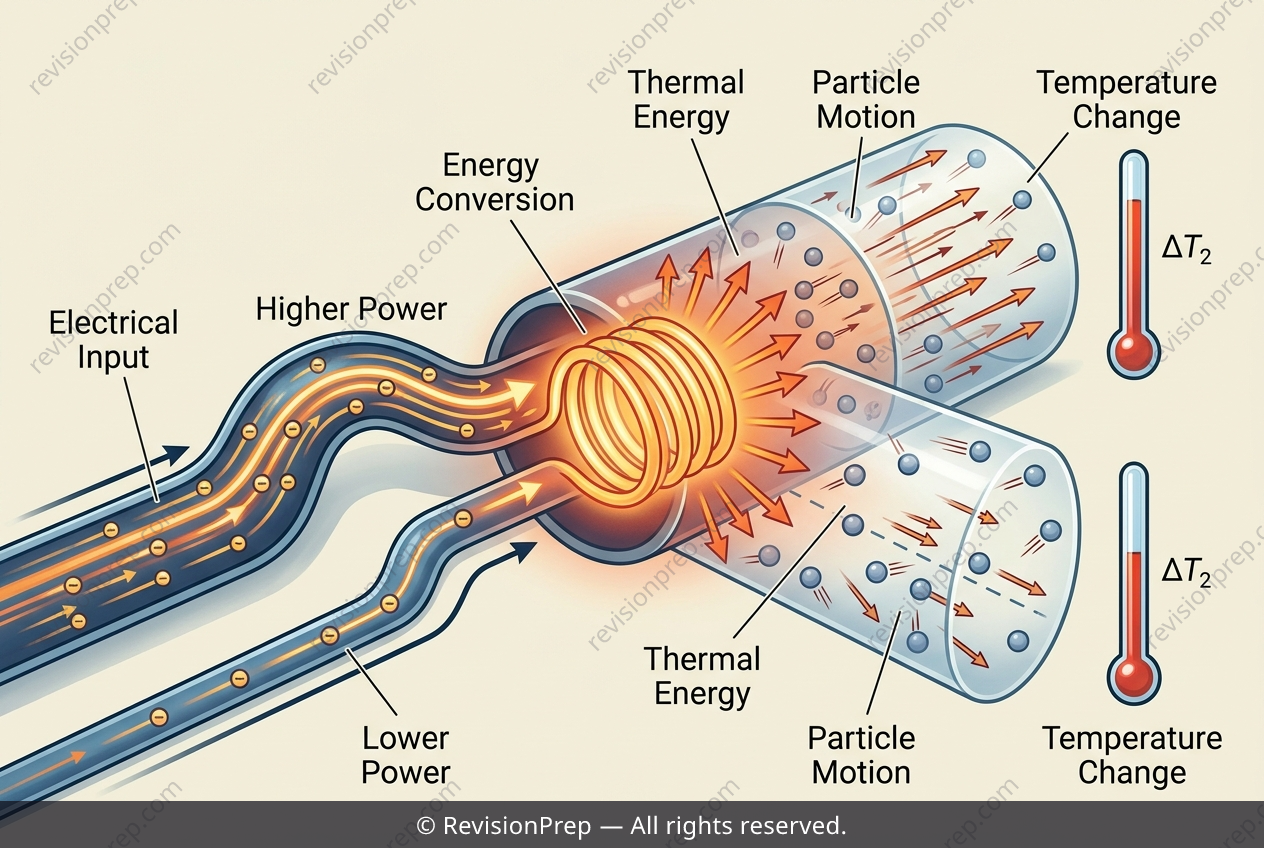
Energy transformations are all around us, from the electrical current heating a filament to the kinetic energy of moving air molecules. At its heart, this topic explores how energy changes from one form to another—most commonly, how electrical energy is converted into thermal energy. In everyday devices like a hair dryer, this conversion is not just a single event but a continuous process, where the rate of energy transfer directly influences the observable outcome: temperature. This concept matters because it explains why different power settings produce different results. A higher power setting doesn't just "work harder"—it converts more electrical energy into thermal energy every second. This greater energy input per unit time increases the average kinetic energy of the air particles, which we perceive as a rise in temperature. Crucially, the relationship between power and temperature rise is not always linear. While a doubling of power might suggest a doubling of energy, the actual temperature change depends on the energy transferred over time, the mass of air heated, and its specific heat capacity (Q = mcΔT). Understanding this distinction between energy input and temperature outcome is key to predicting and explaining real-world thermal behaviour.
Start practising IB questions today
150,000+ IB-styled questions, criteria-mapped and instantly accessible.