
Physics: Why Solar Panels Rarely Reach Full Output
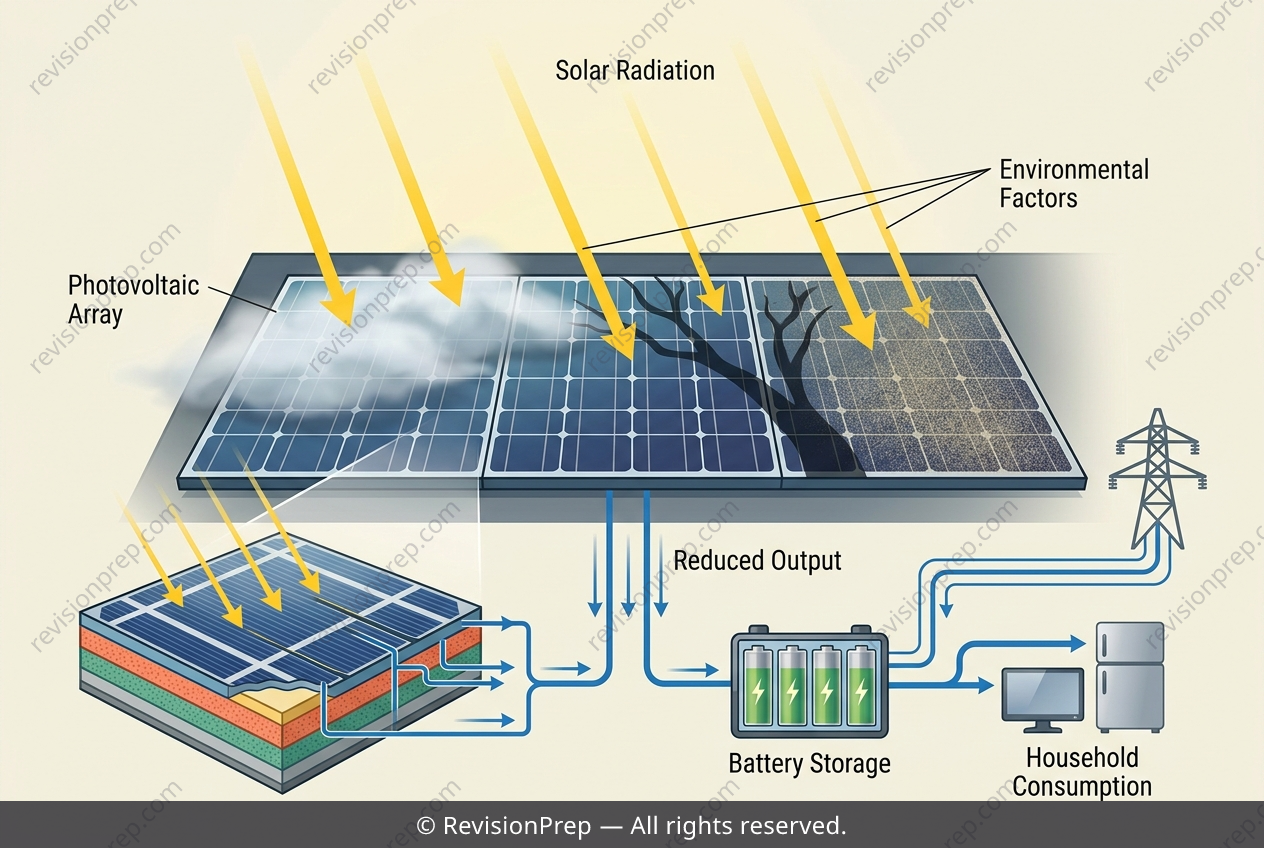
Solar panels are a familiar sight on rooftops, but their real-world performance is a story of energy transformation and loss. At their core, these systems convert light energy—also known as radiant or solar energy—directly into electrical energy, with no moving parts and no combustion. This single conversion step is why they offer a clean alternative to fossil fuels: unlike burning coal or gas, they release no greenhouse gases like CO₂, reducing air pollution and helping slow climate change. Yet the maximum rated output of a panel—say, 3 000 W on a clear summer day—is rarely what you actually get. Output depends on how much sunlight reaches the photovoltaic surface. Thin cloud cover scatters light, dust blocks photons, and partial shading physically prevents sunlight from hitting part of the panel, cutting the number of photons available for conversion. The percentage decrease in output is calculated as the drop from maximum divided by the original maximum, multiplied by 100. And because generation stops entirely at night, a household still draws from the grid unless surplus daytime energy is stored in a battery system for later use. Understanding these factors connects the physics of light to the practical engineering of a home energy system.
Start practising IB questions today
150,000+ IB-styled questions, criteria-mapped and instantly accessible.