
Chemistry: Why Phase Changes Keep Temperature Constant
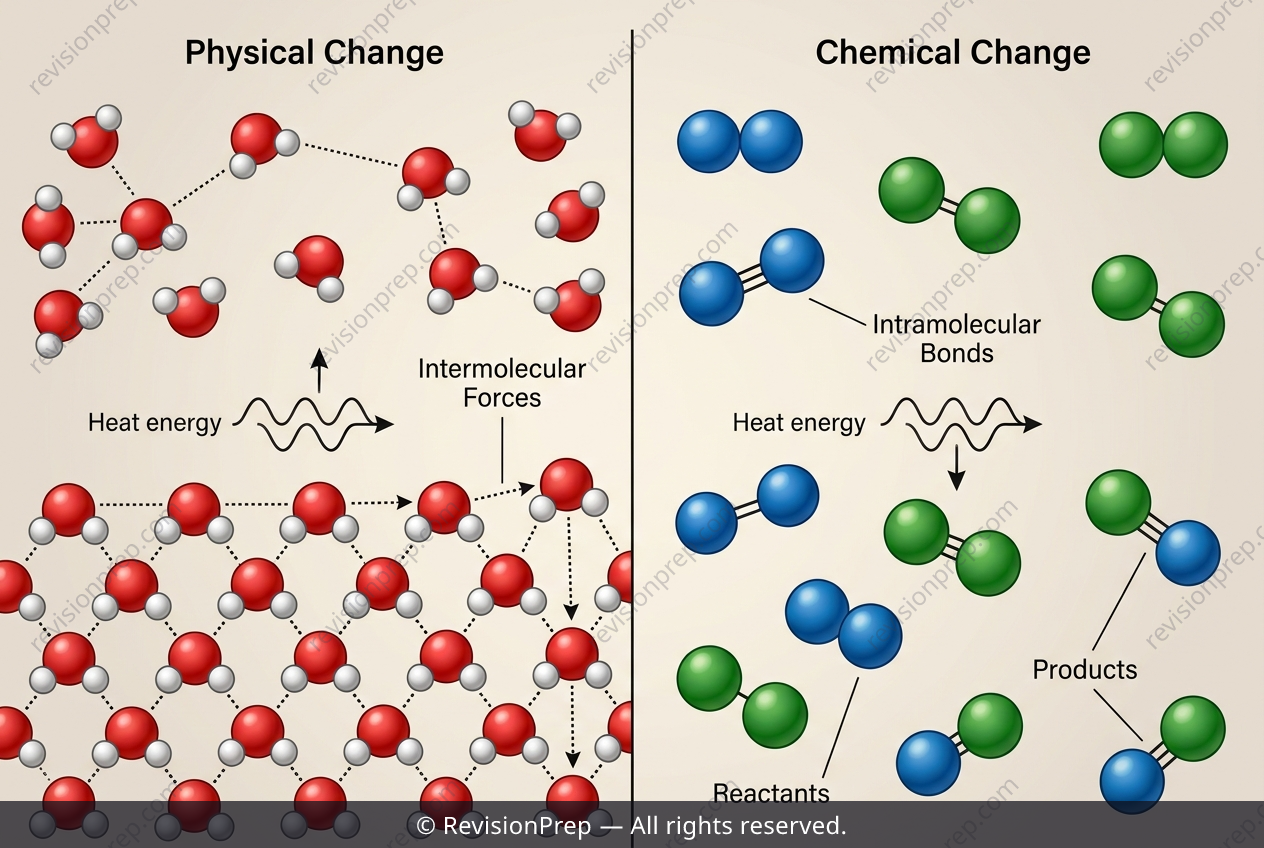
Heating a sample of water from ice at -10°C to steam at 120°C produces a temperature–time graph with three sloped segments and two horizontal segments. The sloped regions show temperature rising as energy is absorbed, while the flat regions reveal something subtler: energy is still entering the system, yet the temperature stays fixed. These plateaus occur at 0°C, where melting converts solid ice to liquid water, and at 100°C, where boiling converts liquid water to steam. At each plateau, the substance remains H2O throughout — no new chemical bonds form and no new substance appears. Only the arrangement and energy of the molecules change, which is the defining feature of a physical change. This distinction matters because energy absorption and dramatic visible transformation are not, by themselves, evidence of a chemical change; a chemical change requires a new substance with different chemical bonds. Recognising where temperature stays constant, and why, is therefore central to classifying changes correctly.
Start practising IB questions today
150,000+ IB-styled questions, criteria-mapped and instantly accessible.