
Chemistry: Molecular Structure Distinguishes Change Type
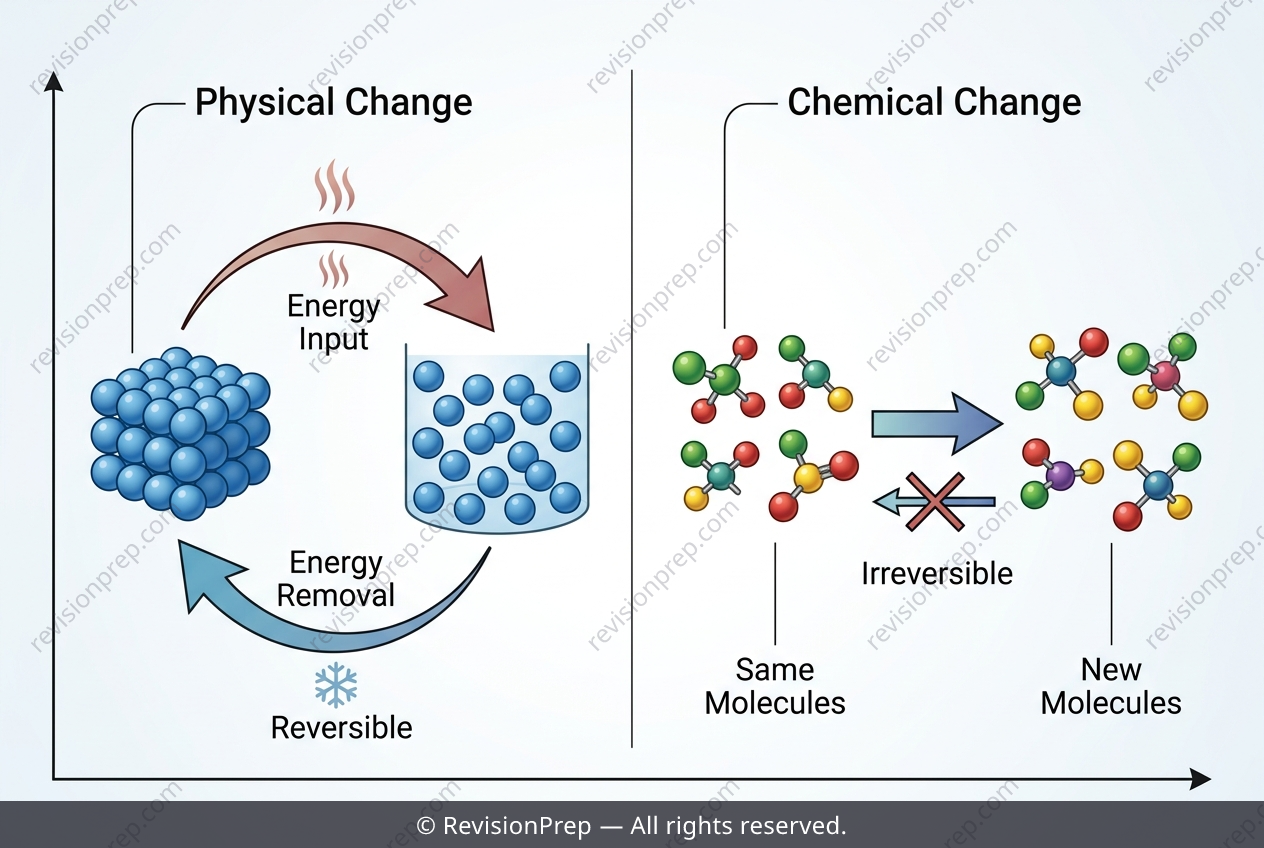
Physical and chemical changes describe two fundamentally different ways matter can transform. In a physical change, such as ice melting into liquid water and refreezing, the substance itself — water, H₂O — remains chemically identical throughout. Its molecular structure is unchanged; only the arrangement and energy of the molecules shift between solid and liquid states. Because no new substance forms, the process is reversible and can be repeated indefinitely. Chemical changes behave differently. When a raw egg is fried, heating causes the egg proteins to denature and coagulate: their three-dimensional structure is permanently broken down, and cooling cannot restore it. This irreversibility is the hallmark of a chemical change — new substances with new properties have formed. Recognising whether molecular structure survives a process, or is permanently altered, is the key to distinguishing physical from chemical change.
Start practising IB questions today
150,000+ IB-styled questions, criteria-mapped and instantly accessible.