
Maths: Currency Exchange and Its Hidden Costs
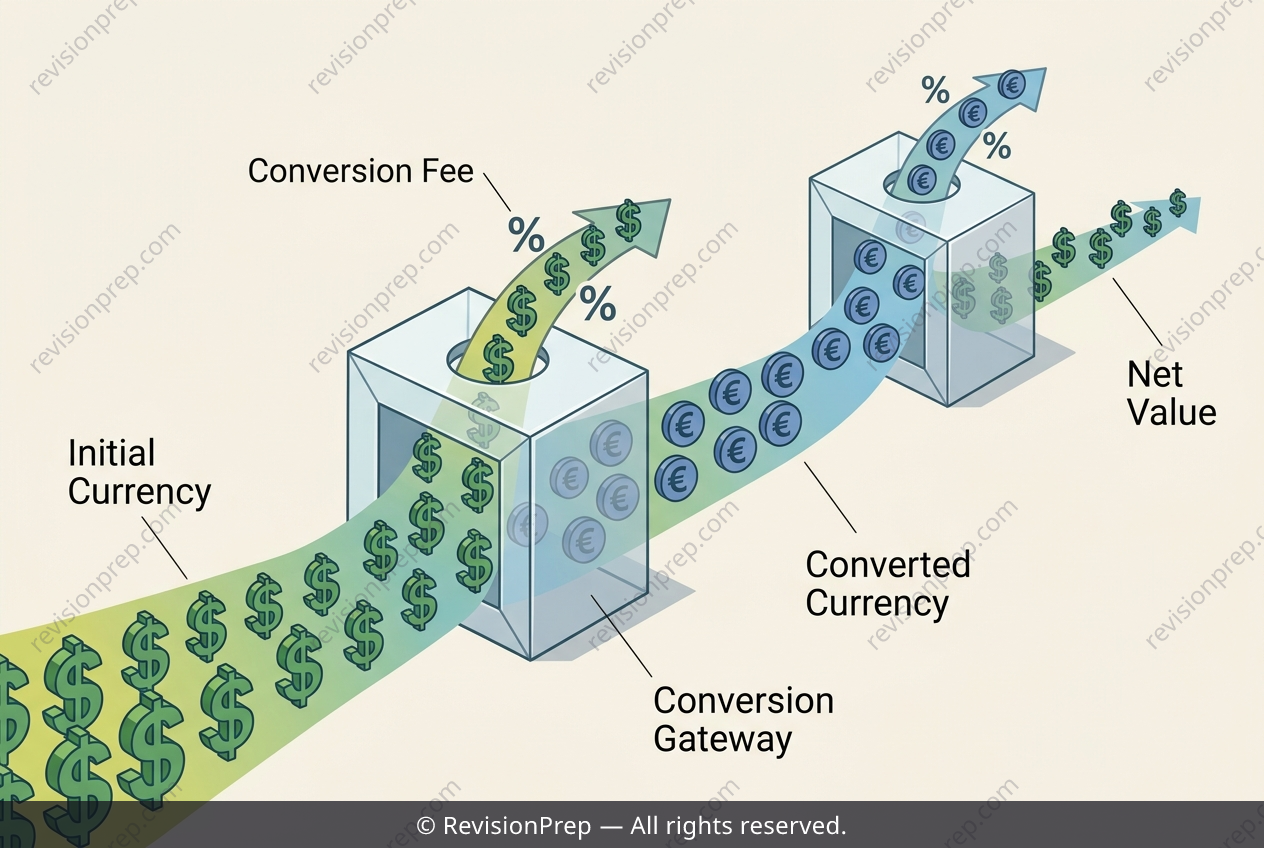
Currency exchange rarely behaves like a simple multiplication. When a business sends money abroad, two forces quietly shrink its value: the conversion fee, charged as a percentage of the amount sent, and the exchange-rate spread between buying and selling a currency. Together they turn an apparently straightforward transaction into a layered calculation. The key idea is that fees are applied before the rate, so the usable amount becomes 0.98x or 0.985x rather than x. Working backwards from a required foreign amount means solving 0.98x × 0.90 = 15 000 for x, while converting back involves subtracting the fee first, then multiplying by the new rate. Reversing a transaction never restores the original sum, because each fee and each rate direction erodes value. Understanding this round-trip loss matters for cash-flow planning, where even a fraction of a percent changes real budgets.
Start practising IB questions today
150,000+ IB-styled questions, criteria-mapped and instantly accessible.