
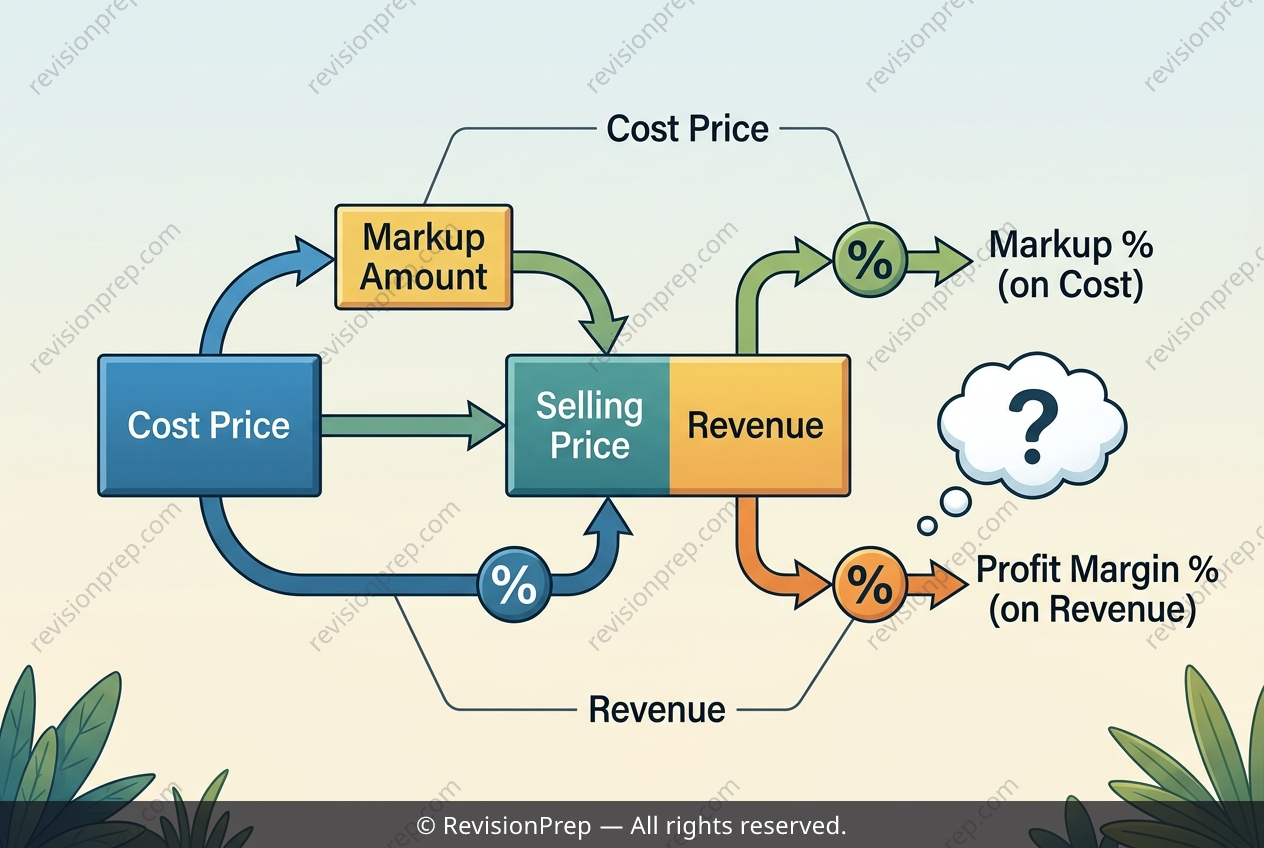
Maths: How Markup and Margin Measure Profit Differently
Markup and profit margin are two ways of expressing the same profit, and confusing them is one of the most common errors in financial mathematics. Markup compares profit to the cost price, while profit margin compares it to the selling price. Both begin with the same raw figure: selling price minus cost price. The distinction matters because each measure uses a different base, and changing the base changes the percentage entirely. A retailer who calculates profit as a fraction of cost price, (selling price − cost price) / cost price × 100, will always report a larger figure than one who calculates it as a fraction of revenue, (selling price − cost price) / selling price × 100. This is why a markup that sounds generous can translate into a much smaller share of every dollar taken at the till. Understanding which base is being used — and why the two percentages can never be equal for a positive profit — is the key skill in this topic.
Start practising IB questions today
150,000+ IB-styled questions, criteria-mapped and instantly accessible.