
Maths: How Nanoparticle Models Shape Medical Decisions
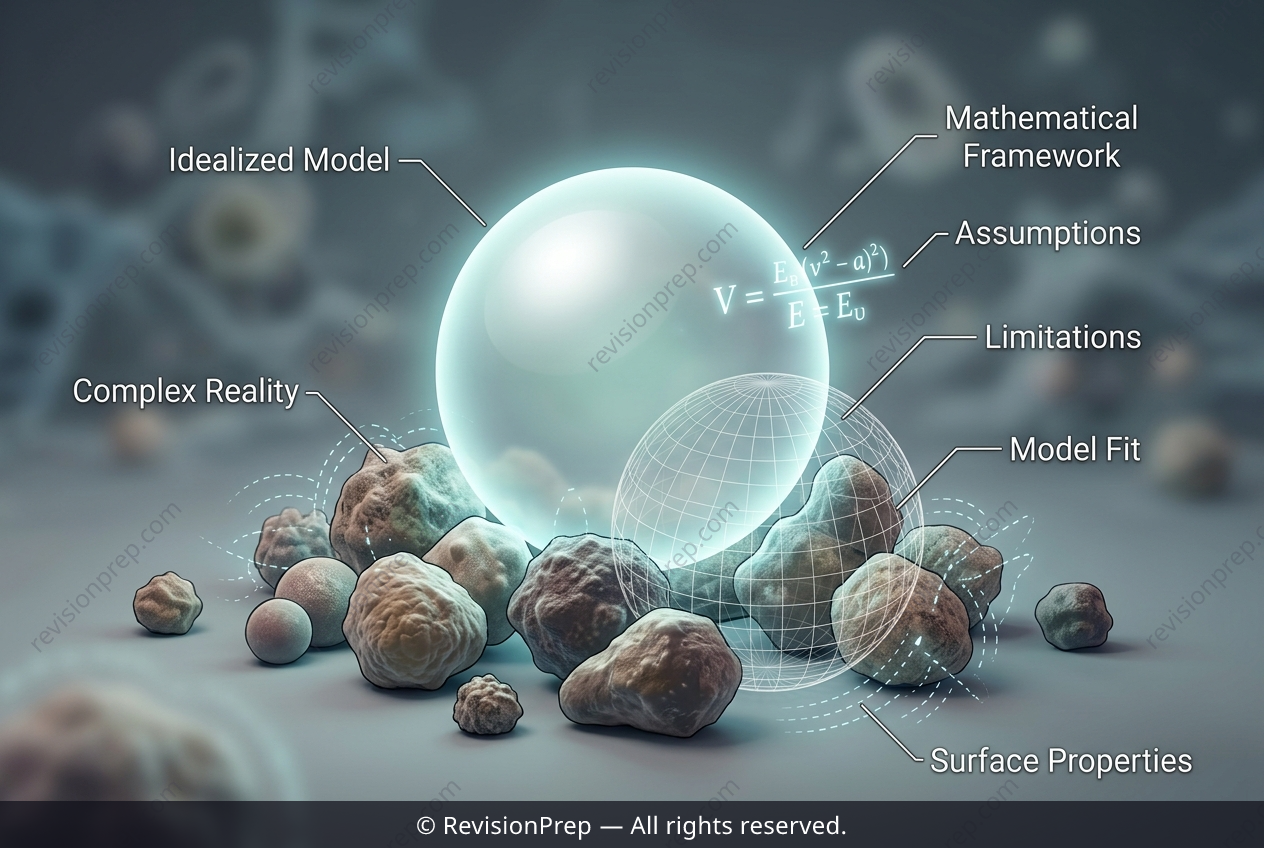
Scientific models let us describe real systems with mathematics, but their usefulness depends on how well their assumptions match reality. This topic explores that tension through exponents, powers and roots, using a nanoparticle whose volume is modelled as V = (2 × 10⁻³)³ m³ and whose surface energy follows E = 5 × 10⁶ × V². Working through these expressions shows how index laws combine powers of coefficients and powers of ten, and how squaring a value in scientific notation shifts both its digits and its exponent. Understanding this matters because the resulting value of E must be compared against a threshold to judge whether the particle suits medical use — a decision resting entirely on the model's output. Yet the model assumes a perfect sphere, while real nanoparticles are irregular or faceted. Since surface energy depends on surface area, shape changes the surface-area-to-volume ratio and can raise the true energy above the estimate. The mathematics and its limits therefore connect directly.
Start practising IB questions today
150,000+ IB-styled questions, criteria-mapped and instantly accessible.