
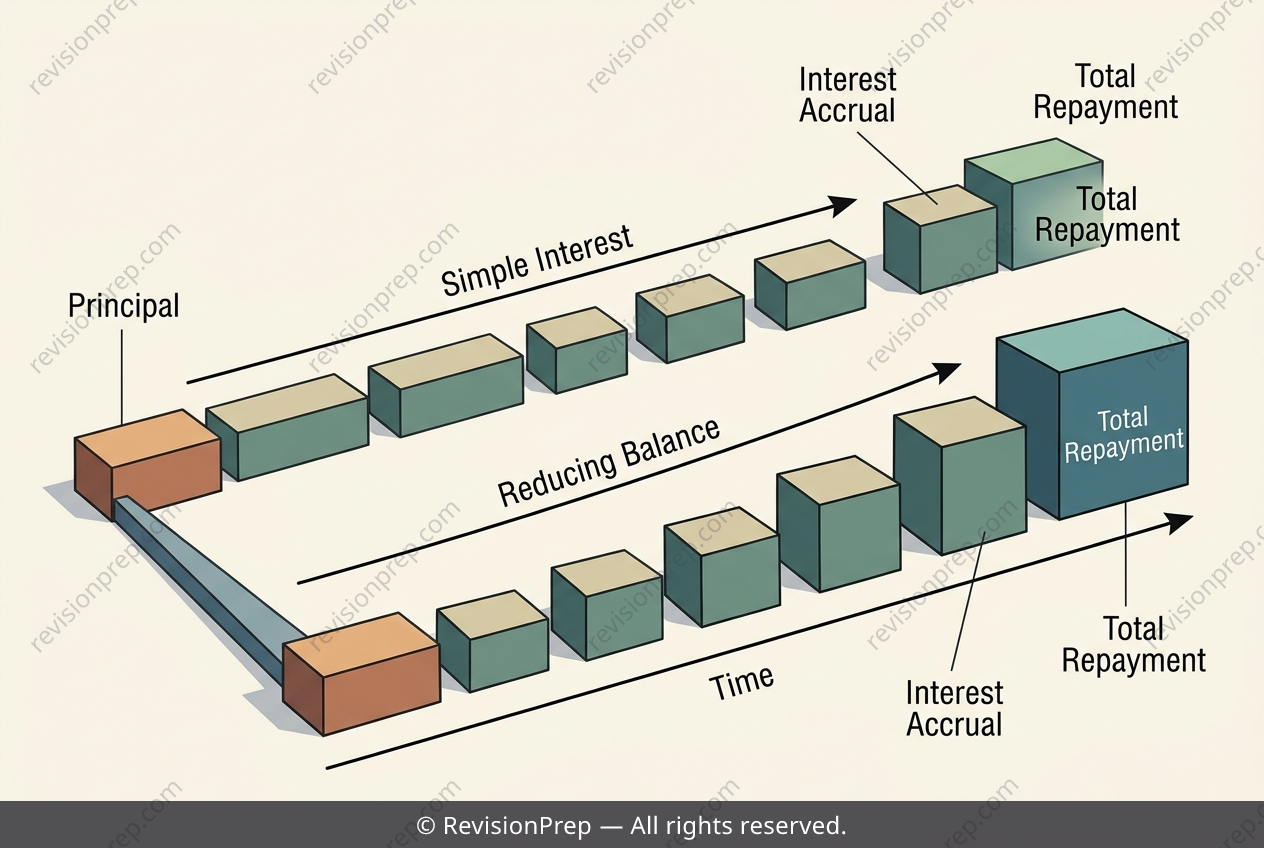
Maths: How Simple and Compound Interest Affect Loans
Comparing simple and compound interest is one of the most practical ideas in financial mathematics, because it explains why two loans with the same principal and the same interest rate can end up costing very different amounts. Simple interest is calculated only on the original principal, using I = Prt, so the interest charged each year stays fixed no matter how much of the debt has already been repaid. The total owed is then the principal plus this interest, which can be divided into equal instalments. Reducing-balance loans work differently. Interest is charged only on the outstanding balance, so as repayments reduce what is owed, the interest charged also falls. This is the same mechanism behind compound interest, where interest is calculated on the current amount rather than the original sum. Understanding this distinction matters because it directly affects the total cost of borrowing. The two approaches connect through the principal, the rate, and the time period, but they diverge in how the interest base changes over time.
Start practising IB questions today
150,000+ IB-styled questions, criteria-mapped and instantly accessible.