
Maths: Pythagorean Theorem and Real-World Applications
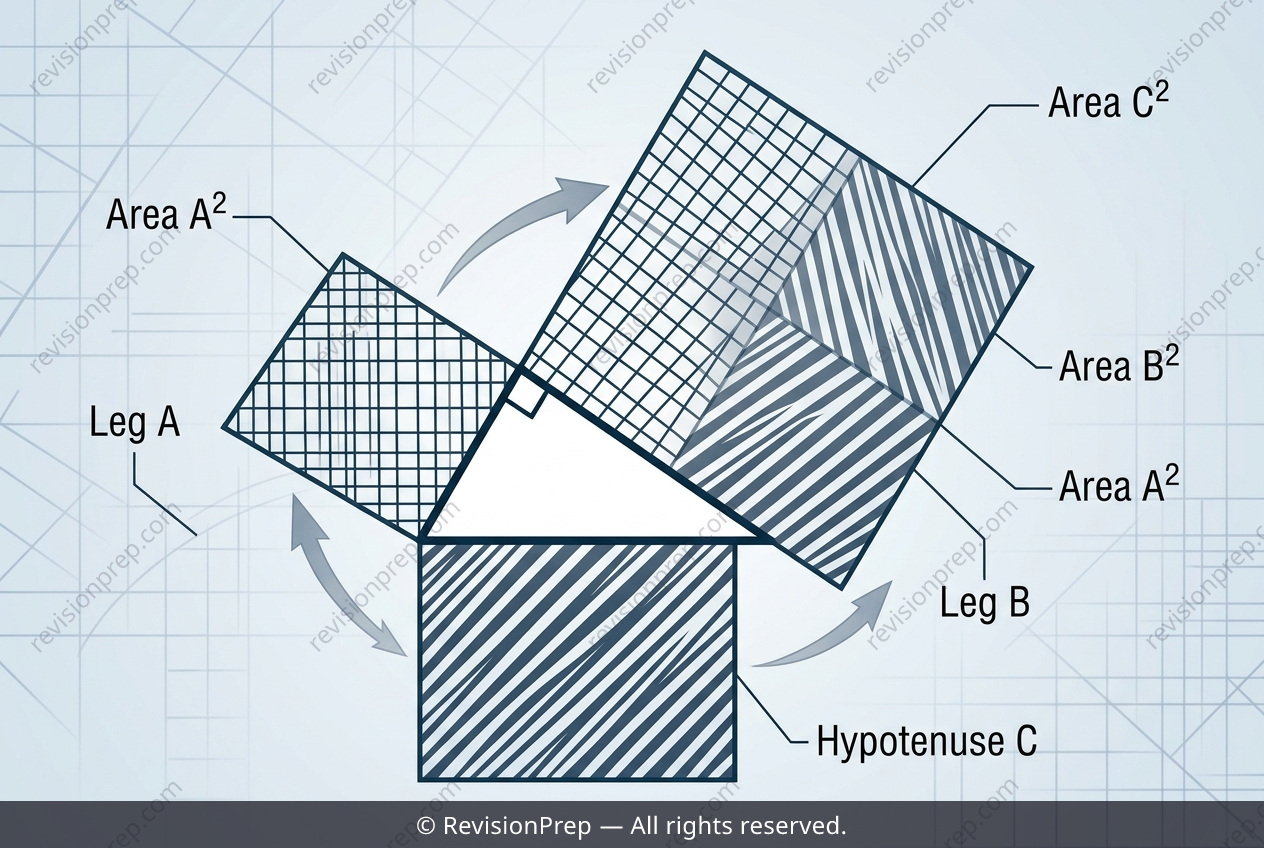
The Pythagorean theorem is the cornerstone of right-angled geometry, stating that for any right triangle with shorter sides a and b and hypotenuse c, the relationship a² + b² = c² always holds. This deceptively simple equation connects three sides of a triangle in a way that has practical applications far beyond the classroom — from construction and surveying to navigation and computer graphics. Understanding this relationship means recognising that the square built on the longest side equals the combined area of the squares on the two shorter sides. What makes this theorem particularly powerful is its geometric interpretation. Rather than treating it as mere algebraic manipulation, viewing it geometrically reveals why the relationship must be true: the largest square's area is precisely the sum of the two smaller squares' areas. This perspective helps when working with real-world problems, such as determining boundary lengths or verifying structural claims. The theorem also works in reverse — given two sides, you can always find the third, making it an indispensable tool for solving practical measurement problems involving right angles.
Start practising IB questions today
150,000+ IB-styled questions, criteria-mapped and instantly accessible.