
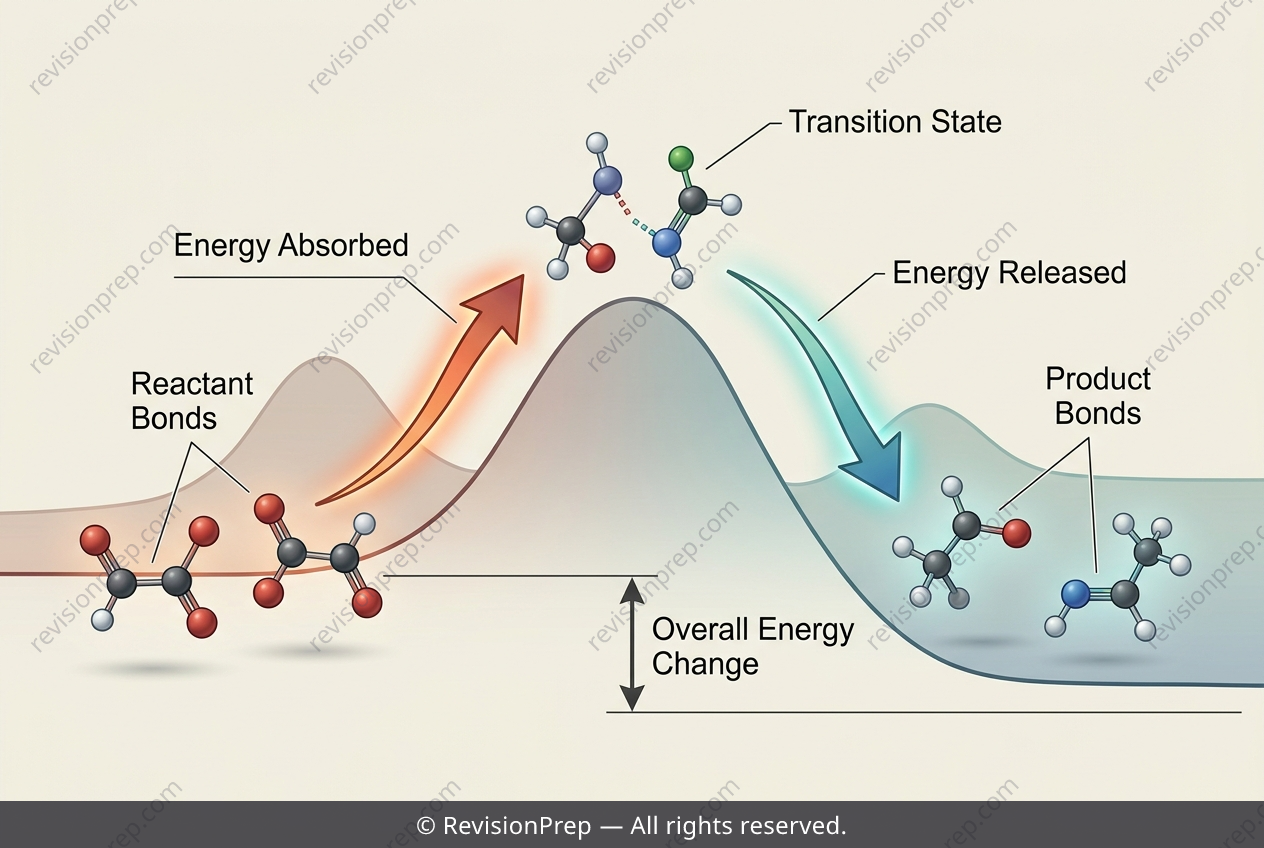
Chemistry: Bond Energy Behind Exothermic Reactions
Every chemical reaction is a silent exchange of energy, and the energy profile diagram is its visual story. At its heart lies a simple question: does the reaction release energy to its surroundings or absorb it? When the products settle at a lower energy level than the reactants, the reaction is exothermic—energy flows out, often as heat or light. Conversely, if the products sit higher, the reaction is endothermic, drawing energy in. This difference is quantified by the enthalpy change, ΔH, which is negative for exothermic processes and positive for endothermic ones. The mechanism behind this shift is found in the breaking and forming of bonds. Breaking bonds in the reactants requires an input of energy—an endothermic step—while forming new bonds in the products releases energy—an exothermic step. The overall energy change is simply the balance between these two opposing flows. When the energy released during bond formation outweighs the energy absorbed during bond breaking, the net result is a release of energy, making the reaction exothermic. Understanding this balance not only explains the diagram but also predicts reaction spontaneity and energy efficiency in everything from combustion to cellular respiration.
Start practising IB questions today
150,000+ IB-styled questions, criteria-mapped and instantly accessible.