
Chemistry: How a Two-Sided Molecule Makes Soap Work
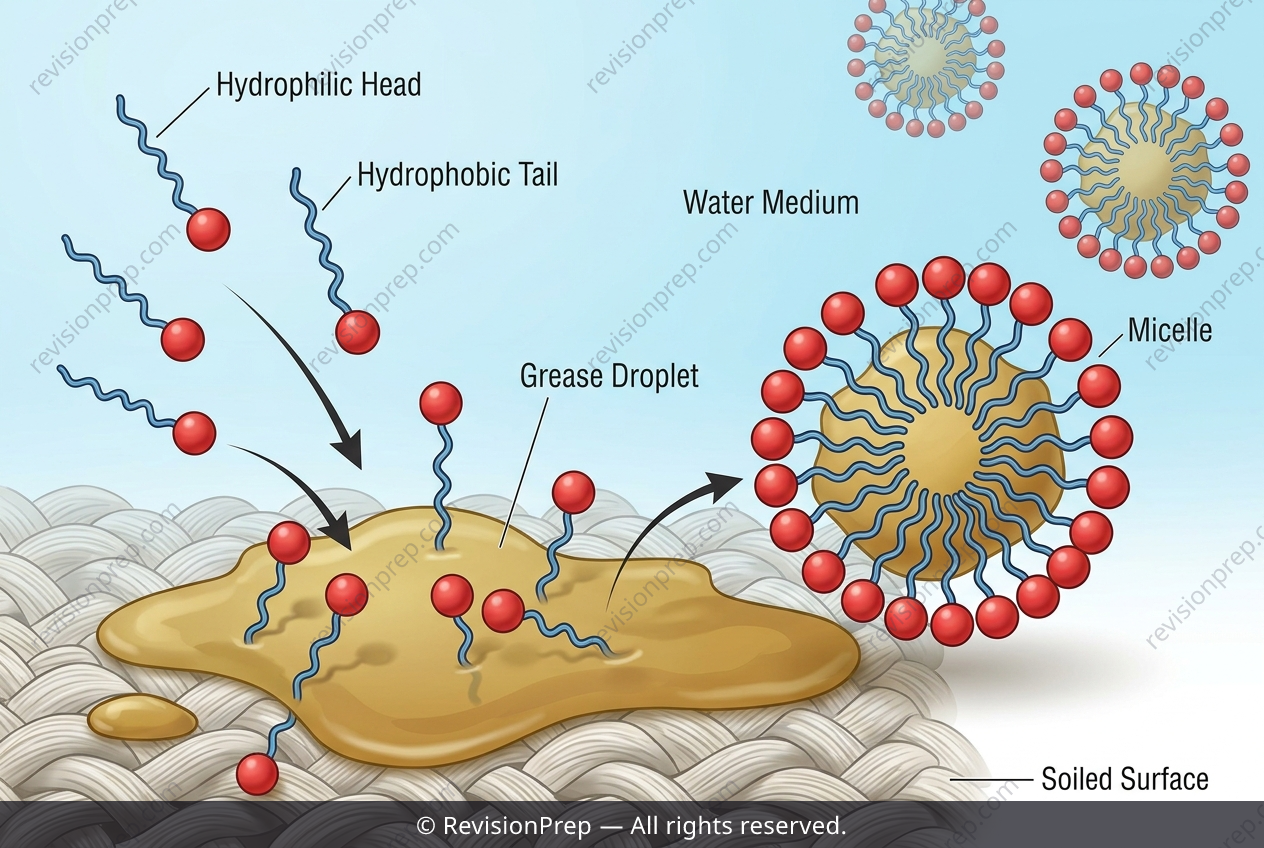
Soap molecules are amphipathic, meaning each one contains two chemically opposite ends: a polar, water-loving hydrophilic head and a non-polar, water-repelling hydrophobic hydrocarbon tail. This dual structure is what makes surfactants such effective cleaning agents, since a single molecule can bridge two normally immiscible substances — grease and water. The mechanism behind this is micelle formation. When soap meets a greasy surface, the hydrophobic tails embed themselves into the grease droplet, while the hydrophilic heads project outward into the surrounding water. This arrangement forms a spherical micelle that encases the grease, with its water-facing exterior keeping the droplet suspended so it can be rinsed away. Water is essential here: without it, the hydrophilic heads have nothing to interact with, micelles cannot stabilise, and grease simply cannot be lifted or dispersed. Understanding this relationship between molecular structure and behaviour explains why soap works the way it does.
Start practising IB questions today
150,000+ IB-styled questions, criteria-mapped and instantly accessible.