
Chemistry: How Acid Concentration Shows Battery Health
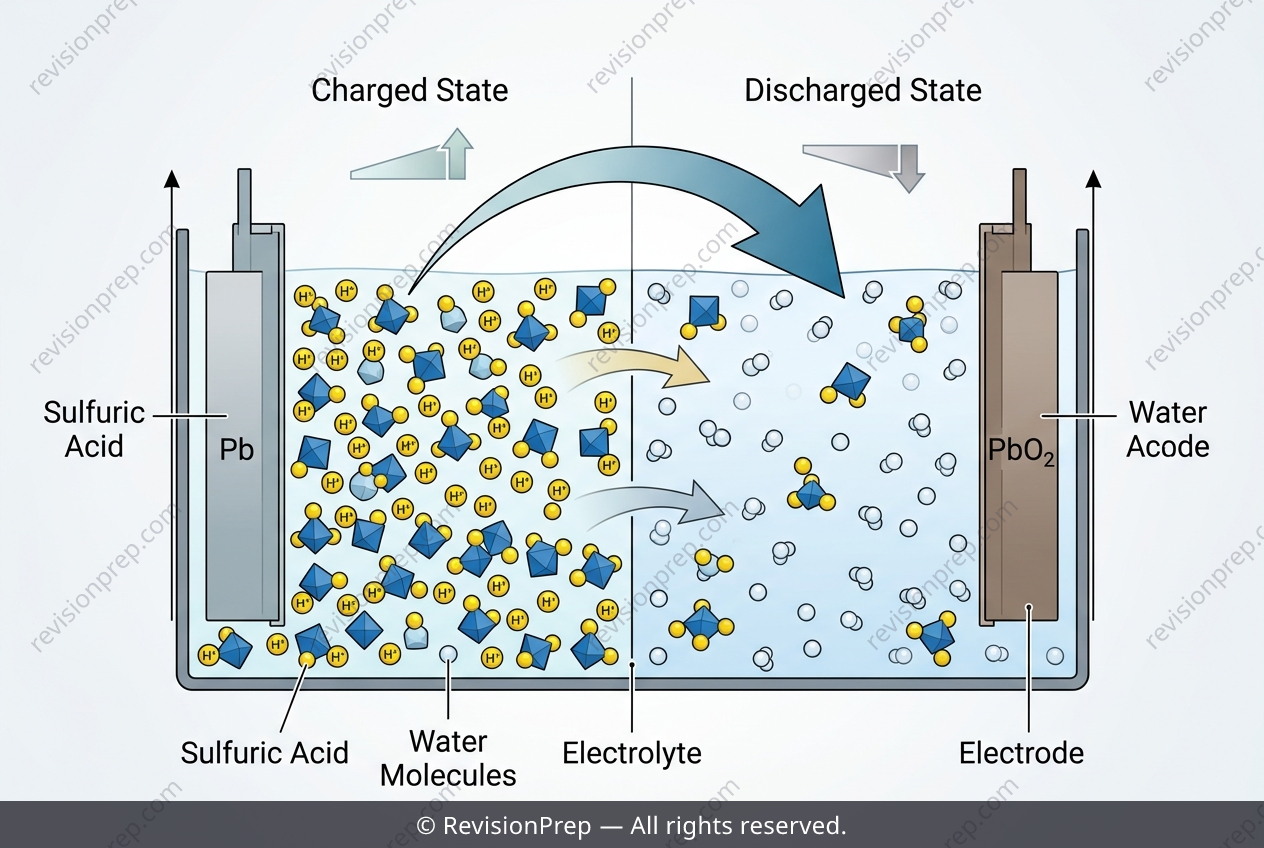
Few everyday objects illustrate electrochemistry quite like the lead-acid car battery, where sulfuric acid (H2SO4) serves as the electrolyte driving the reactions between lead and lead dioxide plates. This topic explores how charging and discharging cycles alter the acid's concentration, linking redox chemistry directly to a measurable property of the battery. Understanding this relationship matters because it explains why electrolyte concentration is a practical indicator of battery health. During discharge, H+ and SO4²⁻ ions react with the lead plates to form lead sulfate (PbSO4), removing ions from solution and lowering the acid concentration. Since this consumption accompanies the release of stored electrical energy, a falling concentration signals that charge is being used up. Conversely, recharging restores the ions to solution. Tracking these concentration changes therefore connects the electrochemical principles of the cell to the simple measurements used to assess whether a battery is charged or flat.
Start practising IB questions today
150,000+ IB-styled questions, criteria-mapped and instantly accessible.