
Chemistry: The Acid That Powers a Car Battery
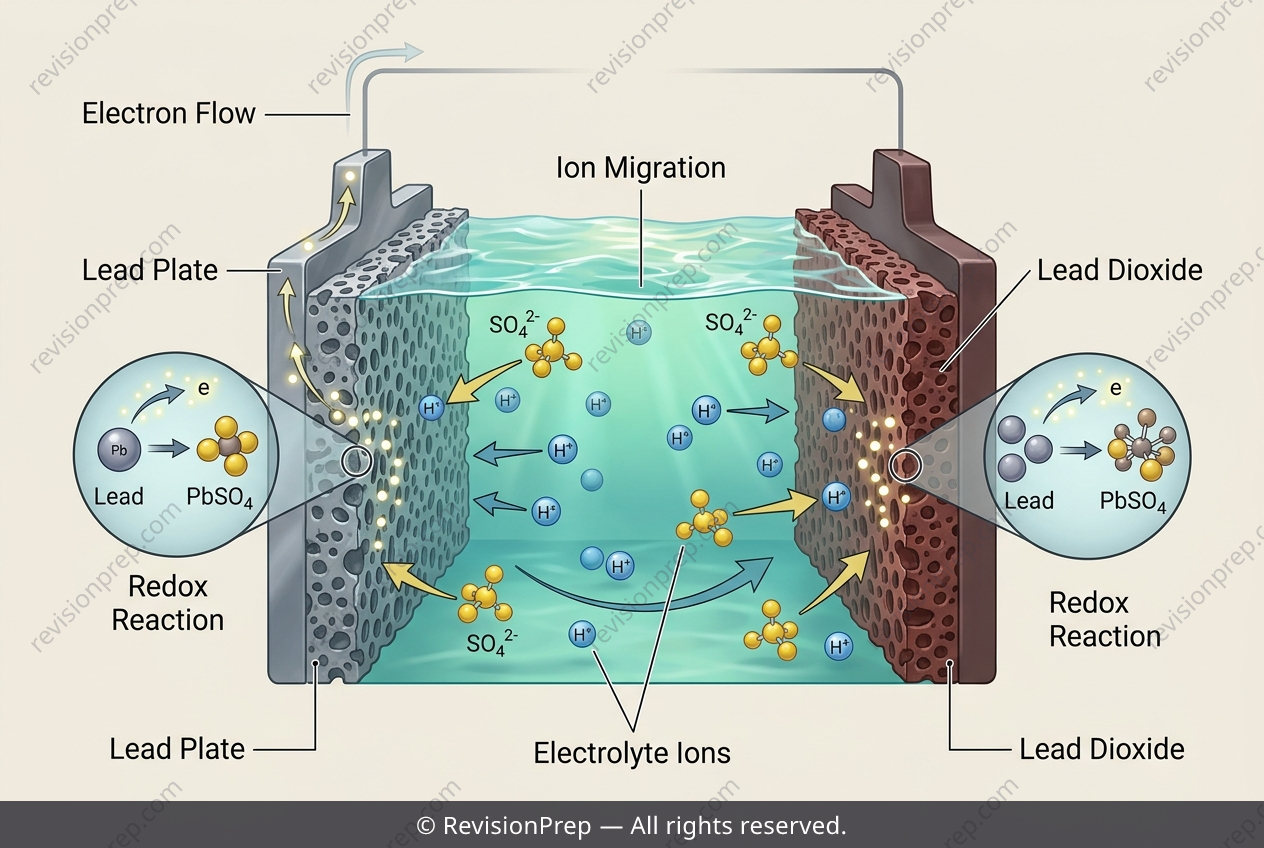
Every car battery is a compact electrochemistry laboratory. Inside its six cells sit lead dioxide plates, spongy lead plates, and a liquid electrolyte that quietly shuttles ions between them, converting stored chemical energy into the electrical current that starts an engine. The electrolyte is not a passive filler; it is the medium that completes the internal circuit and participates directly in the redox reactions at each electrode. That electrolyte is sulfuric acid, H2SO4, an aqueous strong acid that dissociates to release mobile hydrogen ions and sulfate ions. At the lead dioxide (positive) plate, reduction consumes electrons, while at the lead plate (negative) oxidation releases them, driving current through the external circuit. The sulfate ions migrate to form lead(II) sulfate on both plates, and the acid concentration falls as the battery discharges, which is why its density can indicate charge state. Recognising the acid by both name and formula, and linking it to these ion movements, is central to understanding how lead-acid cells store and deliver energy.
Start practising IB questions today
150,000+ IB-styled questions, criteria-mapped and instantly accessible.