
Chemistry: How Antacid Relief Comes at a Cost
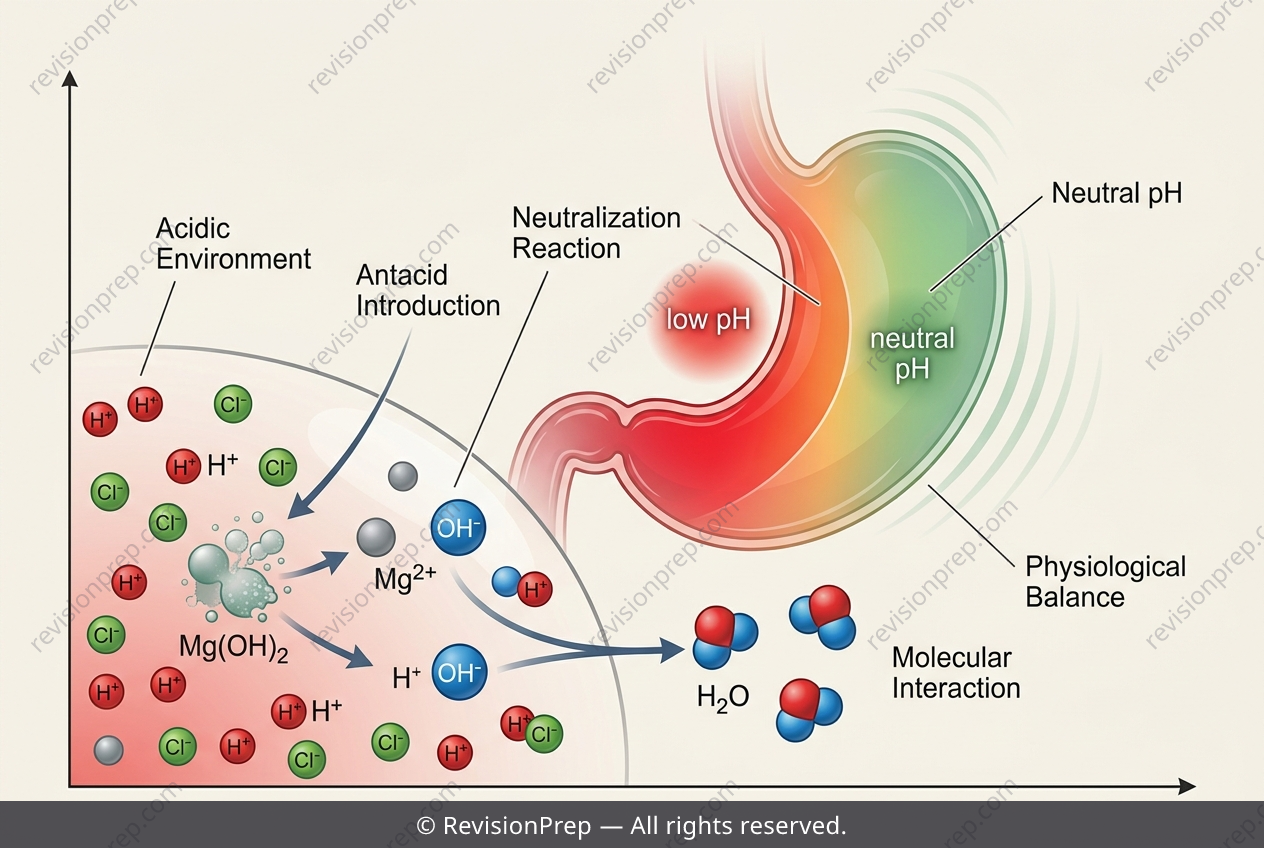
Neutralization reactions sit at the heart of acid-base chemistry, describing what happens when a base meets an acid to produce a salt and water. A familiar example is the antacid tablet: magnesium hydroxide, Mg(OH)₂, reacts with excess hydrochloric acid in the stomach according to Mg(OH)₂ + 2HCl → MgCl₂ + 2H₂O. Beyond the balanced equation, this reaction illustrates a broader principle — the careful balance of pH that keeps physiological systems functioning. That balance matters because the stomach relies on strongly acidic conditions for digestion, yet too much acid damages the stomach lining and esophagus. Neutralization offers relief, but it also carries trade-offs: suppressing acidity disrupts the stomach's natural pH, reducing digestive efficiency, while magnesium-based antacids may cause diarrhea or interfere with nutrient absorption. Understanding both the chemistry and its physiological consequences shows how a single equation connects laboratory theory to real-world health.
Start practising IB questions today
150,000+ IB-styled questions, criteria-mapped and instantly accessible.