
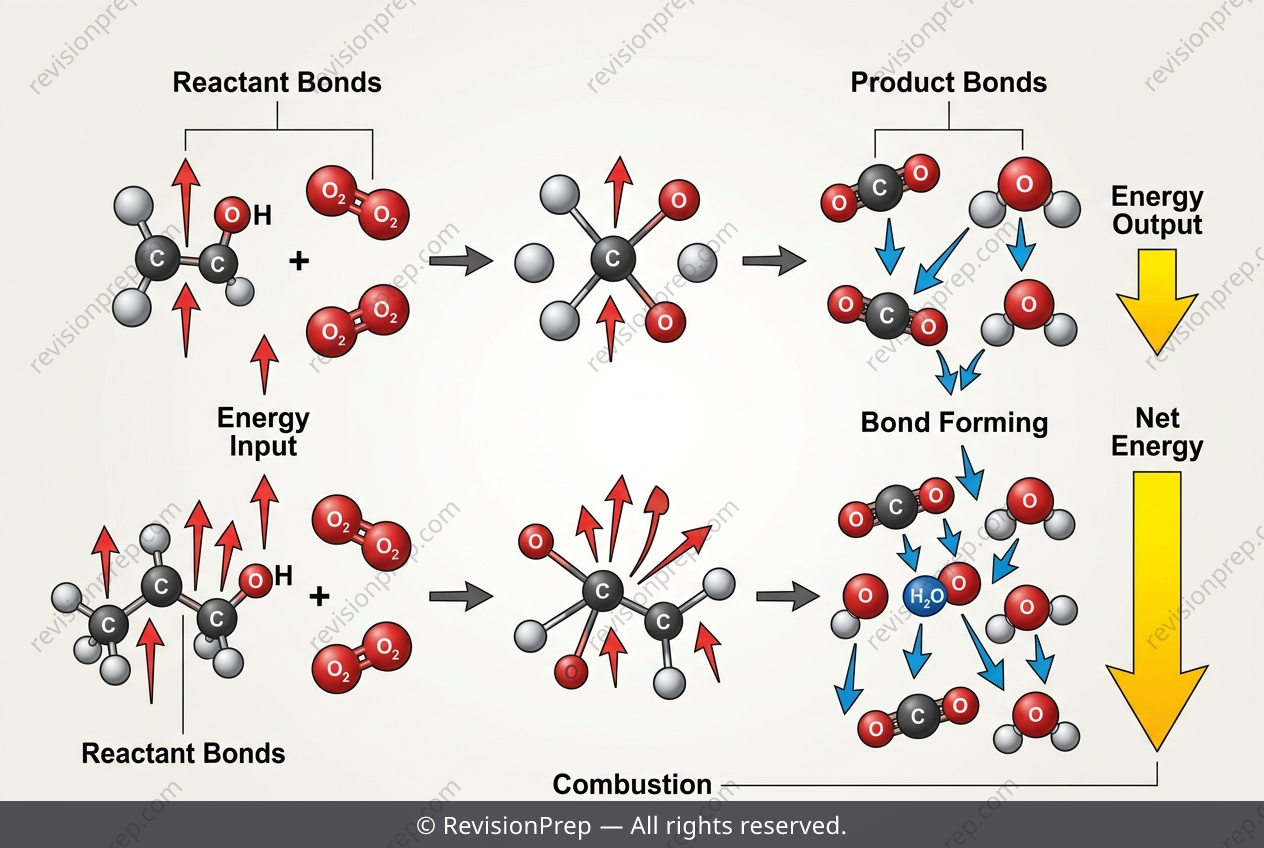
Chemistry: How Bonds Shape Alcohols' Energy Release
When an alcohol burns in excess oxygen, the energy released is not a fixed property of the flame but a direct consequence of bond breaking and bond making. This is the heart of bond enthalpy: breaking chemical bonds requires an energy input, while forming new bonds releases energy. The net enthalpy of combustion is simply the difference between these two opposing flows—energy out minus energy in. For methanol (CH₃OH) and ethanol (C₂HOH), the structural difference is more than a matter of size. Ethanol carries an extra carbon atom and, crucially, an additional C–C bond plus two extra C–H bonds compared to methanol. During complete combustion, both fuels break their internal bonds and form the same products: carbon dioxide (with strong C=O bonds) and water (with O–H bonds). Because ethanol starts with more bonds to break, it requires more energy input, but it also forms proportionally more product bonds—and those product bonds release a greater total energy than the extra input required. The net effect is that ethanol’s enthalpy of combustion per mole is larger (more negative) than methanol’s. This relationship—where the number and type of bonds in the reactant directly dictate the energy payoff—explains why longer-chain alcohols generally burn with higher energy yields per mole.
Start practising IB questions today
150,000+ IB-styled questions, criteria-mapped and instantly accessible.