
Chemistry: The Hidden Cost of Capturing Refinery Methane
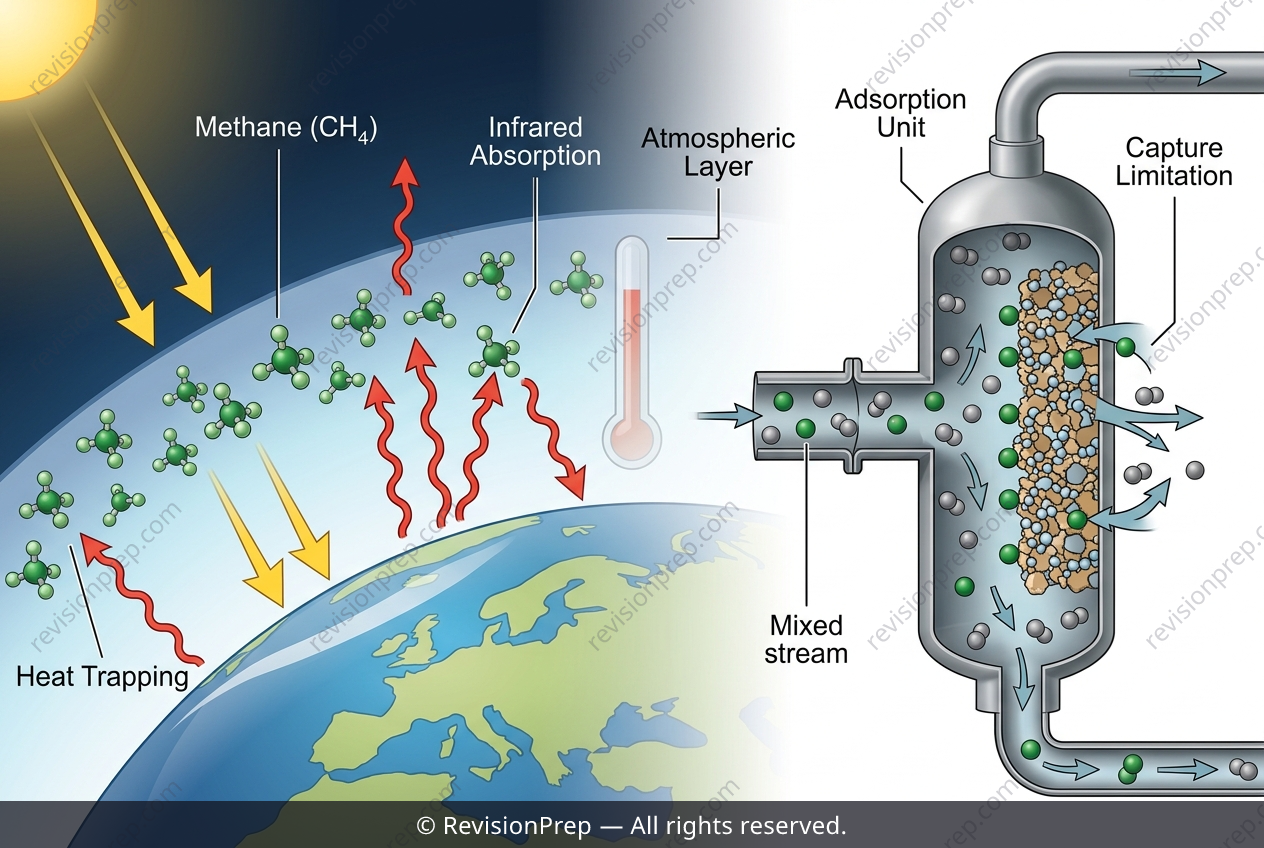
When crude oil is refined, it is separated into useful fractions, but the process also releases lighter gases—most notably methane (CH₄). Methane is far more effective at trapping heat than carbon dioxide, with a global warming potential roughly 25 times greater over a 100-year period. This means that even small leaks or releases during refining can have a disproportionately large impact on the atmosphere, intensifying the greenhouse effect and accelerating climate change. Understanding this connection between an industrial by-product and global warming is central to environmental chemistry. The challenge lies in controlling these emissions. While technologies exist to capture methane—such as vapour recovery units or flaring systems—they are not a perfect solution. These systems require significant energy to operate and come with high installation and maintenance costs, which can be prohibitive, especially for refineries in lower-income regions. Additionally, no capture method is 100% efficient, so some methane inevitably escapes. This creates a practical gap between the ideal of zero emissions and what current technology can realistically achieve, highlighting the trade-off between environmental benefit and economic feasibility.
Start practising IB questions today
150,000+ IB-styled questions, criteria-mapped and instantly accessible.