
Chemistry: How Exothermic Reactions Release Heat
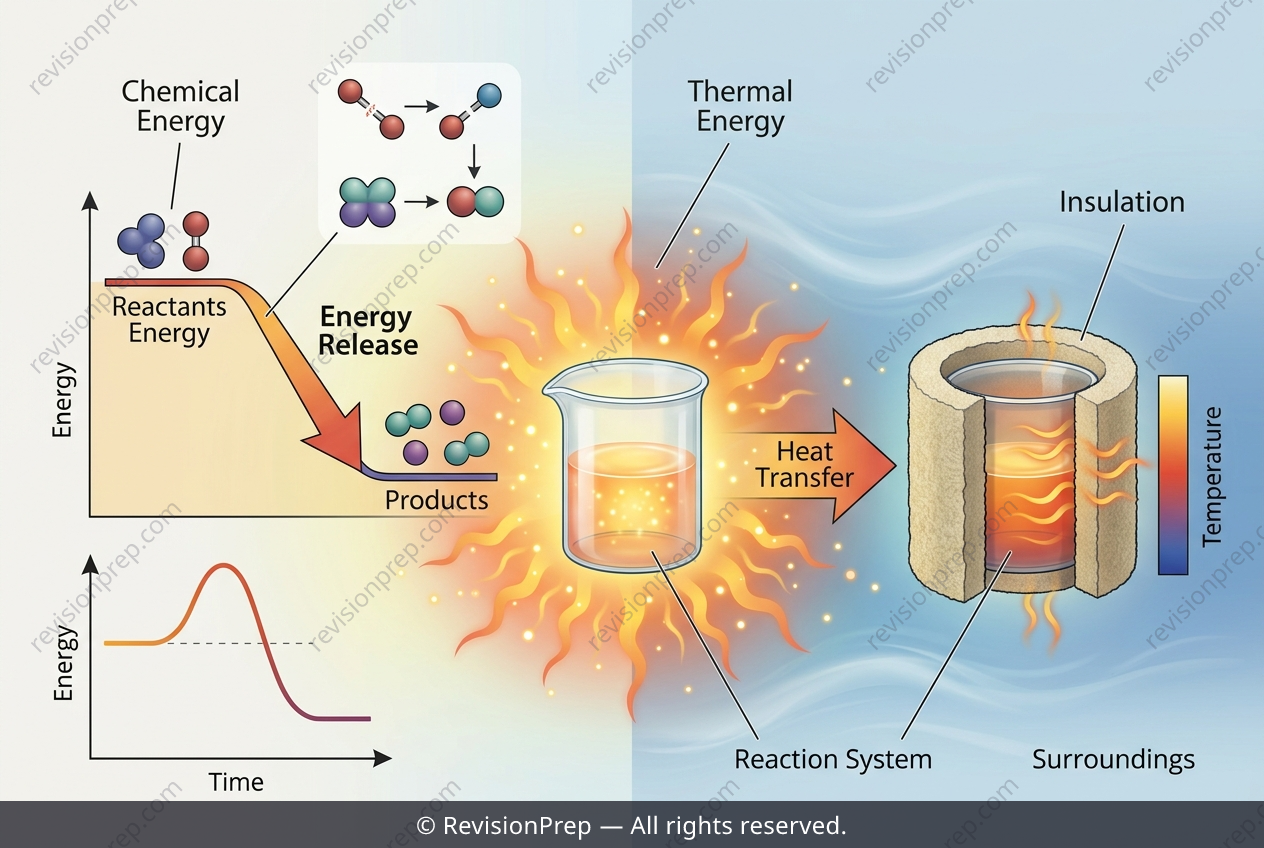
When magnesium ribbon is dropped into dilute hydrochloric acid, the beaker warms up — a clear sign that energy is being released. This is the essence of an exothermic reaction: the chemical energy stored in the reactants is greater than that in the products, so the difference is emitted as heat. In this case, the reaction between magnesium and acid forms magnesium chloride and hydrogen gas, and the temperature of the solution rises sharply before slowly cooling back toward room temperature. Understanding heat transfer in exothermic reactions matters because it explains not just why reactions feel hot, but how energy flows between a system and its surroundings. The released energy increases the kinetic energy of particles in the solution, which we measure as a temperature rise. However, that heat doesn’t stay trapped — it dissipates into the cooler air around the beaker, causing the gradual decline seen after the reaction peaks. If the beaker were insulated, that outward heat loss would slow down, meaning the temperature would fall more gently. Insulation doesn’t stop heat transfer entirely; it just reduces its rate, so the solution still eventually returns to room temperature. This interplay between energy release and energy loss is central to predicting how reaction temperatures change over time.
Start practising IB questions today
150,000+ IB-styled questions, criteria-mapped and instantly accessible.