
Chemistry: How Heat Shifts the Haber Process
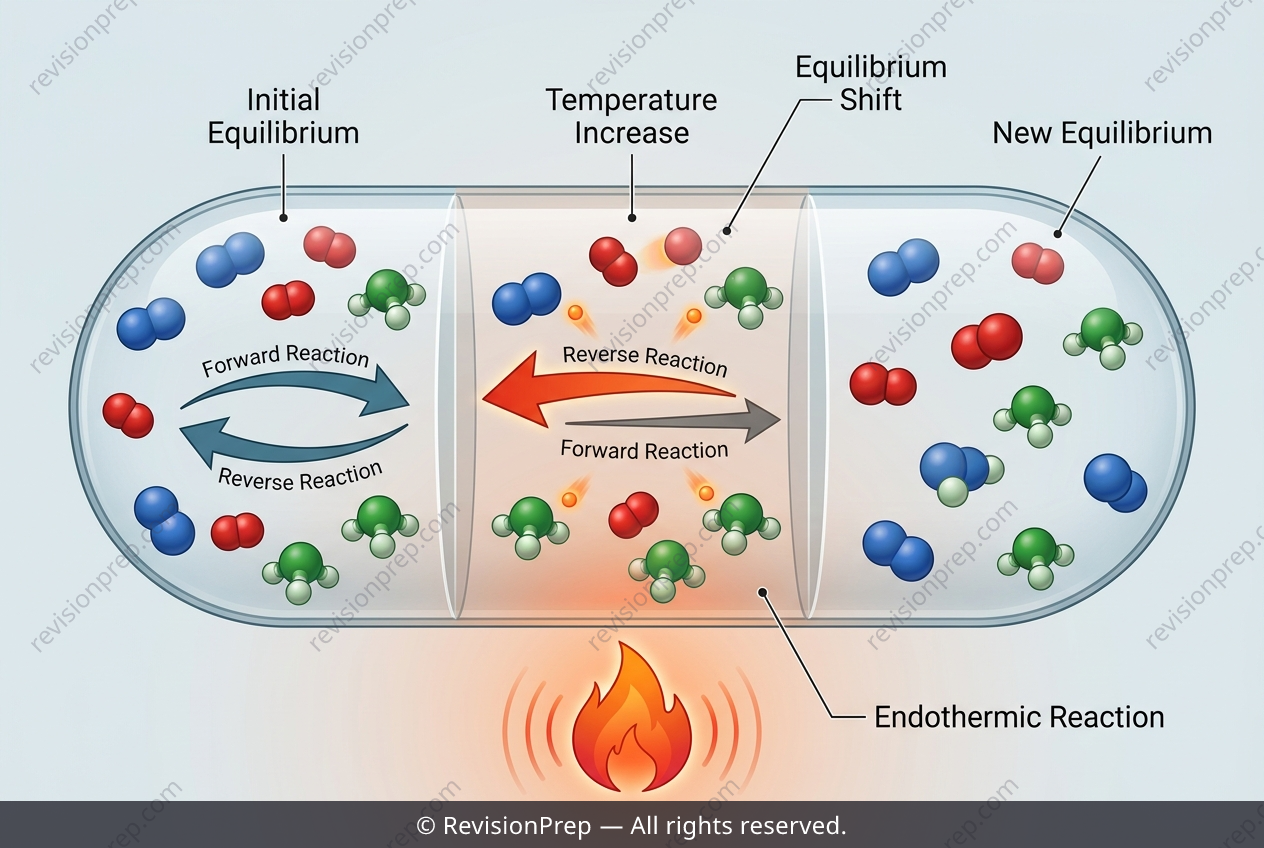
Dynamic equilibrium is a deceptively simple idea: a reaction that appears “stopped” is actually running in both directions at equal rates. For the Haber process, N₂(g) + 3H₂(g) ⇌ 2NH₃(g) with ΔH < 0, the forward step produces ammonia and releases heat, while the reverse step consumes ammonia and absorbs heat. At equilibrium, these two opposing rates are balanced, so concentrations stay constant—but that balance is fragile. The power of Le Chatelier’s principle lies in predicting how that balance responds to stress. When temperature rises, the system treats heat as a product (since the forward reaction is exothermic). To counteract the added heat, it favours the endothermic reverse reaction, shifting the equilibrium left—decomposing NH₃ into N₂ and H₂. This shift isn’t instantaneous: during the transition, the reverse rate temporarily exceeds the forward rate, causing NH₃ to drop until a new equilibrium is reached. At that new point, forward and reverse rates are again equal, but both are faster than before (due to higher temperature), and the equilibrium position sits further left. This interplay—rate changes, direction of shift, and final concentrations—is the heart of understanding how real chemical systems respond to their environment.
Start practising IB questions today
150,000+ IB-styled questions, criteria-mapped and instantly accessible.