
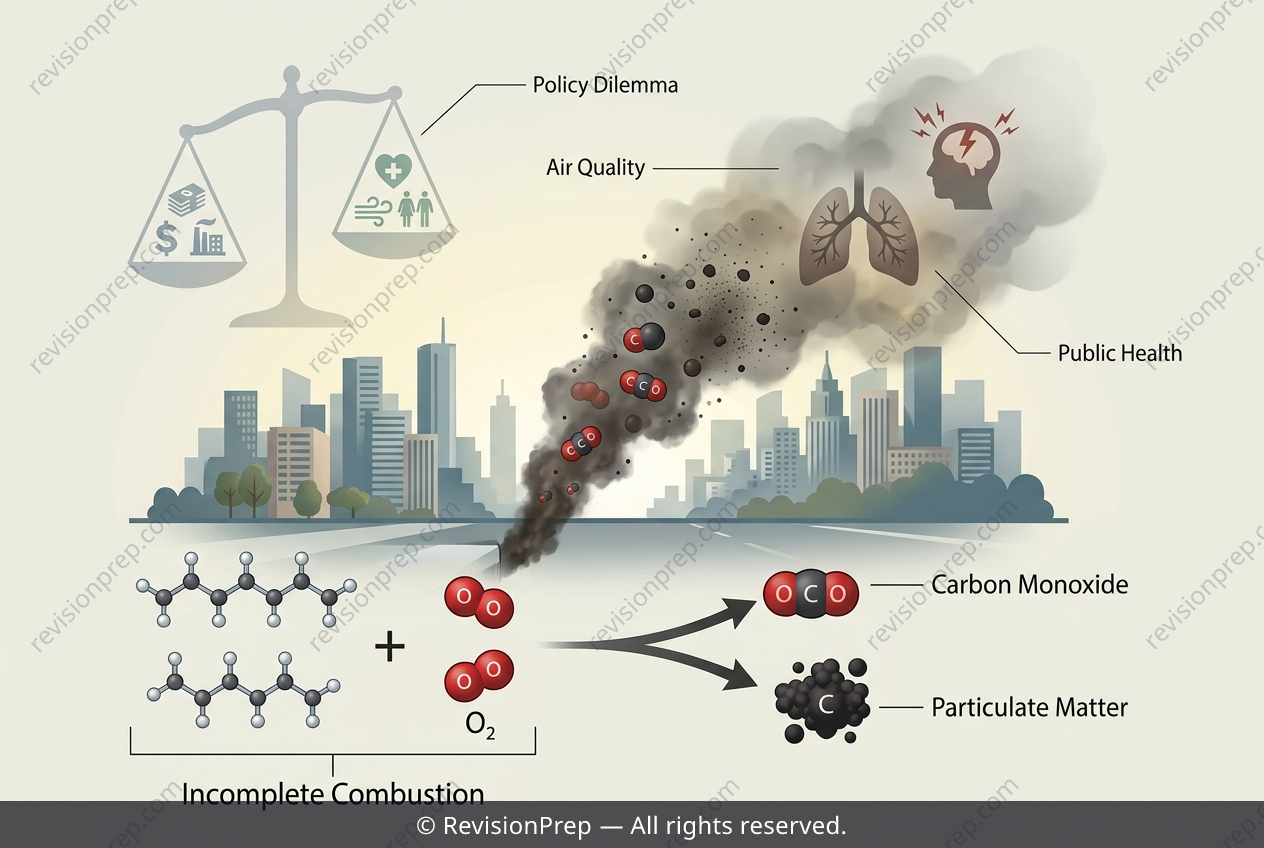
Chemistry: How Incomplete Combustion Harms Health
When diesel burns inside an engine, the chemistry of combustion is rarely perfect. Under ideal conditions, a hydrocarbon fuel would react with oxygen to produce only carbon dioxide and water. But in the real world—especially in older or heavily loaded diesel engines—oxygen supply is uneven, leading to incomplete combustion. This single deviation from ideal stoichiometry produces two harmful byproducts: solid carbon particles, or soot, and carbon monoxide (CO). A simplified representation of this process, for a fuel like dodecane, is C₁₂H₂₆ + O₂ → CO + C + H₂O, showing that instead of clean oxidation, the fuel’s carbon is only partially converted. These byproducts do not stay confined to the exhaust pipe. Soot consists of fine particles that can be inhaled deep into lung tissue, aggravating asthma and bronchitis, while CO binds to haemoglobin roughly 200 times more strongly than oxygen, starving the brain and heart of vital O₂. This is why residents near bus routes report headaches and respiratory distress. The policy dilemma emerges because diesel buses are cheaper upfront than electric alternatives—a trade-off between immediate fiscal constraints and long-term public health costs. Understanding this chemical mechanism reveals how a simple combustion equation underpins complex socio-economic decisions.
Start practising IB questions today
150,000+ IB-styled questions, criteria-mapped and instantly accessible.