
Chemistry: What Makes a Substance an Arrhenius Acid?
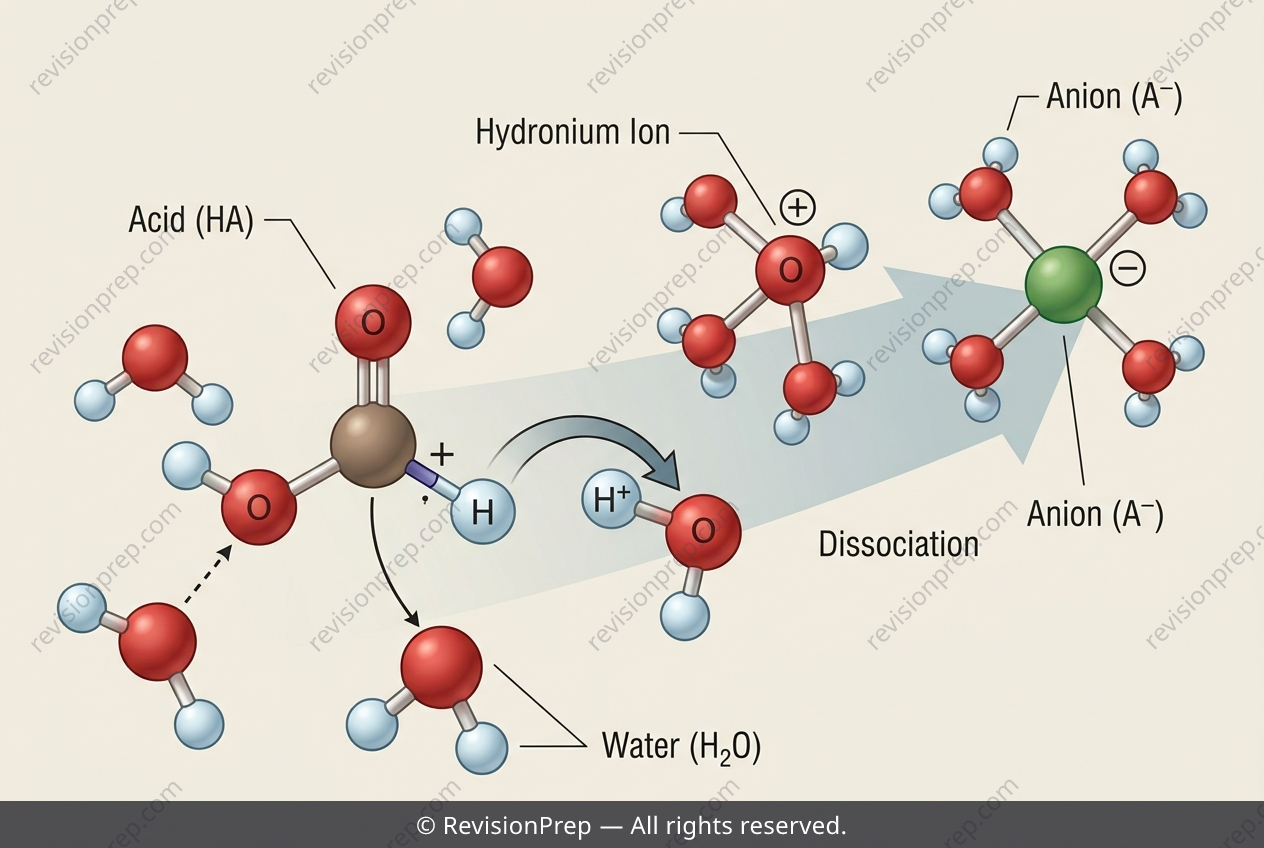
An Arrhenius acid is a substance that produces hydrogen ions, H+, when it dissolves in water. This simple idea underpins some of the most familiar chemistry in everyday life, from the sulfuric acid inside a car battery to the acidic cleaners that strip away grease and mineral deposits. Understanding it means recognising that the acid's behaviour depends entirely on water acting as the solvent, the medium in which dissociation occurs. The mechanism is straightforward: when an acid such as H2SO4 is added to water, it dissociates, releasing H+ ions into solution. Those ions are what give the solution its acidic character and drive its reactivity. The definition therefore links two essential ideas — the production of H+ and the role of water in enabling it. Both must be present for a substance to qualify as an Arrhenius acid, distinguishing this model from the broader Brønsted–Lowry and Lewis definitions you will meet later.
Start practising IB questions today
150,000+ IB-styled questions, criteria-mapped and instantly accessible.