
Chemistry: The Two-Way Nature of the Haber Process"
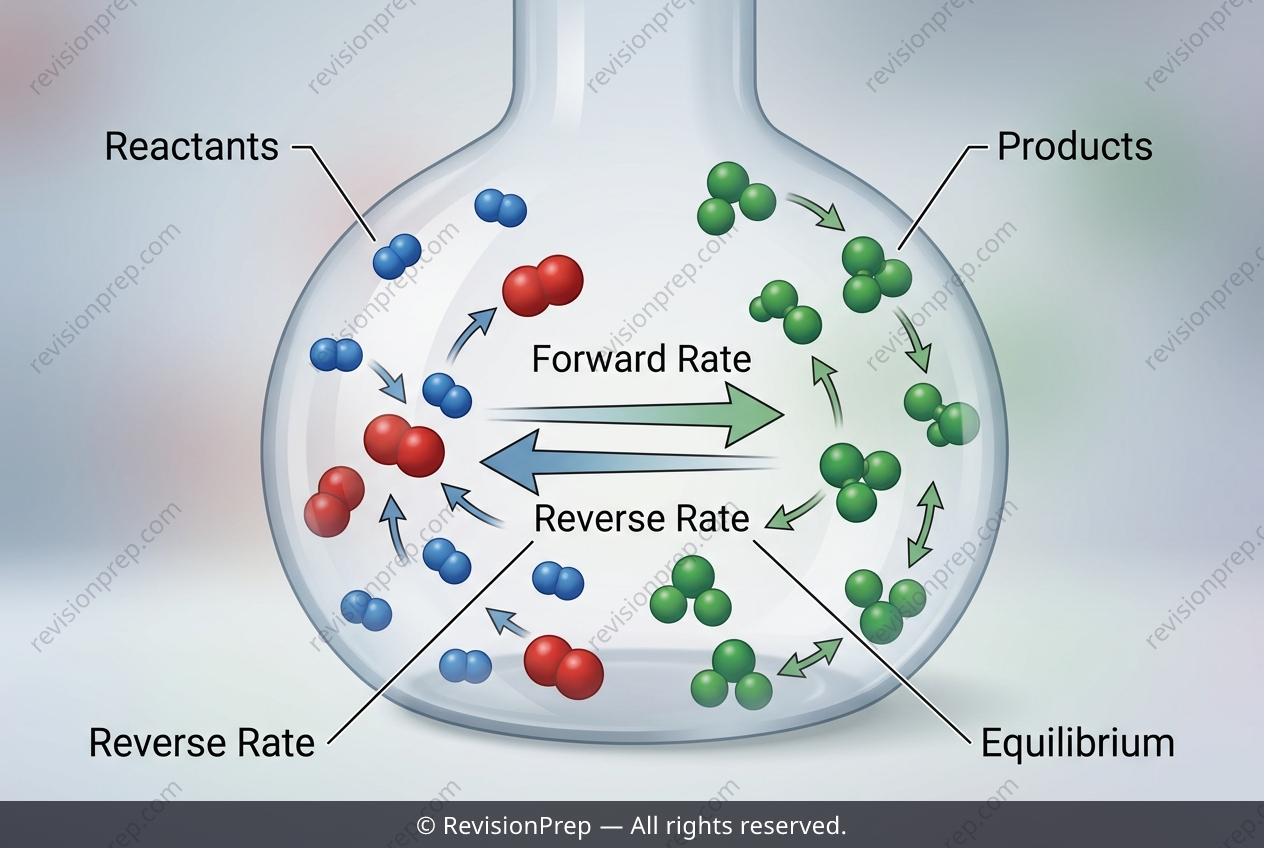
In the world of chemistry, very few reactions are one-way streets. The Haber process, which combines nitrogen and hydrogen to form ammonia, is a perfect example of a system that settles into a state of balance rather than running to completion. At the heart of this behaviour lies the concept of a reversible reaction—a reaction in which the products can collide and react together to reform the original reactants. This means the process can proceed in both the forward and reverse directions simultaneously, creating a dynamic tug-of-war between the formation of ammonia and its decomposition back into nitrogen and hydrogen. To represent this two-way nature, chemists use a special symbol: the double half-arrow (⇌). This is not just a stylistic choice; it signals that both the forward and reverse reactions are occurring at the same time. When the rates of these two opposing processes become equal, the system reaches dynamic chemical equilibrium—a state where the concentrations of reactants and products remain constant, not because the reaction has stopped, but because the forward and reverse flows are perfectly matched. Understanding this balance is essential for grasping why industrial processes like the Haber process are designed with specific conditions, as shifting the equilibrium can favour one side of the arrow over the other.
Start practising IB questions today
150,000+ IB-styled questions, criteria-mapped and instantly accessible.