
Chemistry: When Buffers Lose the Race Against Acid
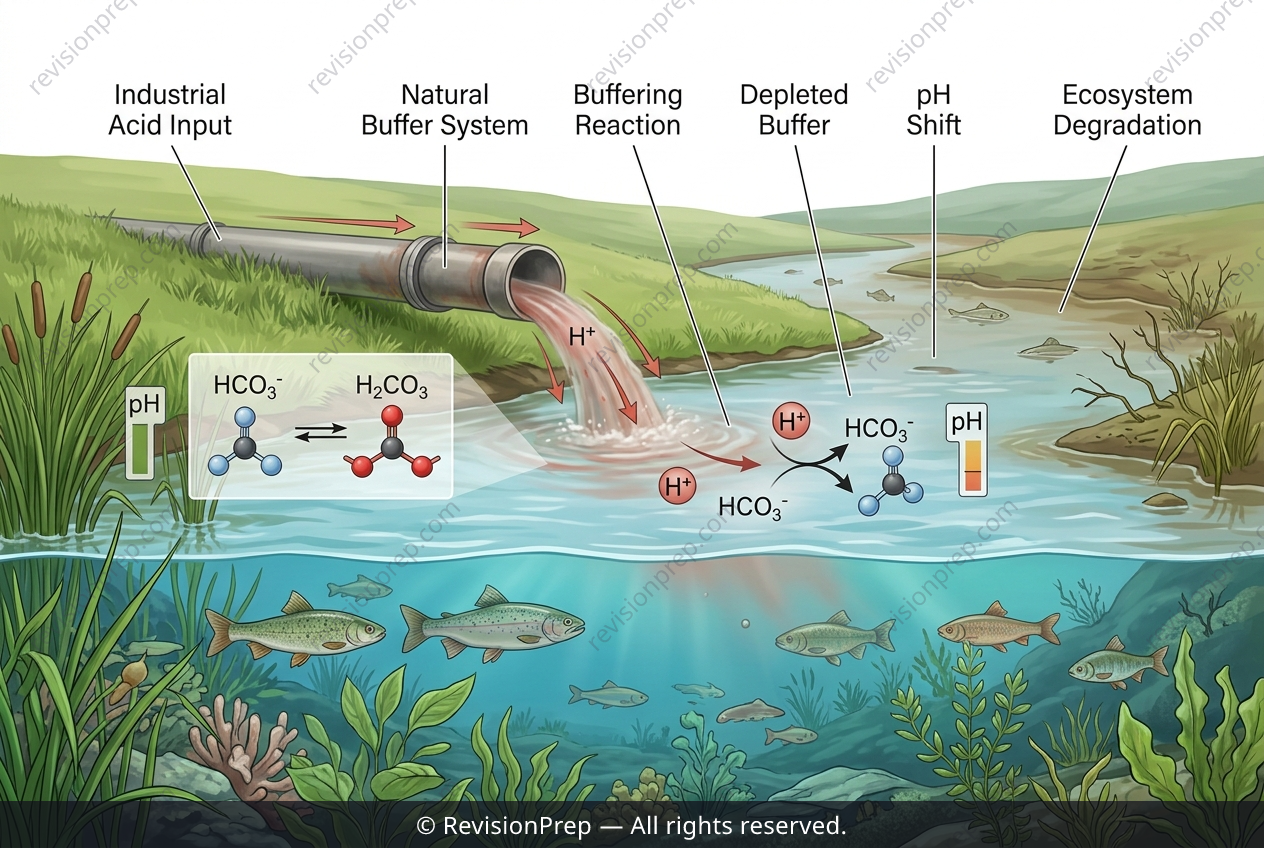
Carboxylic acids, such as acetic acid (CH₃COOH), are not just laboratory reagents—they are industrial workhorses, yet their release into the environment carries a hidden cost. The core concept here is environmental acidification: how weak organic acids, when introduced in large volumes, disrupt the delicate pH balance of natural systems. Understanding this matters because it connects molecular behaviour—the release of H⁺ ions from the carboxyl group—to macroscopic consequences like acid rain and ecosystem decline. The mechanism begins when acetic acid volatilises and dissolves in atmospheric water vapour, lowering precipitation pH and forming acid rain. This acidic deposition then leaches nutrients from soils, mobilises toxic metals, and stresses aquatic life. Meanwhile, natural buffers—limestone (CaCO₃) and bicarbonate ions (HCO₃⁻)—work to neutralise these inputs through reactions that consume H⁺. However, their capacity is finite: when continuous industrial acid flux exceeds the buffer’s regeneration rate, the system is overwhelmed, and pH drops sharply. This relationship between acid input rate and buffering capacity is the crux—it explains why even “weak” acids cause lasting damage when the natural defence is exhausted, leading to fish mortality in low-alkalinity lakes.
Start practising IB questions today
150,000+ IB-styled questions, criteria-mapped and instantly accessible.