
Chemistry: When Data Defies Le Chatelier
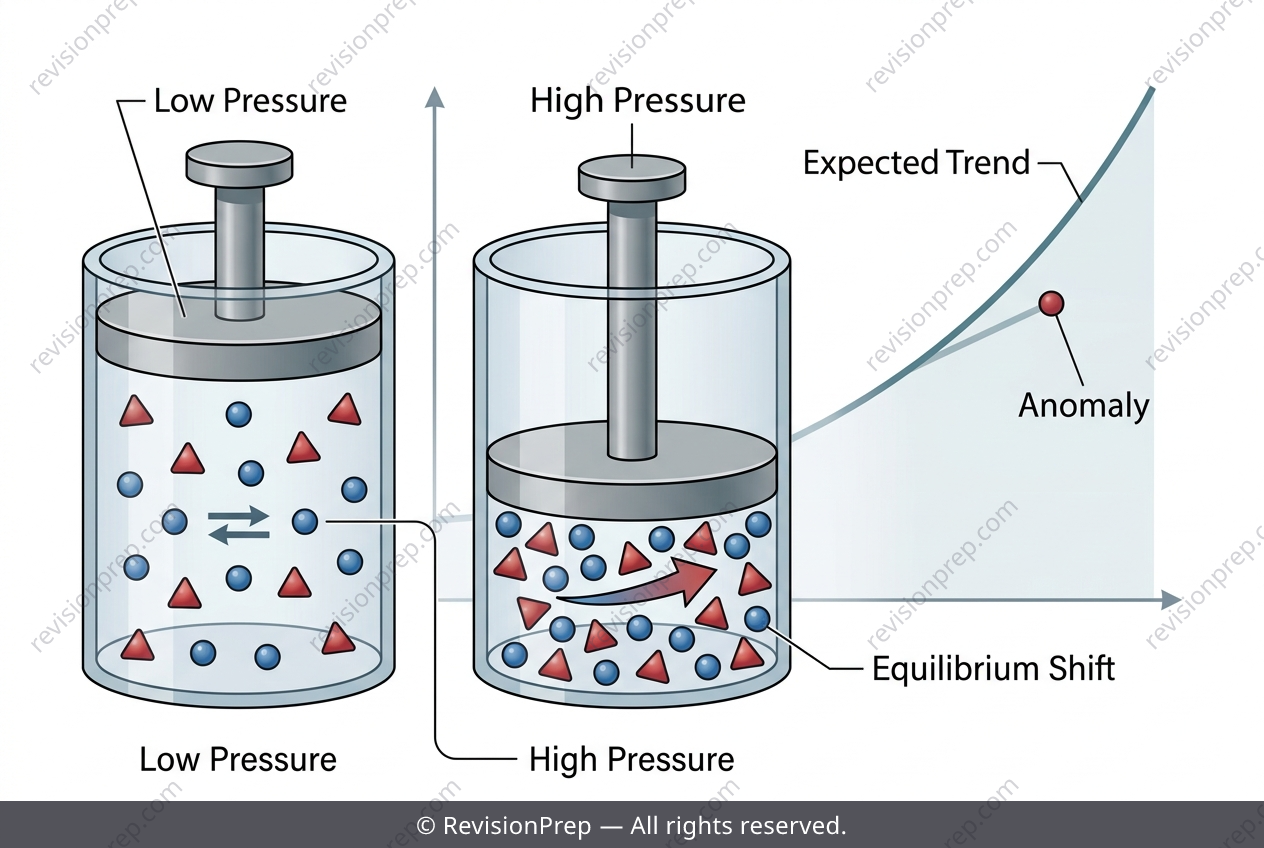
Le Chatelier’s principle is the compass for predicting how a chemical system at equilibrium responds to external stress—whether that stress is a change in concentration, temperature, or pressure. For reversible reactions, this principle states that the system will shift to partially counteract the disturbance, favouring the direction that relieves the stress. In industrial processes like the Haber synthesis of ammonia, N₂(g) + 3H₂(g) ⇌ 2NH₃(g), this principle becomes a practical tool: because the forward reaction converts 4 moles of gas into 2 moles, increasing pressure pushes the equilibrium toward ammonia, boosting yield. This relationship between pressure and mole count is the mechanistic heart of the concept. Why does this matter? Because real-world data rarely behaves perfectly. When you plot yield against pressure, you expect a smooth upward curve—yet anomalies can appear, breaking the trend. Interpreting such data requires distinguishing between a genuine equilibrium shift (which would need a change in conditions like temperature) and an experimental error, such as a faulty gauge or catalyst deactivation. The isolated drop at one pressure point, surrounded by values that follow Le Chatelier’s prediction, signals a measurement flaw rather than a chemical surprise. Understanding this interplay between theory, data, and experimental reality is what separates rote memorisation from true chemical reasoning.
Start practising IB questions today
150,000+ IB-styled questions, criteria-mapped and instantly accessible.