
Chemistry: Why Limestone Neutralisation Isn't Cost-Free
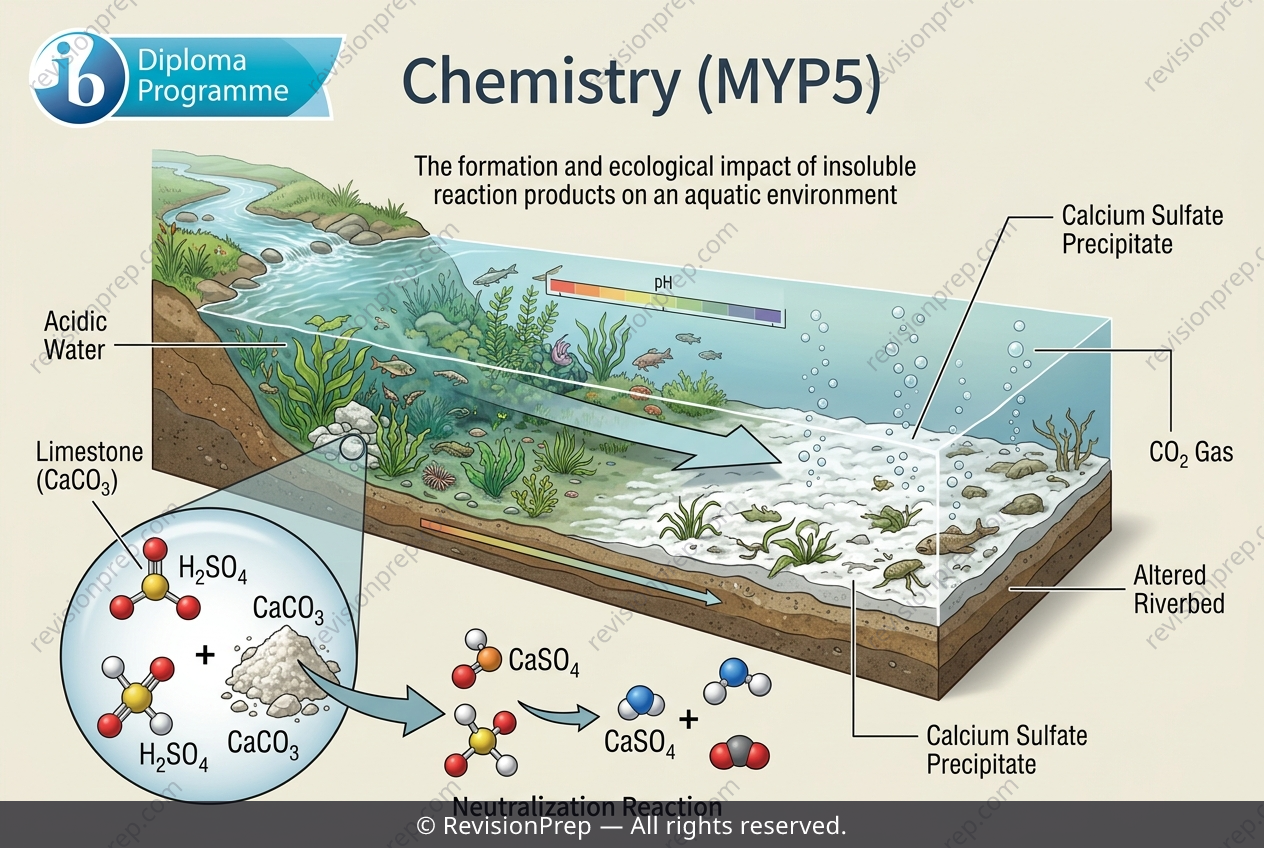
When sulfuric acid spills into a river, the immediate danger is a sharp drop in pH, turning the water acidic enough to kill fish and invertebrates and destabilise the entire aquatic ecosystem. Neutralising that acid with powdered limestone, CaCO₃, seems like a straightforward fix, and the reaction CaCO₃(s) + H₂SO₄(aq) → CaSO₄(s) + H₂O(l) + CO₂(g) does remove the acid and raise the pH back towards safe levels. But remediation chemistry rarely ends at the intended reaction. The same equation reveals two by-products that complicate the story: carbon dioxide, a greenhouse gas, and calcium sulfate, an insoluble solid that settles on the riverbed and can smother habitats. Evaluating limestone as a long-term solution therefore means weighing its neutralising benefit against the environmental cost of what it leaves behind — the central tension in this topic.
Start practising IB questions today
150,000+ IB-styled questions, criteria-mapped and instantly accessible.