
Chemistry: Why Neutralising a River Is Not So Simple
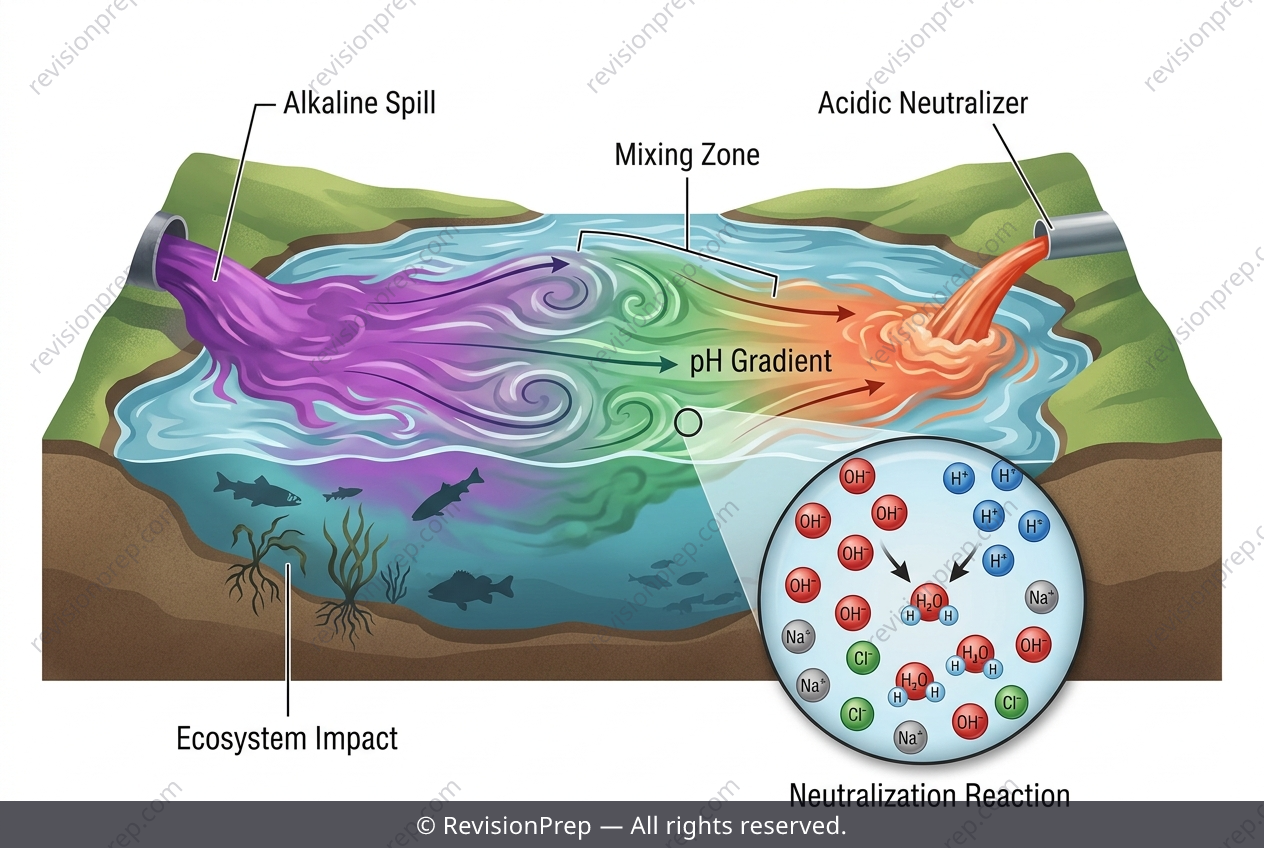
Acids and bases shape the chemistry of every aquatic ecosystem, and when their balance is disturbed, the consequences ripple outward fast. A spill of sodium hydroxide — a strong base that dissociates completely in water, releasing a high concentration of OH⁻ ions — can push a river's pH far beyond the narrow 6.5–8.5 range most organisms tolerate, disrupting enzyme function and osmoregulation. Its corrosive nature adds a second layer of harm, chemically destroying the proteins and lipids in cell membranes, gills, and skin. Neutralisation offers a seemingly simple fix: NaOH + HCl → NaCl + H₂O. Yet in a flowing river, even mixing is impossible, leaving pockets of unneutralised solution behind, while the salt by-product raises salinity in a freshwater system. Understanding these relationships — between pH, biological tolerance, and reaction practicality — is what turns abstract acid-base theory into real environmental judgement.
Start practising IB questions today
150,000+ IB-styled questions, criteria-mapped and instantly accessible.