
Maths: How Order of Operations Models Real Transactions
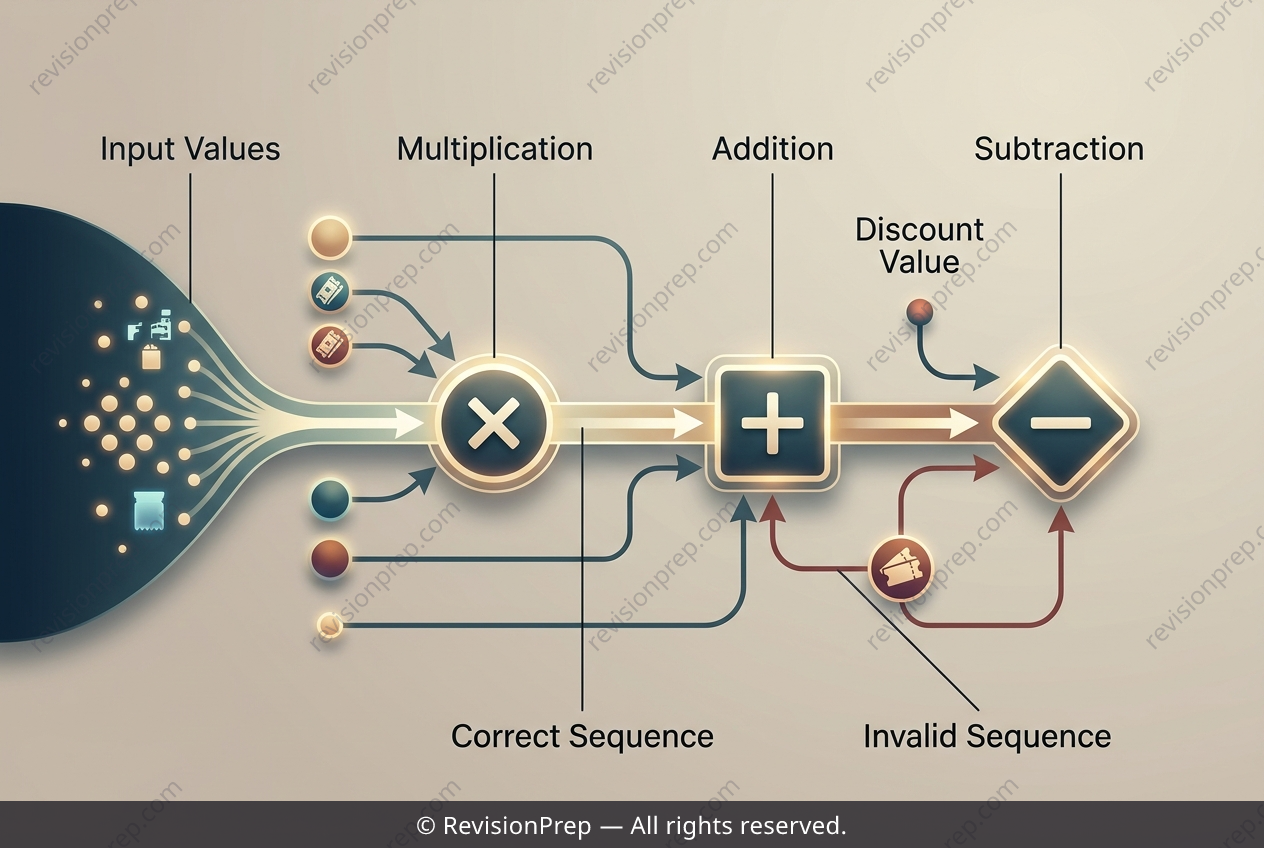
Order of operations is the set of conventions that determines how a numerical expression is evaluated, ensuring everyone reading 4 × 7.25 − 6.00 arrives at the same result. Multiplication and division are performed before addition and subtraction, so the total cost of the tickets is found first, and the voucher is deducted from that total afterwards. Brackets override this default, which is why 4 × (7.25 − 6.00) represents a fundamentally different calculation. This matters because the order of operations is not arbitrary — it mirrors the structure of real transactions. A voucher is a single discount applied once to a whole bill, not a repeated reduction on every item, so the expression must reflect that relationship. Understanding why multiplication precedes subtraction here connects the abstract rule to its meaning: the grouping of quantities in an expression should match the grouping of quantities in the situation being modelled.
Start practising IB questions today
150,000+ IB-styled questions, criteria-mapped and instantly accessible.