
Maths: The Pharmacist's Dilemma With Rounding
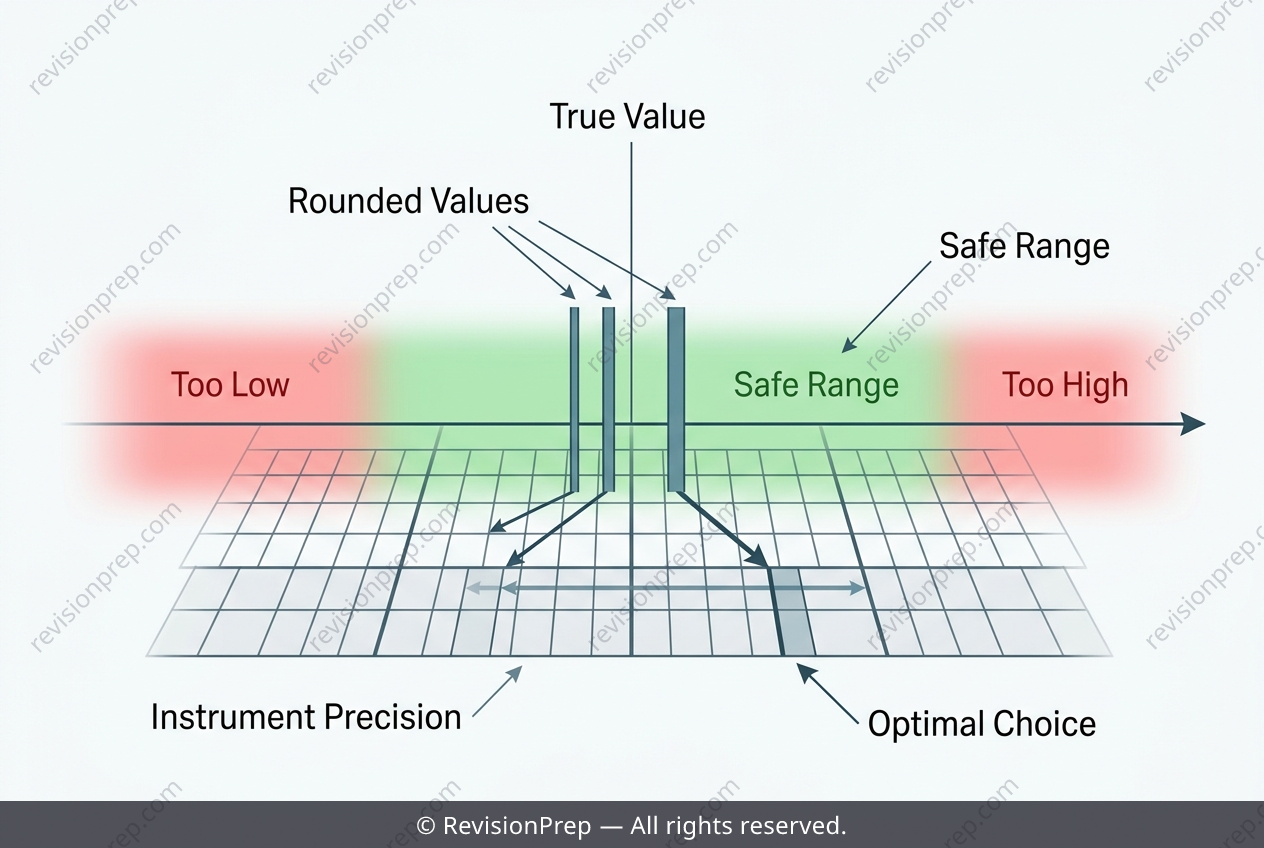
Rounding a number is never just a mathematical exercise — it is a decision about how much precision a situation genuinely allows. Significant figures express which digits carry meaningful information, and the rules are simple: locate the required digits, then round up or down based on the next one. Yet the consequences of that choice depend entirely on context. In real-world measurement, precision is bounded by the instrument itself. A syringe graduated to the nearest 0.1 mL cannot deliver a reading of 2.49 mL, however accurate that figure looks on paper — this is false precision. Meanwhile, rounding too aggressively can push a value outside a safe dosage range, turning a tidy answer into a dangerous one. The pharmacist's dilemma captures this tension perfectly: the rounded value must be numerically safe and physically measurable. Estimation, rounding, and instrument limitations therefore work together, not separately, shaping every practical decision.
Start practising IB questions today
150,000+ IB-styled questions, criteria-mapped and instantly accessible.