
Maths: How Percentages Make Deals Comparable
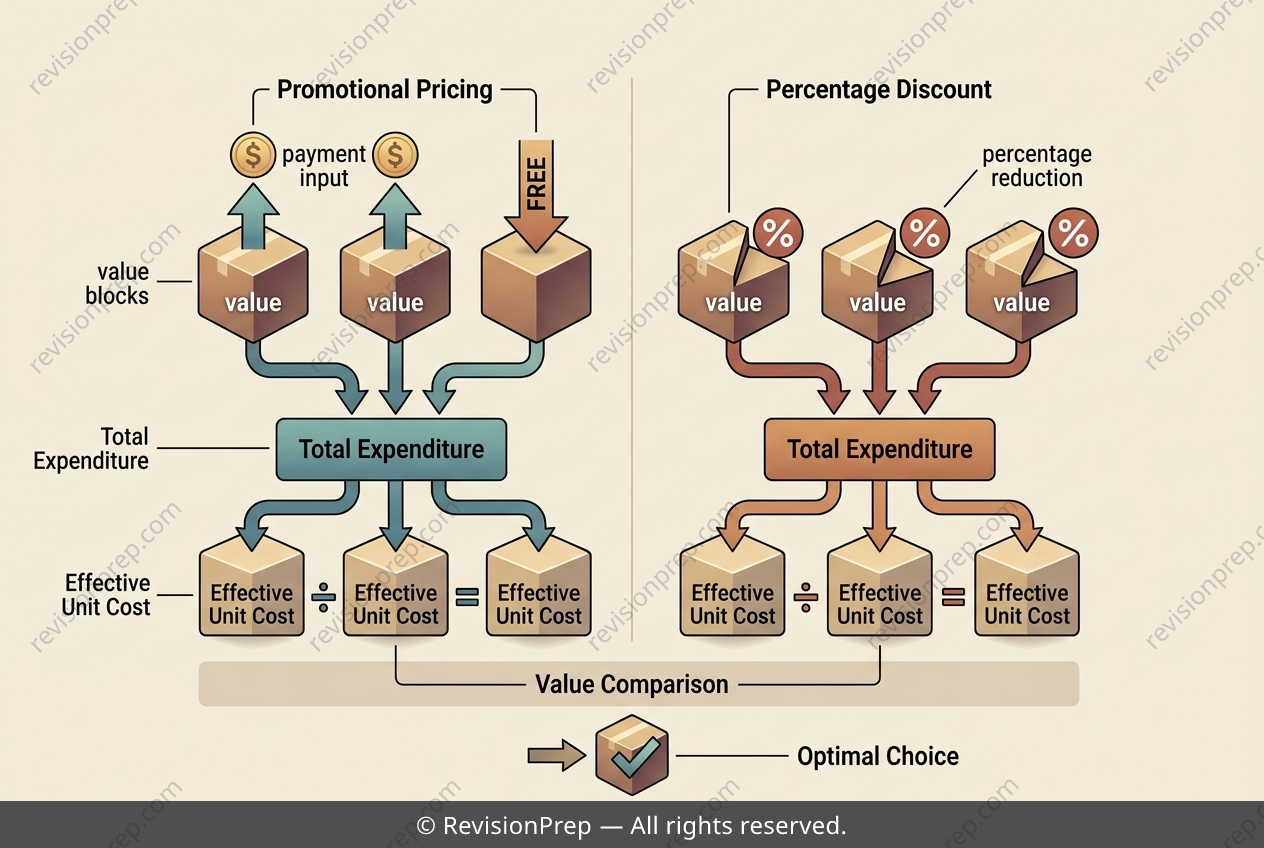
Comparative financial analysis is the art of reducing competing offers to a single, fair basis so that a genuine "best deal" can be identified. Promotions such as "Buy 2, get 1 free" are deliberately framed around items rather than prices, which makes their true value harder to see at a glance. To compare them fairly, the headline offer must be translated into an effective discount percentage. The mechanism is straightforward: first establish the total paid under the promotion, then compare it with the original cost of the same basket of goods. The saving is the difference between these two figures, and the effective discount is that saving expressed as a fraction of the original cost, converted using (saving ÷ original cost) × 100. This single percentage then becomes a common currency, allowing a multi-buy promotion to be set directly against a flat percentage discount. Because the resulting figures are often very close, the analysis also reveals how marginal the "better" deal can be — a reminder that price is only one factor in a sound purchasing decision.
Start practising IB questions today
150,000+ IB-styled questions, criteria-mapped and instantly accessible.