
Maths: Why Recovering a Loss Takes a Bigger Gain
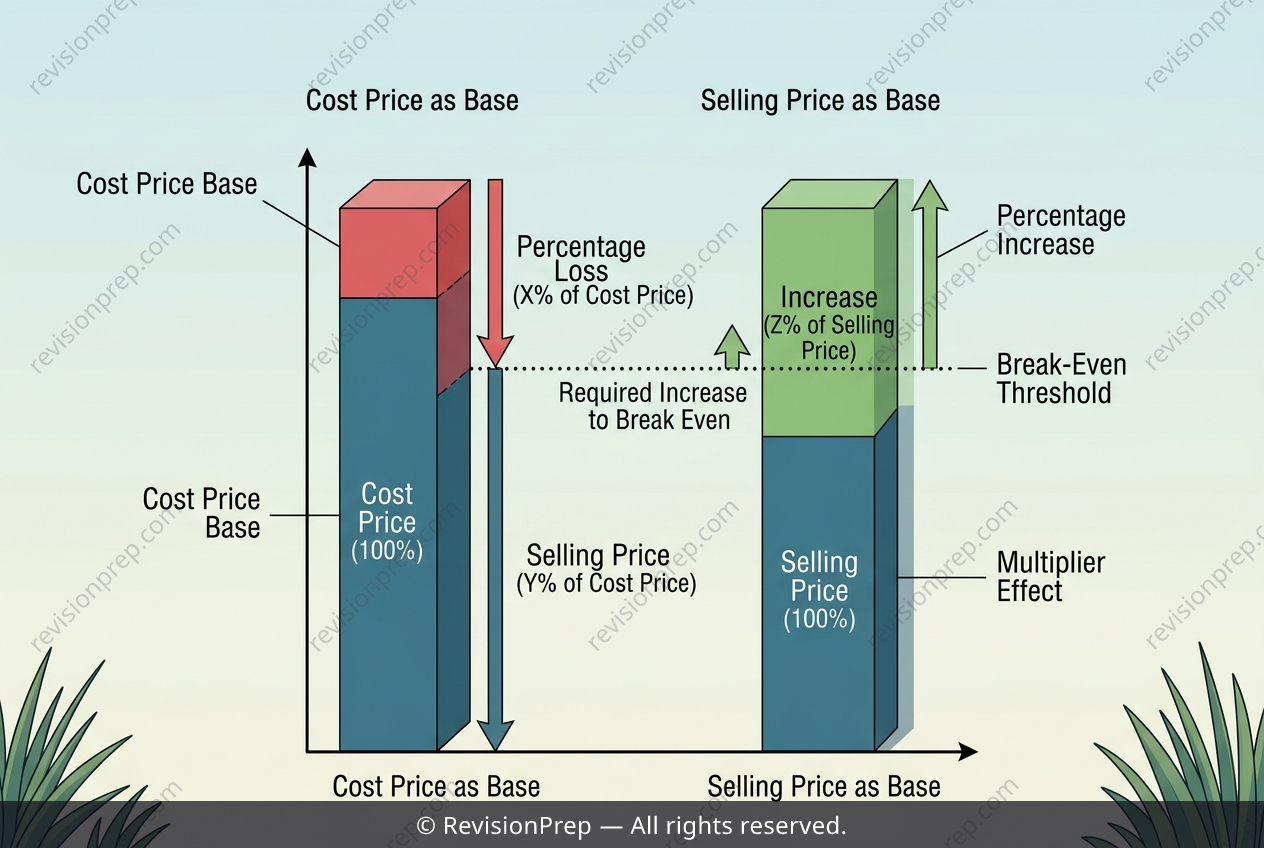
Percentage change is one of the most quietly treacherous ideas in financial mathematics, because the same headline rate can mean very different things depending on which value it is measured against. When a loss occurs, the selling price is a fixed fraction of the cost price, captured by a multiplier such as (1 − 0.15), and reversing that relationship means dividing rather than subtracting. This matters because money questions rarely move in one direction. A loss and the gain needed to undo it are not symmetrical: the loss is calculated on the larger original cost price, while any recovery is calculated on the smaller selling price. That shift in base value is the mechanism behind the counterintuitive result that recovering a percentage fall always demands a proportionally larger percentage rise. Understanding this relationship — multiplier, base value, and the direction of comparison — is what allows cost price, selling price, and percentage change to be connected confidently rather than treated as isolated calculations.
Start practising IB questions today
150,000+ IB-styled questions, criteria-mapped and instantly accessible.