
Maths: How Profit Percentages Shape Selling Prices
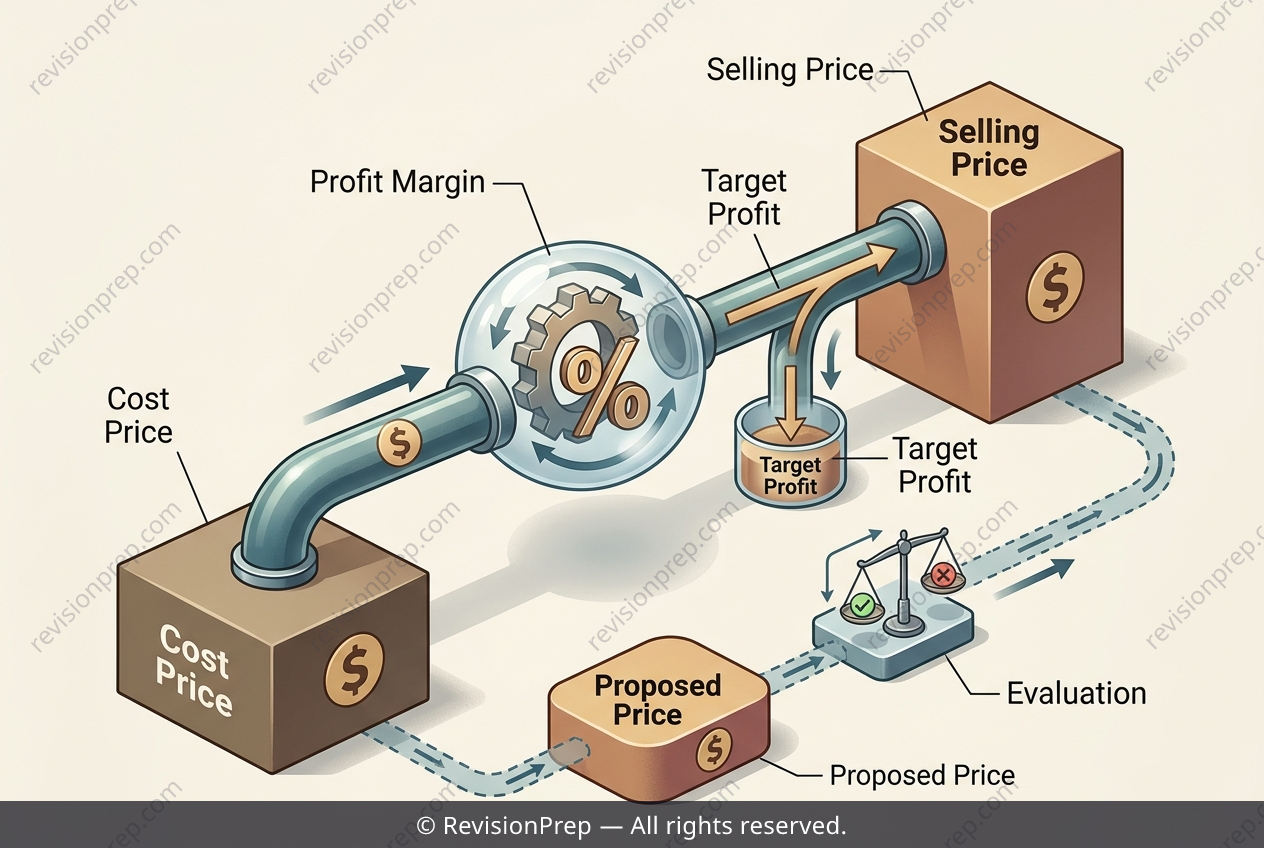
Pricing strategy sits at the heart of financial mathematics, linking the cost a retailer pays to the price a customer is charged. The central relationship is simple but powerful: Selling Price = Cost Price × (1 + Profit % ÷ 100). This multiplier form shows that any desired profit margin can be applied directly to the cost price, turning a percentage goal into a concrete selling price. Understanding this matters because profit margins drive business decisions, from setting everyday prices to judging whether a suggested price is sensible. The profit percentage itself is calculated by comparing the difference between selling price and cost price against the original cost: Profit % = ((Selling Price − Cost Price) ÷ Cost Price) × 100. Working through a scenario, such as a jacket bought at a set cost with a target margin, reveals how these pieces connect. A price above target raises the margin but may affect demand, so the mathematics informs a real trade-off between profitability and customer appeal.
Start practising IB questions today
150,000+ IB-styled questions, criteria-mapped and instantly accessible.